Skip to content
WAnimals
  • Map
  • Species
  • Parks
  • Diving
Log inCreate account
WAnimals

The guide for travellers and animal lovers: discover, plan and share your wild adventures around the world.

Discover wildlife

  • Species
  • Ecosystems
  • Glossary
  • Tags

Explore places

  • Map
  • Countries
  • Parks
  • Diving

Plan experiences

  • Guides

Learn

  • Blog

Resources

  • Help centre
  • Contact
  • Install the app

Follow us

Account

  • Log in
  • Create account

© 2026 WAnimals. All rights reserved.

About usHow we build our profilesTerms of servicePrivacyLegal notice
MapSpeciesParksDiving
  1. Home
  2. Species
  3. Gypsy Moth

One of the 4 moths on WAnimals

Insects · Lepidoptera · Erebidae

Gypsy Moth

Lymantria dispar

Not Evaluated

It has not yet been assessed against the IUCN criteria.

Spotted something wrong?

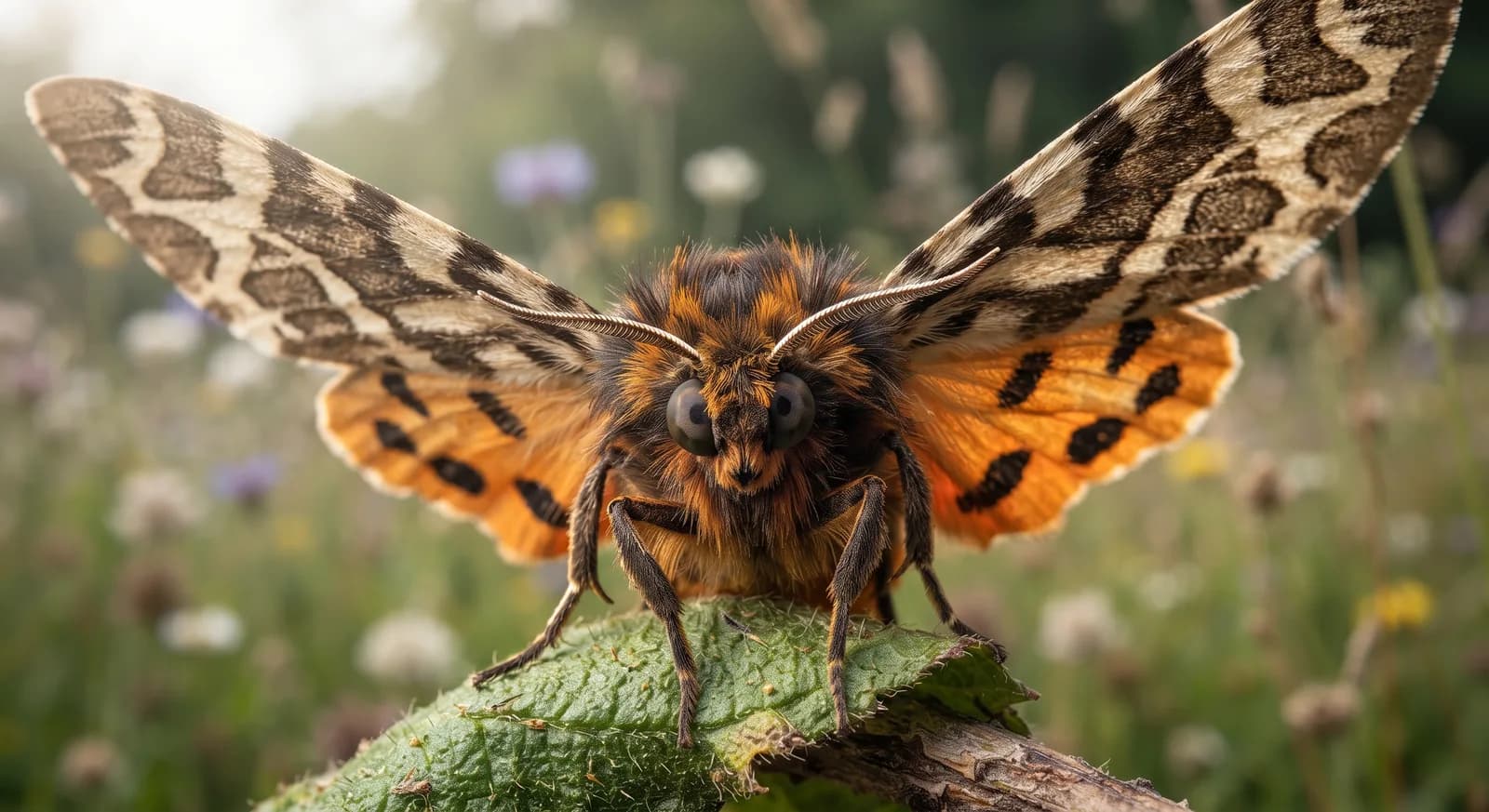
The gypsy moth is a lepidopteran of the family Erebidae, Eurasian in origin. Originally found from Europe to Asia, it was introduced into North America in the late 1860s, extending its geographical range. Its English common name is the gypsy moth.

Size

3.7 cm – 6.2 cm

Diet

Herbivore

Feeds mainly on plants.

Activity

Diurnal

Active mainly during the day.

Social structure

Solitary

Lives and hunts alone, joining others only to breed.

Sighting difficulty

Unknown

Temperate forest
57countries2same family

Fun facts

  • GeneralA defoliating pest that can strip whole forests bare; the European females can barely fly.
  • It reached North America by accident: in 1869 Étienne Léopold Trouvelot imported eggs to Medford, Massachusetts, to try crossing it with the silkworm and obtain a disease-resistant caterpillar. They escaped from his garden.
  • He warned the local entomologists and nothing was done; twelve years later the population exploded and the first government insect eradication campaign in history was launched, and failed.
  • Since 1980 it has defoliated more than 4,000 km² of US forest a year; in 1981 the figure was 52,200 km².
  • Newly hatched caterpillars disperse through the air hanging from a silk thread, a process known as ballooning.
  • The females cannot fly: they lay their eggs on the same trunk where they emerge, and dispersal depends on the caterpillars and on human transport.

Life cycle and biology

Skeleton type
Invertebrate - chitin exoskeleton (insect)
Habitat and environment
Deciduous woodland of oak, holm oak and chestnut
Size at birth
First-instar larva of about 3 mm
Gestation / incubation
The eggs spend the winter in diapause and hatch in April-May, several months after the August laying
Litter / clutch size
A single clutch of 100 to 1,000 eggs in an egg mass covered with abdominal hairs; some sources cite up to 1,500

Sources consulted: https://en.wikipedia.org/wiki/Lymantria_dispar; Bugwoodwiki, Lymantria dispar; Columbia CERC, ficha de especie introducida; Univ. of Wisconsin Extension, ciclo biologico de Lymantria dispar; Bugwoodwiki; Animal Diversity Web / BioKIDS, Lymantria dispar; Monaco Nature Encyclopedia; Monaco Nature Encyclopedia, Lymantria dispar; Canadian Food Inspection Agency, ficha tecnica de Lymantria dispar

Where to find it

Best time: Adults between late June and September, peaking in July; caterpillars from April to early July

Loading map…

Related species

Other species in the catalogue with the most in common with Gypsy Moth — same habitat, park, country, tags or family.

Same taxonomic family
Related to
Related to
Related to
Related to

Keep exploring

Based on what we already know about gypsy moth.

Comments

Share an experience, a fun fact or a tip for seeing the gypsy moth.

Be the first to comment.
See full glossary
This page in other languages: Español · Deutsch · Français · Português · Italiano
See its range on the interactive map→
Least Concern

Jersey Tiger

Euplagia quadripunctaria

Garden TigerNot Evaluated

Garden Tiger

Arctia caja

Vulnerable

Greater Capricorn Beetle

Cerambyx cerdo

Not Evaluated

North American Luna Moth

Actias luna

Not Evaluated

Golden Buprestid

Buprestis aurulenta

European Rhinoceros BeetleNot Evaluated

European Rhinoceros Beetle

Oryctes nasicornis

CountriesAlbania
TagsHerbivore
Herbivore
Solitary
Insect
Temperate forest

Europe41

Asia11

Africa3

North America2

Albania
Algeria
Andorra
Armenia
Austria
Azerbaijan
Albania
Andorra
Austria
Belarus
Belgium
Bosnia and Herzegovina
Bulgaria
Croatia
Cyprus
Czechia
Denmark
Estonia
Finland
France
Germany
Greece
Hungary
Iceland
Ireland
Italy
Latvia
Lithuania
Luxembourg
Malta
Moldova
Monaco
Montenegro
Netherlands
North Macedonia
Norway
Poland
Portugal
Romania
Serbia
Slovakia
Slovenia
Spain
Sweden
Switzerland
Ukraine
United Kingdom
Armenia
Azerbaijan
China
Georgia
Iran
Japan
Kazakhstan
Mongolia
Russia
South Korea
Türkiye
Algeria
Morocco
Tunisia
Canada
United States