Skip to content
WAnimals
  • Map
  • Species
  • Parks
  • Diving
Log inCreate account
WAnimals

The guide for travellers and animal lovers: discover, plan and share your wild adventures around the world.

Discover wildlife

  • Species
  • Ecosystems
  • Glossary
  • Tags

Explore places

  • Map
  • Countries
  • Parks
  • Diving

Plan experiences

  • Guides

Learn

  • Blog

Resources

  • About us
  • How we build our profiles
  • Help centre
  • Contact
  • Install the app

Follow us

Account

  • Log in
  • Create account

© 2026 WAnimals. All rights reserved.

Terms of servicePrivacyCookiesLegal notice
MapSpeciesParksDiving
  1. Home
  2. Species
  3. European Rhinoceros Beetle

One of the 24 beetles on WAnimals
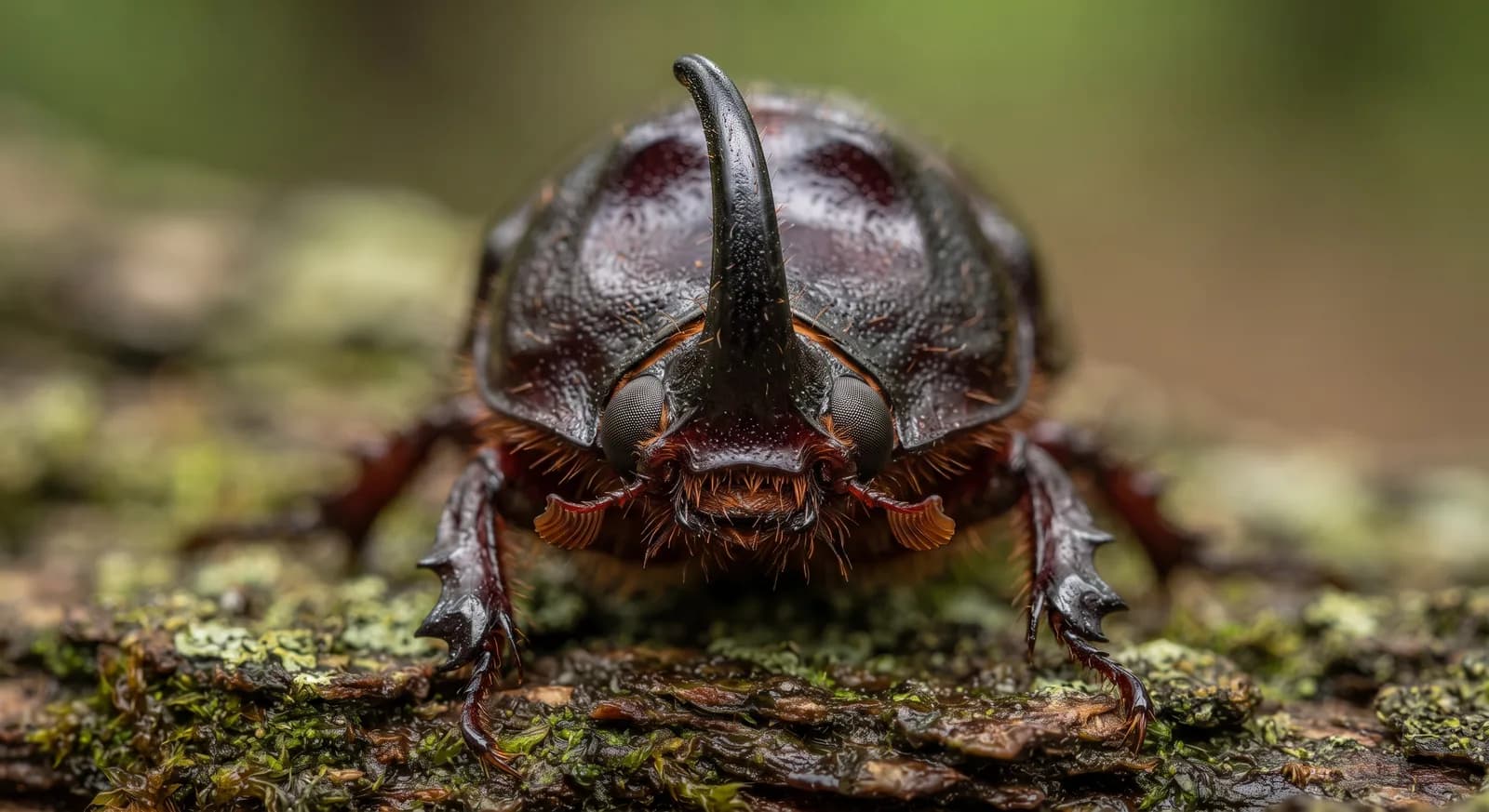
European Rhinoceros Beetle (Oryctes nasicornis)

Insects · Coleoptera · Scarabaeidae

European Rhinoceros Beetle

Oryctes nasicornis

Not Evaluated

It has not yet been assessed against the IUCN criteria.

Spotted something wrong?

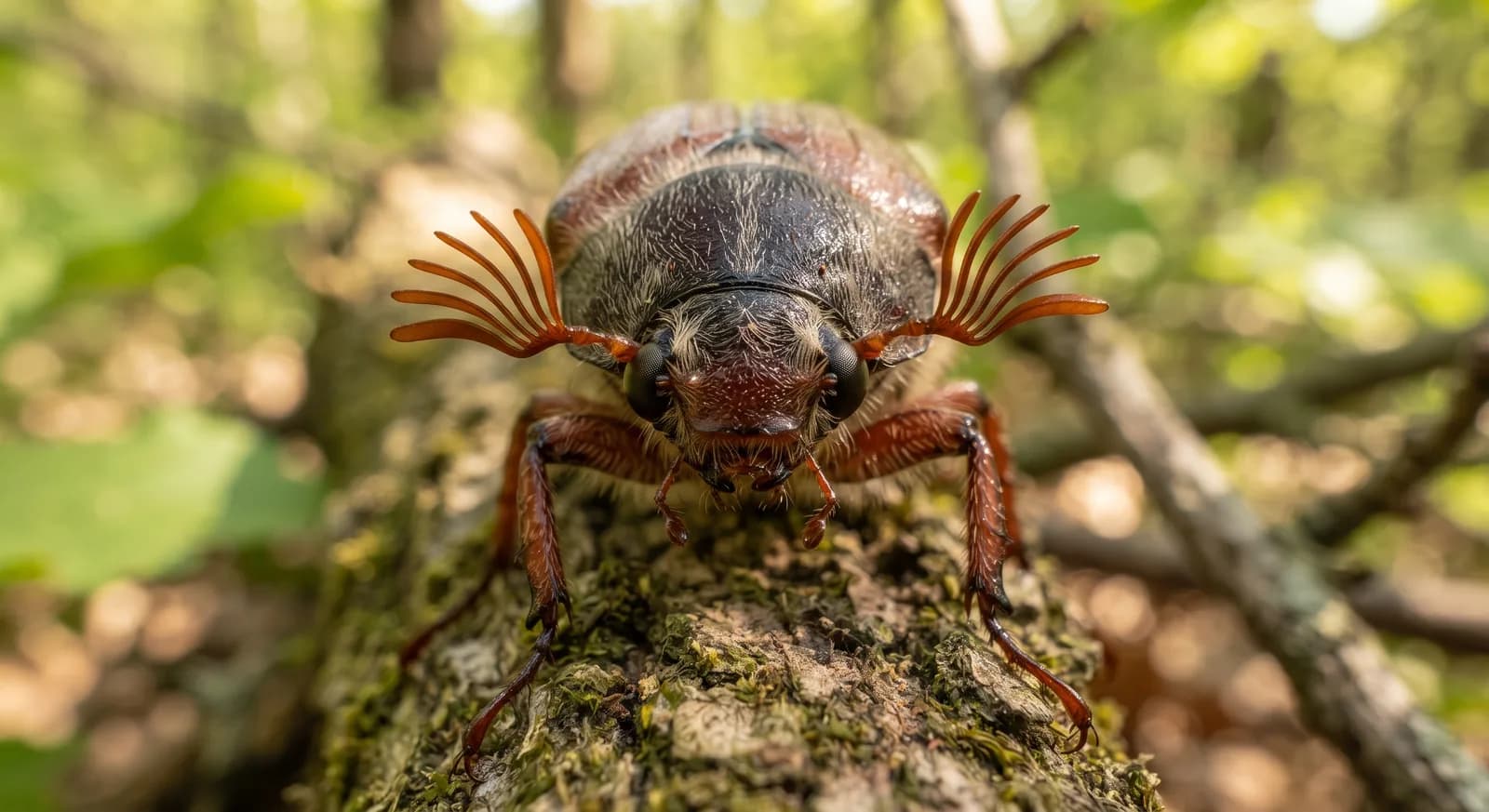
The European rhinoceros beetle is robust and a glossy reddish brown, and the male carries a horn curving back over its head. Its larvae, large and white, develop over several years in well-rotted wood, sawdust and compost.

Size

2 cm – 4 cm

Diet

Herbivore

Feeds mainly on plants.

Activity

Nocturnal

Active mainly at night.
Social structure

Solitary

Lives and hunts alone, joining others only to breed.

Temperate forest
54countries138parks8same family

AI-generated images: illustrations, not photographs.

Fun facts

  • The male's horn is not a weapon for killing: it is used as a lever to prise rivals out in fights over females.
  • The adults barely feed and live only a few weeks: all the energy was stored by the larva during its three or four years underground.
  • Compost heaps, sawmill sawdust and stacked bark have become an important substitute habitat for it, now that dead wood is scarce in managed forests.
  • It is one of the largest beetles in Europe, and the male bears a curved horn on its head that it uses in fights with other males.
  • The larva is enormous, up to 10 cm, and takes between three and five years to develop inside dead wood or compost.
  • It has changed habitat: as dead wood is scarce in managed forests, today it lives mainly in piles of sawdust, wood shavings and compost of human origin, which have become its main refuge.
  • It is completely harmless despite its looks: the adult barely eats, and the horn serves to attack no one but another male.
  • It is the obligatory prey of the mammoth wasp, Megascolia maculata, which paralyses its larvae and lays an egg on each one.

Life cycle and biology

Skeleton type
Invertebrate - chitin exoskeleton (insect)
Habitat and environment
Woodland with dead wood, sawmills and compost heaps

Sources consulted: Buglife · Natural History Museum de Londres · proyecto LIFE4OakForests

Where to find it

Best time: From June to August, when the adults fly at dusk

Loading map…

Where to see it

Parks and dive sites where this species has been documented — showing 10 of 138.

Related species

Other species in the catalogue with the most in common with European Rhinoceros Beetle — same habitat, park, country, tags or family.

Same taxonomic family
Shares a park
Shares a park

Keep exploring

Based on what we already know about european rhinoceros beetle.

Share an experience, a fun fact or a tip for seeing the european rhinoceros beetle.
See full glossary
This page in other languages: Español · Deutsch · Français · Português · Italiano

The pins mark the parks where its presence is documented.

See its range on the interactive map→
Picos de EuropaSpain
Ordesa y Monte PerdidoSpain
Aiguestortes i Estany de Sant MauriciSpain
Peneda-GeresPortugal
Abruzzo, Lazio and MoliseItaly
Alta MurgiaItaly
Mount OlympusGreece
PlitviceCroatia
DurmitorMontenegro
RetezatRomania
See all 138 parks
Common CockchaferNot Evaluated

Common Cockchafer

Melolontha melolontha

Rose ChaferNot Evaluated

Rose Chafer

Cetonia aurata

Not Evaluated

Dung Beetle

Onthophagus taurus

Sacred ScarabNot Evaluated

Sacred Scarab

Scarabaeus sacer

Stag BeetleNear Threatened

Stag Beetle

Lucanus cervus

Vulnerable

Greater Capricorn Beetle

Cerambyx cerdo

CountriesPoland
ParksPicos de EuropaSpain
TagsHerbivore
Herbivore
Nocturnal
Solitary
Insect
Temperate forest
PolandSpainRomaniaItalyGermanySlovakia

Europe41

AlbaniaAndorraAustriaBelarusBelgiumBosnia and HerzegovinaBulgariaCroatiaCyprusCzechiaDenmarkEstoniaFinlandFranceGermanyGreeceHungaryIrelandItalyLatviaLiechtensteinLithuaniaLuxembourgMaltaMoldovaMonacoMontenegroNetherlandsNorth MacedoniaNorwayPolandPortugalRomaniaSerbiaSlovakiaSloveniaSpainSwedenSwitzerlandUkraineUnited Kingdom

Asia10

ArmeniaAzerbaijanGeorgiaIranIsraelKazakhstanLebanonRussiaSyriaTürkiye

Africa3

AlgeriaMoroccoTunisia