Skip to content
WAnimals
  • Map
  • Species
  • Parks
  • Diving
Log inCreate account
WAnimals

The guide for travellers and animal lovers: discover, plan and share your wild adventures around the world.

Discover wildlife

  • Species
  • Ecosystems
  • Glossary
  • Tags

Explore places

  • Map
  • Countries
  • Parks
  • Diving

Plan experiences

  • Guides

Learn

  • Blog

Resources

  • About us
  • How we build our profiles
  • Help centre
  • Contact
  • Install the app

Follow us

Account

  • Log in
  • Create account

© 2026 WAnimals. All rights reserved.

Terms of servicePrivacyCookiesLegal notice
MapSpeciesParksDiving
  1. Home
  2. Species
  3. Bull-headed Dung Beetle

One of the 24 beetles on WAnimals

Insects · Coleoptera · Scarabaeidae

Bull-headed Dung Beetle

Onthophagus taurus

Not Evaluated

It has not yet been assessed against the IUCN criteria.

Spotted something wrong?

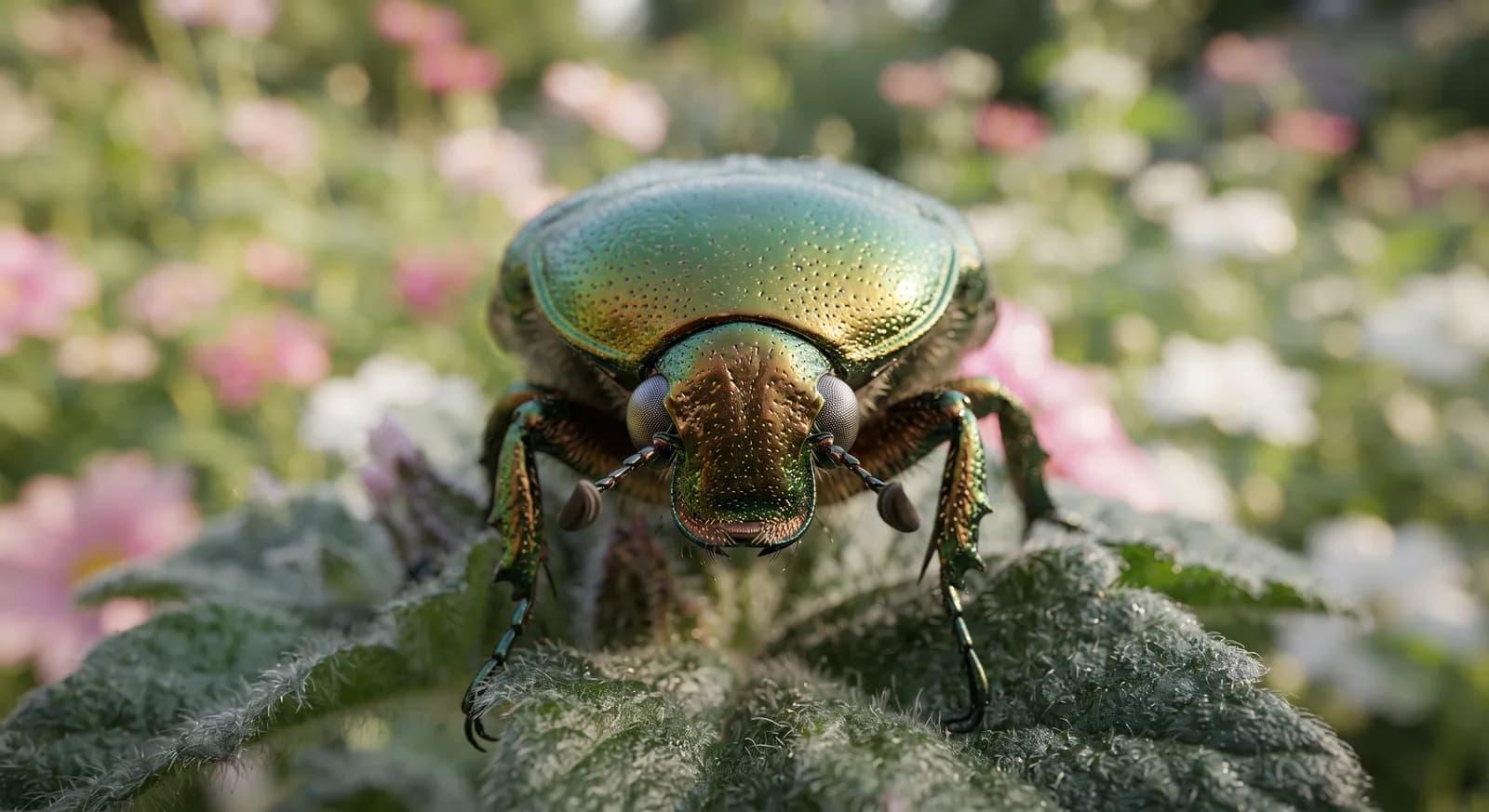
Onthophagus taurus is a beetle of the family Scarabaeidae. It is commonly called the horned dung beetle.

Size

0.8 cm – 1 cm

Diet

Detritivore

Feeds on dead organic matter as it decomposes.

Activity

Diurnal

Active mainly during the day.

Social structure

Solitary

Lives and hunts alone, joining others only to breed.

Grassland
51countries29parks8same family

Fun facts

  • It is the strongest animal in the world in proportion to its weight: in laboratory tests a male pulled more than eleven hundred times his own mass, the equivalent of a person moving several buses.
  • Two types of male coexist: the large, horned ones, which fight for access to the females in the tunnels, and the small, hornless ones, which slip in unnoticed and have proportionally much larger testes.
  • Introduced into Australia along with other dung beetles to clear cattle dung, which the local fauna could not process, it solved a serious problem of flies and lost pasture.
  • It is the strongest insect ever measured: in tests at Queen Mary University and the University of Western Australia, the most powerful individual pulled 1,141 times its own weight, the equivalent of a 70 kg person dragging 80 tonnes.
  • Males come in two morphs: the large ones grow long horns and guard the tunnel entrance by fighting rivals; the small ones grow no horns and go in for sneaking, slipping past or digging side tunnels.
  • What decides the morph is not the gene but the food: a male that passes a certain size threshold as a larva grows horns, and one that does not, does not.
  • Females sense population density and adjust their offspring's rations accordingly, producing more large males when competition is greater.
  • The female packs dung into oval balls at the bottom of the tunnel and lays a single egg in each; the larva develops in isolation inside its ball.

Life cycle and biology

Skeleton type
Invertebrate - chitin exoskeleton (insect)
Habitat and environment
Grassland and dehesa with livestock, in herbivore dung
Gestation / incubation
Development from egg to adult takes 8 to 10 weeks depending on the soil temperature; the whole juvenile cycle takes place inside the brood ball, buried 10 to 15 cm beneath the dung
Litter / clutch size
A single egg per brood ball

Sources consulted: Wikipedia (es): Onthophagus taurus · Dung Beetle Ecosystem Engineers · Cornell CALS · Agriculture Victoria, ficha Onthophagus taurus · Dung Beetle Ecosystem Engineers (Australia) · ficha tecnica de Nueva Zelanda · Ficha tecnica de escarabajos del estiercol de Nueva Zelanda · Agriculture Victoria

Where to find it

Best time: Active from spring to autumn, with at least two generations a year; it overwinters as a fattened larva inside the ball or as an adult in burrows

Loading map…

Where to see it

Parks and dive sites where this species has been documented — showing 10 of 29.

Related species

Other species in the catalogue with the most in common with Bull-headed Dung Beetle — same habitat, park, country, tags or family.

Same taxonomic family
Shares a park

Keep exploring

Based on what we already know about bull-headed dung beetle.

Share an experience, a fun fact or a tip for seeing the bull-headed dung beetle.
See full glossary
This page in other languages: Español · Deutsch · Français · Português · Italiano

The pins mark the parks where its presence is documented.
See its range on the interactive map→
Doñana National ParkSpain
CévennesFrance
Alta MurgiaItaly
BiałowieżaPoland
Hortobágy National ParkHungary
Peak DistrictUnited Kingdom
CabañerosSpain
New ForestUnited Kingdom
MonfragüeSpain
Sierra de GuadarramaSpain
See all 29 parks
Sacred ScarabNot Evaluated

Sacred Scarab

Scarabaeus sacer

Rose ChaferNot Evaluated

Rose Chafer

Cetonia aurata

Common CockchaferNot Evaluated

Common Cockchafer

Melolontha melolontha

European Rhinoceros BeetleNot Evaluated

European Rhinoceros Beetle

Oryctes nasicornis

Not Evaluated

Rainbow Scarab

Phanaeus vindex

Great Green Bush CricketNot Evaluated

Great Green Bush Cricket

Tettigonia viridissima

CountriesSpain
ParksDoñana National ParkSpain
TagsOmnivore
Omnivore
Solitary
Insect
Grassland

Europe37

Africa5

Asia4

South America3

North America1

Oceania1

Spain
Italy
United Kingdom
Algeria
France
Hungary
Albania
Austria
Belarus
Belgium
Bosnia and Herzegovina
Bulgaria
Croatia
Cyprus
Czechia
Denmark
Estonia
Finland
France
Germany
Greece
Hungary
Ireland
Italy
Latvia
Lithuania
Luxembourg
Malta
Moldova
Montenegro
Netherlands
Norway
Poland
Portugal
Romania
Serbia
Slovakia
Slovenia
Spain
Sweden
Switzerland
Ukraine
United Kingdom
Algeria
Egypt
Morocco
South Africa
Tunisia
Iran
Israel
Russia
Türkiye
Argentina
Brazil
Chile
United States
Australia