Skip to content
WAnimals
  • Map
  • Species
  • Parks
  • Diving
Log inCreate account
WAnimals

The guide for travellers and animal lovers: discover, plan and share your wild adventures around the world.

Discover wildlife

  • Species
  • Ecosystems
  • Glossary
  • Tags

Explore places

  • Map
  • Countries
  • Parks
  • Diving

Plan experiences

  • Guides

Learn

  • Blog

Resources

  • About us
  • How we build our profiles
  • Help centre
  • Contact
  • Install the app

Follow us

Account

  • Log in
  • Create account

© 2026 WAnimals. All rights reserved.

Terms of servicePrivacyCookiesLegal notice
MapSpeciesParksDiving
  1. Home
  2. Species
  3. Common Cockchafer

One of the 2 bumblebees on WAnimals
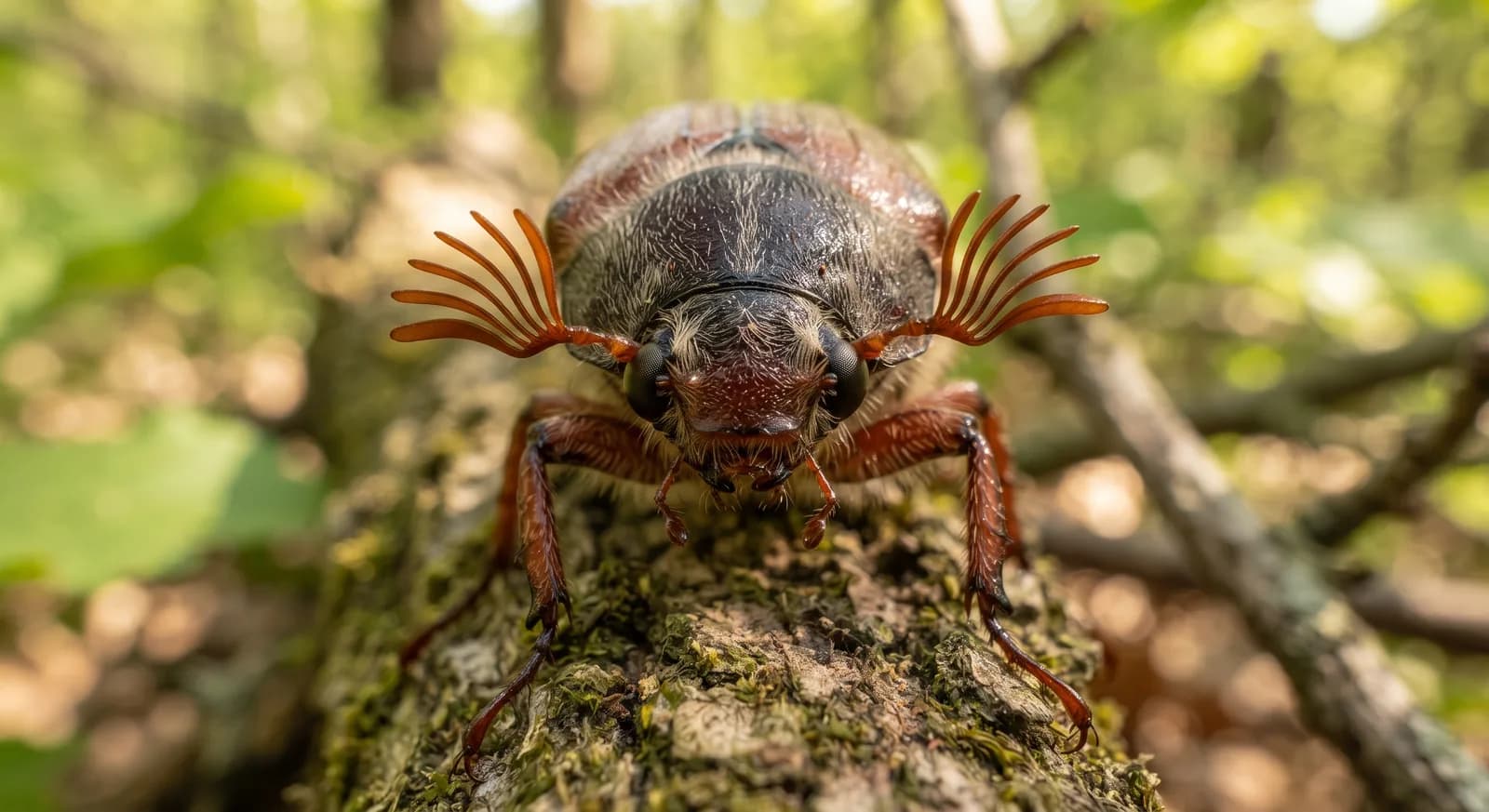
Common Cockchafer (Melolontha melolontha)

Insects · Coleoptera · Scarabaeidae

Common Cockchafer

Melolontha melolontha

Not Evaluated

It has not yet been assessed against the IUCN criteria.

Spotted something wrong?

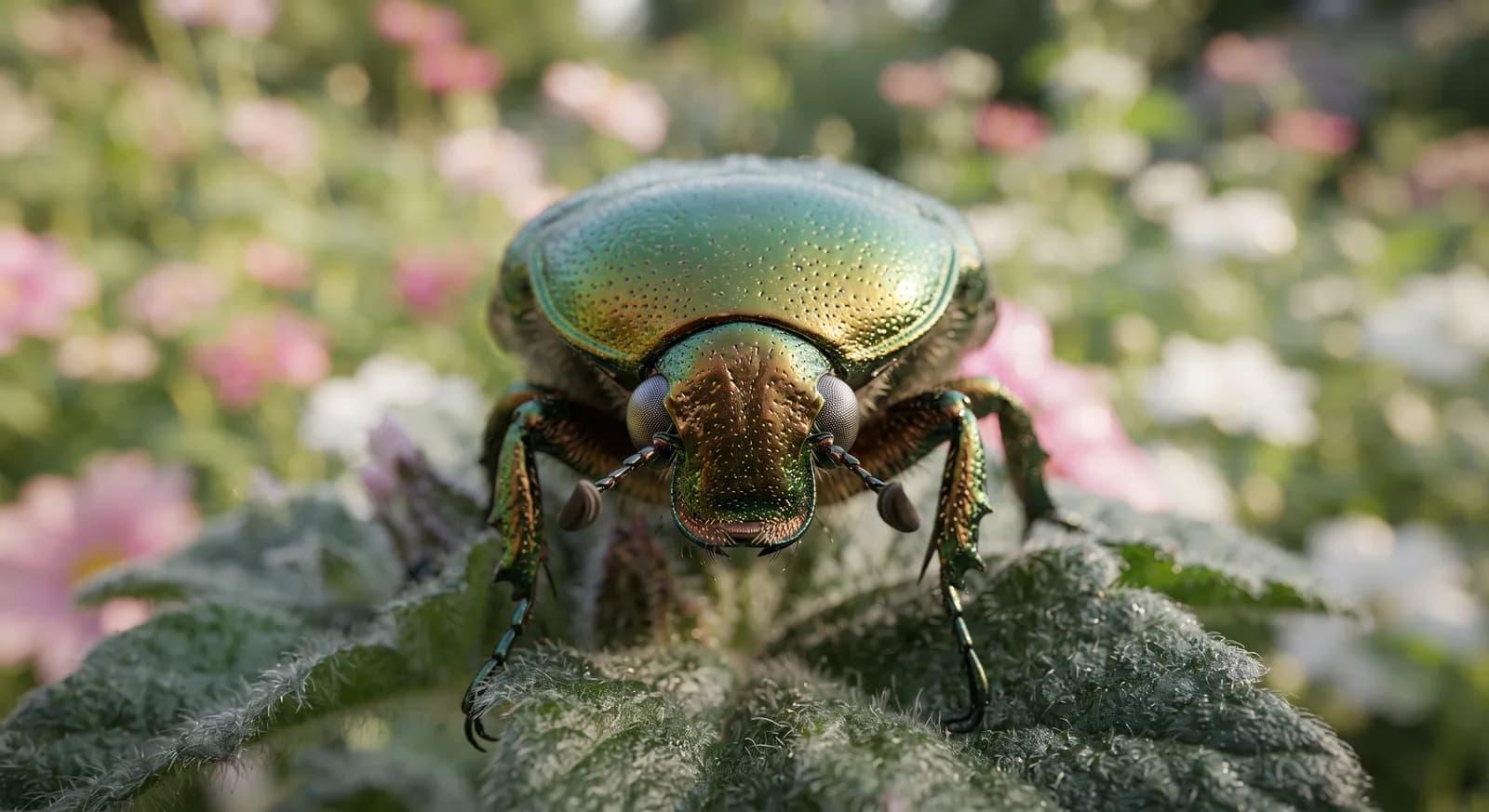
A stout beetle with a blackish, downy head and pronotum and reddish-brown elytra bearing four longitudinal grooves. Its most striking feature is the lamellate antennae, which it spreads like a fan and which are far more prominent in the male. Along the sides of the abdomen it carries a row of white triangular marks.

Size

2.5 cm – 3 cm

Life expectancy

5 years

Diet

Herbivore

Feeds mainly on plants.
Activity

Nocturnal

Active mainly at night.

Social structure

Colony

Lives in large concentrations, often for breeding reasons.

Grassland
46countries182parks8same family

AI-generated images: illustrations, not photographs.

Fun facts

  • Because its larvae take three or four years to develop, the adults appear in cyclical waves every three or four years, and the years vary from region to region according to climate.
  • In 1320, in Avignon, its larvae were put on trial and sentenced to exile in a special reserve; when they failed to comply with the decree, they were gathered up and exterminated.
  • The males locate the females by the volatile compounds released by leaves as the females eat them.
  • Its cycle lasts three or four years, and because it is synchronised it appears in massive waves every three or four years in any given district. Those periodic outbreaks have been documented in Europe since the Middle Ages.
  • They were a dreaded pest in centuries past: there are medieval records of ecclesiastical court proceedings against cockchafers, which were even excommunicated.
  • The larva, known as the white grub, is the damaging stage: it lives in the soil and eats the roots of cereals, grassland and fruit trees, and can kill the plant from below without anything showing above ground.
  • The adult emerges in spring, flies at dusk with a very characteristic heavy drone and devours the leaves of oaks, beeches and fruit trees.
  • Its populations collapsed with the insecticides of the 20th century and have partially recovered since their withdrawal.

Life cycle and biology

Skeleton type
Invertebrate - chitin exoskeleton (insect)
Habitat and environment
Lowland and low-altitude country, scarce in the mountains. It prefers wooded ground, fields and orchards on light soils. The adults overwinter buried between 20 and 100 cm deep
Size at birth
Oval eggs of 2-3 mm, dirty white, laid on the ground in batches of 10 to 30
Gestation / incubation
The eggs hatch four to six weeks after laying
Litter / clutch size
Batches of 10 to 30 eggs buried 10-25 cm deep. Three larval stages that take three to four years to complete

Sources consulted: ITACyL - Portal de Plagas de Castilla y León · Koppert · Sociedad Entomológica Aragonesa (Boletín 44) · EPPO Global Database · Malusá et al. 2020, Organic Agriculture 10

Where to find it

Best time: From April to July, mainly in June, on mild nights and near lights

Loading map…

Where to see it

Parks and dive sites where this species has been documented — showing 10 of 182.

Related species

Other species in the catalogue with the most in common with Common Cockchafer — same habitat, park, country, tags or family.

Same taxonomic family
Shares a park

Keep exploring

Based on what we already know about common cockchafer.

Share an experience, a fun fact or a tip for seeing the common cockchafer.
See full glossary
This page in other languages: Español · Deutsch · Français · Português · Italiano

The pins mark the parks where its presence is documented.

See its range on the interactive map→
SarekSweden
PadjelantaSweden
HardangerviddaNorway
Lake DistrictUnited Kingdom
CairngormsUnited Kingdom
Snowdonia (Eryri)United Kingdom
KillarneyIreland
Picos de EuropaSpain
Ordesa y Monte PerdidoSpain
Aiguestortes i Estany de Sant MauriciSpain
See all 182 parks
Rose ChaferNot Evaluated

Rose Chafer

Cetonia aurata

European Rhinoceros BeetleNot Evaluated

European Rhinoceros Beetle

Oryctes nasicornis

Not Evaluated

Dung Beetle

Onthophagus taurus

Sacred ScarabNot Evaluated

Sacred Scarab

Scarabaeus sacer

Not Evaluated

Japanese Beetle

Popillia japonica

Death's-head Hawk-mothNot Evaluated

Death's-head Hawk-moth

Acherontia atropos

CountriesSpain
ParksSarekSweden
TagsHerbivore
Herbivore
Nocturnal
Colonial
Insect
Grassland

Europe41

Asia5

Spain
Sweden
Italy
United Kingdom
Finland
Poland
Albania
Andorra
Austria
Belarus
Belgium
Bosnia and Herzegovina
Bulgaria
Croatia
Czechia
Denmark
Estonia
Finland
France
Germany
Greece
Hungary
Ireland
Italy
Kosovo
Latvia
Liechtenstein
Lithuania
Luxembourg
Moldova
Montenegro
Netherlands
North Macedonia
Norway
Poland
Portugal
Romania
San Marino
Serbia
Slovakia
Slovenia
Spain
Sweden
Switzerland
Ukraine
United Kingdom
Vatican City
Armenia
Azerbaijan
Georgia
Russia
Türkiye