Skip to content
WAnimals
  • Map
  • Species
  • Parks
  • Diving
Log inCreate account
WAnimals

The guide for travellers and animal lovers: discover, plan and share your wild adventures around the world.

Discover wildlife

  • Species
  • Ecosystems
  • Glossary
  • Tags

Explore places

  • Map
  • Countries
  • Parks
  • Diving

Plan experiences

  • Guides

Learn

  • Blog

Resources

  • About us
  • How we build our profiles
  • Help centre
  • Contact
  • Install the app

Follow us

Account

  • Log in
  • Create account

© 2026 WAnimals. All rights reserved.

Terms of servicePrivacyCookiesLegal notice
MapSpeciesParksDiving
  1. Home
  2. Species
  3. Rose Chafer
Rose Chafer (Cetonia aurata)

Insects · Coleoptera · Scarabaeidae

Rose Chafer

Cetonia aurata

Not Evaluated

It has not yet been assessed against the IUCN criteria.

Spotted something wrong?

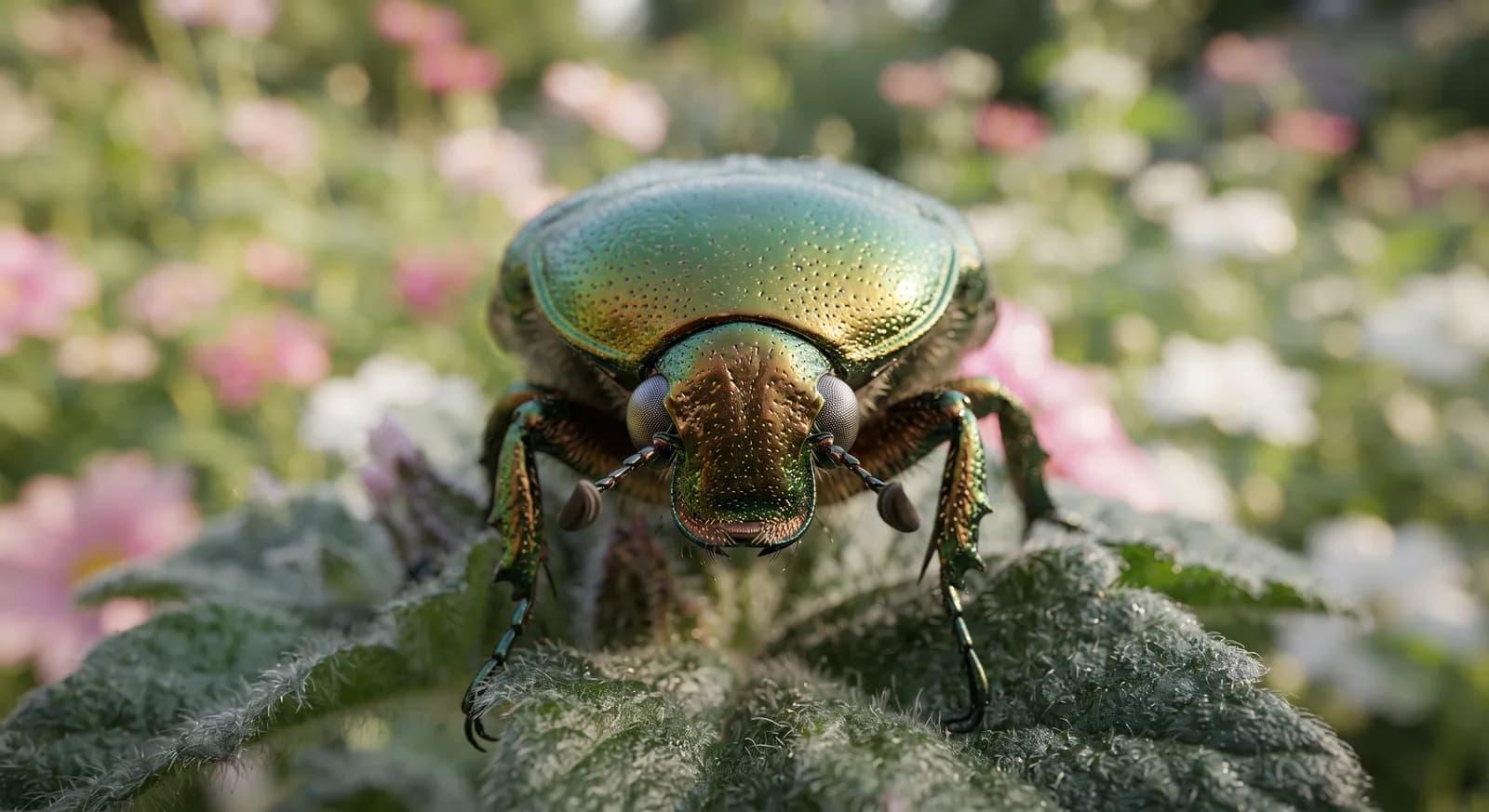
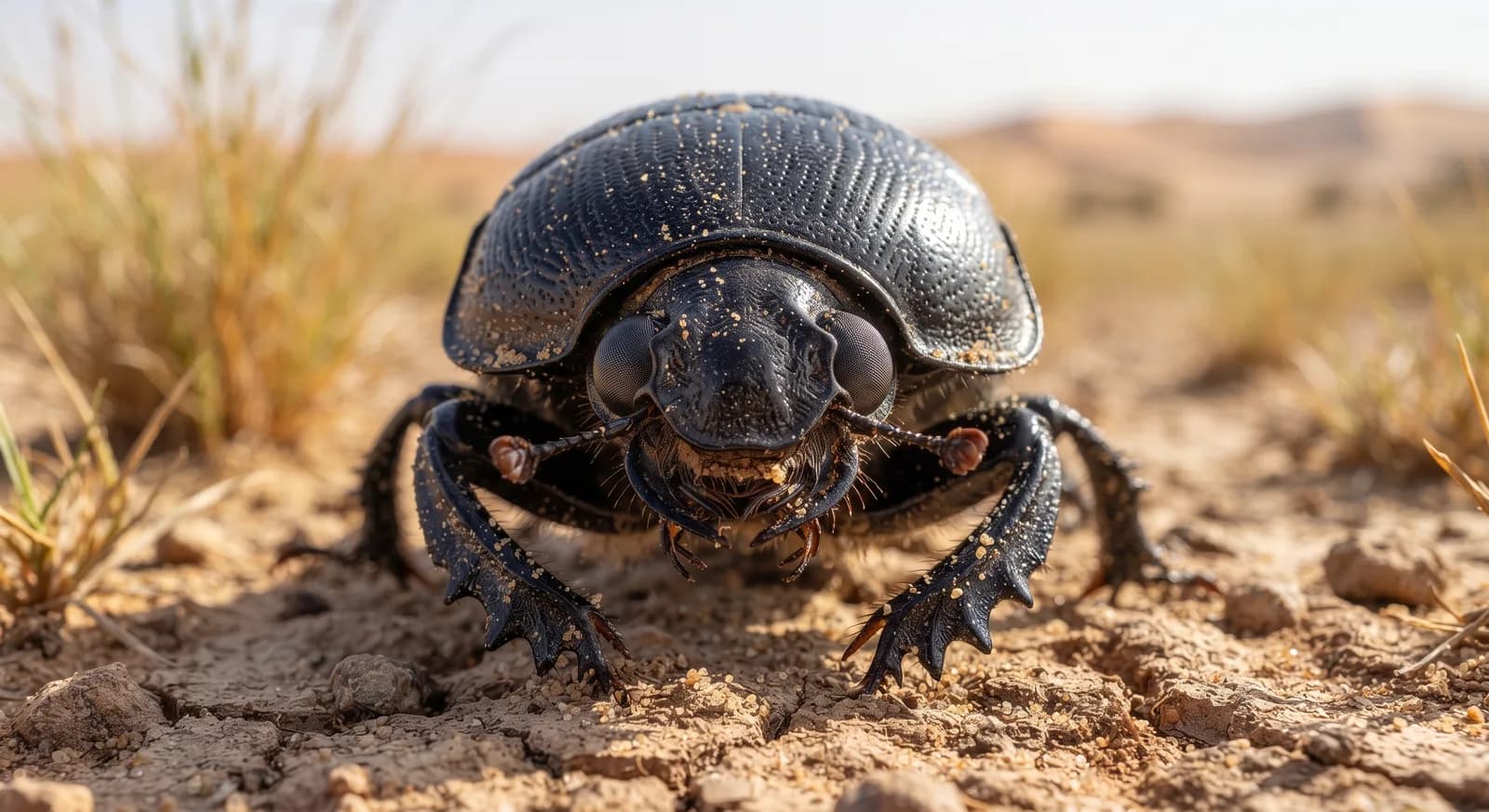
A beetle with an oval body, flattened on top, of a shimmering metallic green with reflections ranging from gold to copper, violet or blackish blue, dotted with small white lines on the elytra. The underside is coppery. The antennae are lamellate and the mandibles are reduced.

Size

1.5 cm – 2 cm

Diet

Herbivore

Feeds mainly on plants.

Activity

Diurnal

Active mainly during the day.
Social structure

Solitary

Lives and hunts alone, joining others only to breed.

Grassland
45countries180parks8same family

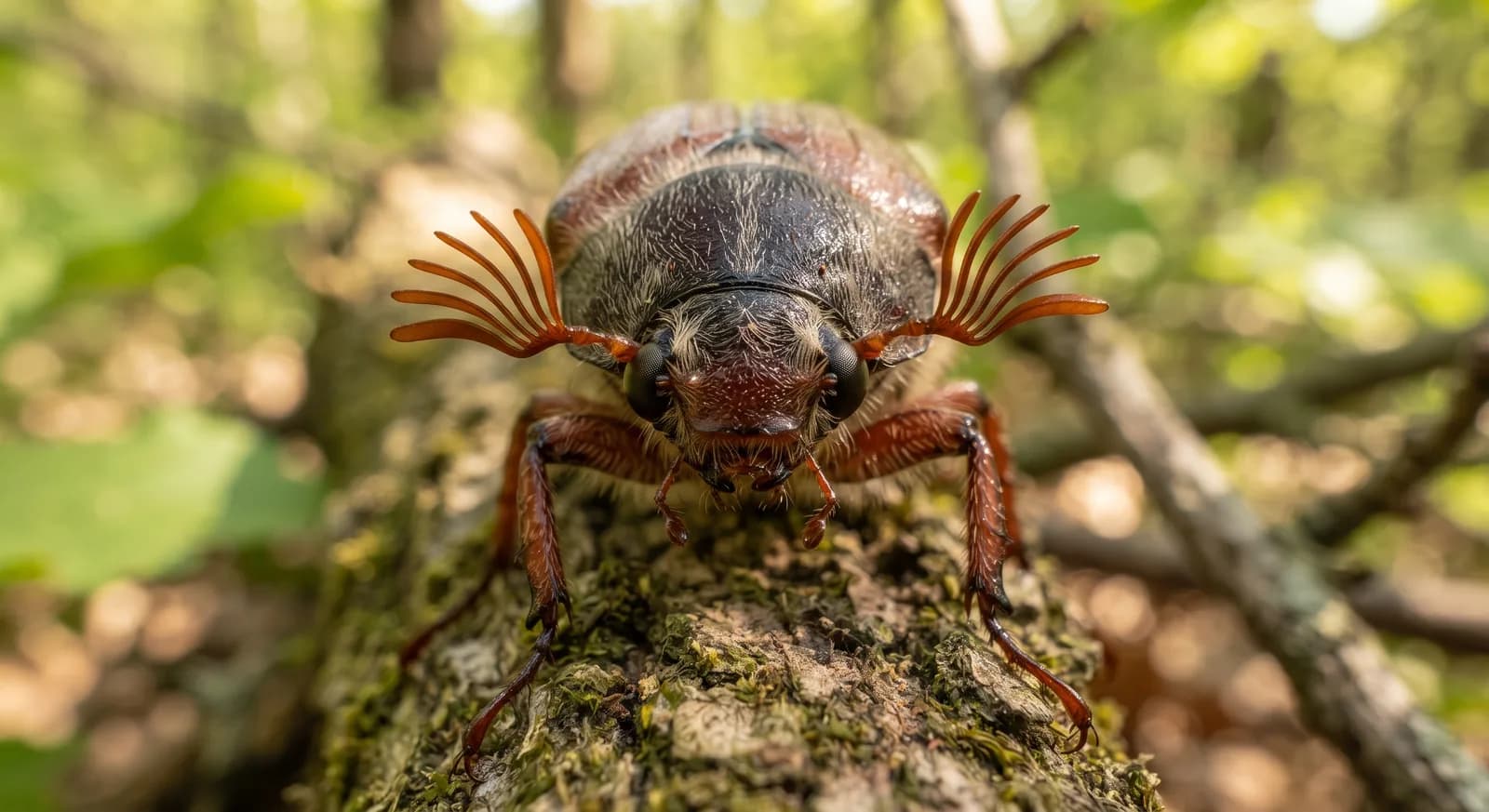
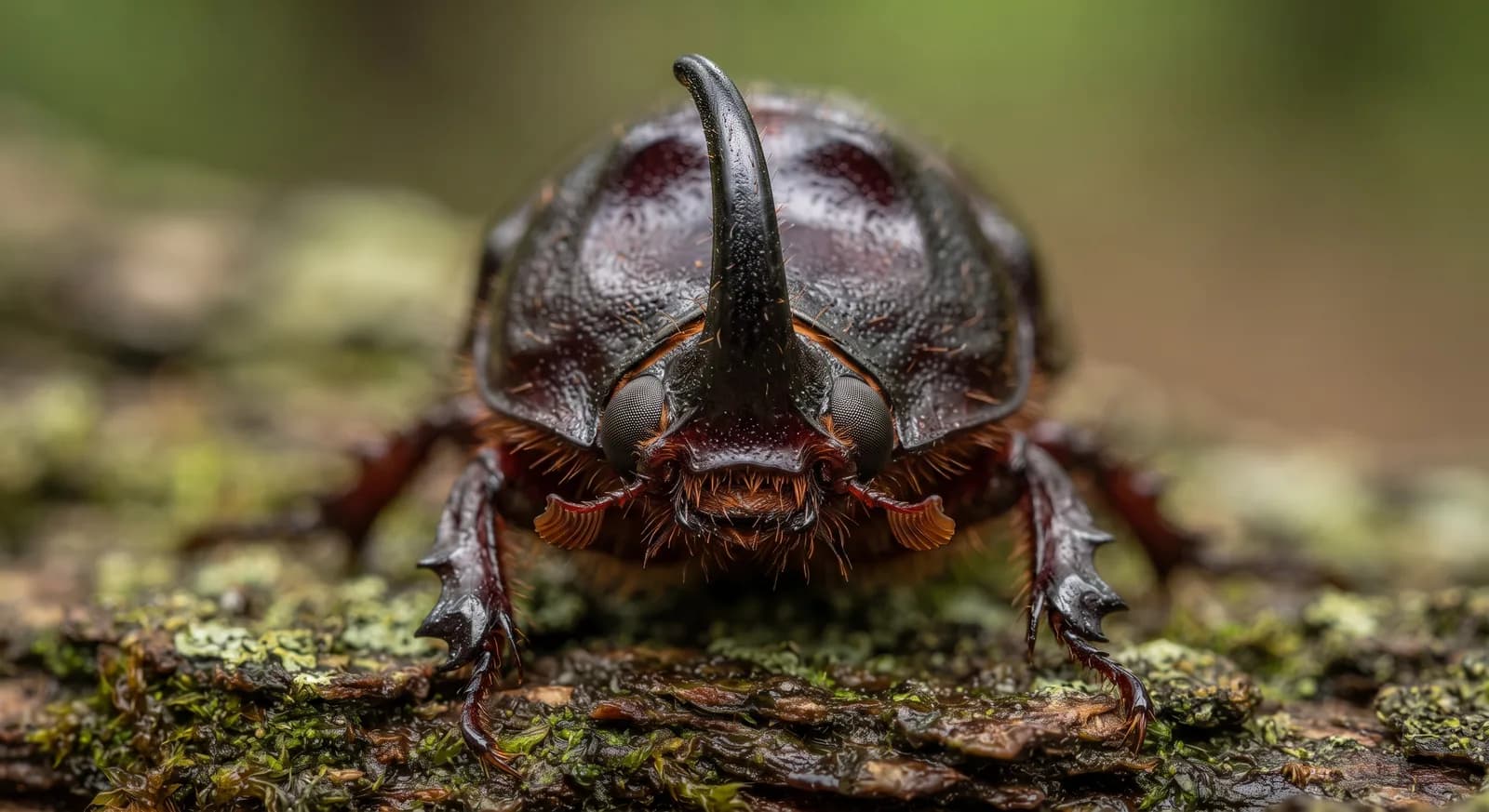
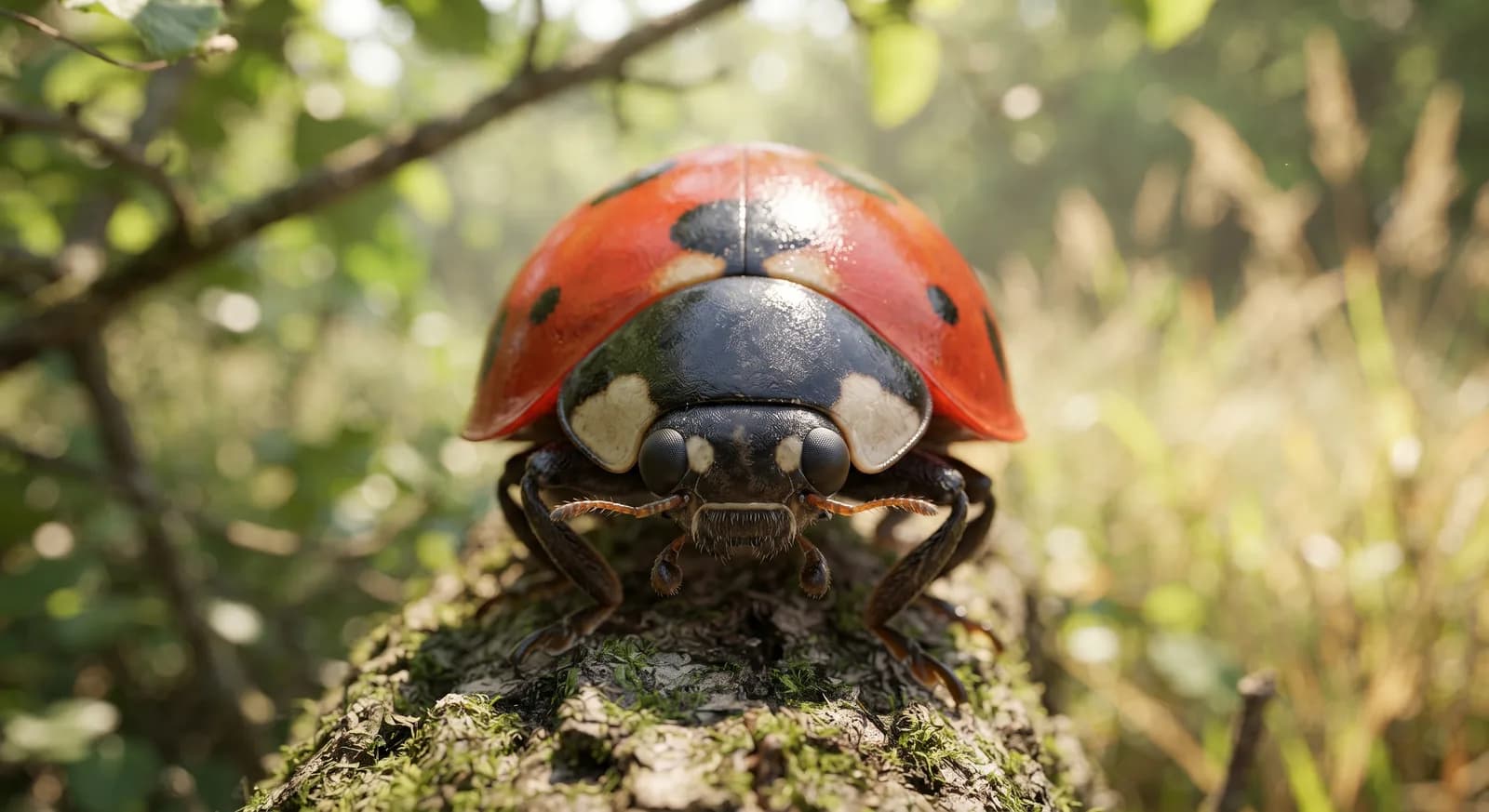
AI-generated images: illustrations, not photographs.

Fun facts

  • GeneralA metallic green beetle, very common on roses and elder blossom.
  • It flies with its elytra closed, pushing its membranous wings out through side grooves, something very few beetles do and that gives it a fast, noisy flight.
  • As a defence it excretes uric acid and formic acid from the anal cavity, which give it a smell its predators find unpleasant.
  • Its mandibles are reduced: it cannot chew as carnivorous beetles do and is limited to pollen, nectar, petals and soft fruit.
  • Its metallic green is not a pigment but structural colour: the cuticle is made up of layers of chitin arranged in a helix that reflect light selectively.
  • And there is a striking optical detail: it reflects left-handed circularly polarised light, a property that is vanishingly rare in nature and well understood only in this group of beetles. Whether it has a biological function or is a by-product of the structure is still debated.
  • It flies without opening its elytra. Unlike almost all beetles, it has a lateral notch that lets it slip its wings out while keeping the elytra closed, giving it a fast, stable flight more like a bumblebee's.
  • Its larva is a useful decomposer: it lives in compost and rotten wood and speeds up the recycling of organic matter, so it is best not to remove it from compost bins.
  • The adult eats pollen, nectar and ripe fruit, and is an occasional pollinator.

Life cycle and biology

Skeleton type
Invertebrate - chitin exoskeleton (insect)
Habitat and environment
Gardens, flowery meadows and woodland edges
Litter / clutch size
The female lays her eggs in decaying organic matter and then dies. The larvae overwinter in the same place where they fed and pupate in June or July

Sources consulted: Natural History Museum (Londres) · Fauna Europaea · Asturnatura · Società Entomologica Italiana · El medi natural del Bages i del Moianès

Where to find it

Best time: From April to September, mainly from May to July and on sunny days

Loading map…

Where to see it

Parks and dive sites where this species has been documented — showing 10 of 180.

Related species

Other species in the catalogue with the most in common with Rose Chafer — same habitat, park, country, tags or family.

Same taxonomic family
Shares a park

Keep exploring

Based on what we already know about rose chafer.

Share an experience, a fun fact or a tip for seeing the rose chafer.
See full glossary
This page in other languages: Español · Deutsch · Français · Português · Italiano

The pins mark the parks where its presence is documented.

See its range on the interactive map→
Lake DistrictUnited Kingdom
CairngormsUnited Kingdom
Snowdonia (Eryri)United Kingdom
KillarneyIreland
Swiss National ParkSwitzerland
Gran ParadisoItaly
VanoiseFrance
Hohe TauernAustria
BerchtesgadenGermany
Stelvio (Stilfserjoch)Italy
See all 180 parks
Sacred ScarabNot Evaluated

Sacred Scarab

Scarabaeus sacer

Not Evaluated

Bull-headed Dung Beetle

Onthophagus taurus

Common CockchaferNot Evaluated

Common Cockchafer

Melolontha melolontha

European Rhinoceros BeetleNot Evaluated

European Rhinoceros Beetle

Oryctes nasicornis

Not Evaluated

Japanese Beetle

Popillia japonica

Seven-spotted Lady BeetleNot Evaluated

Seven-spotted Lady Beetle

Coccinella septempunctata

CountriesSpain
ParksLake DistrictUnited Kingdom
TagsHerbivore
Herbivore
Diurnal
Solitary
Insect
Grassland

Europe40

Asia5

Spain
Italy
Poland
United Kingdom
Germany
Greece
Albania
Andorra
Austria
Belarus
Belgium
Bosnia and Herzegovina
Bulgaria
Croatia
Czechia
Denmark
Estonia
Finland
France
Germany
Greece
Hungary
Ireland
Italy
Kosovo
Latvia
Liechtenstein
Lithuania
Luxembourg
Moldova
Montenegro
Netherlands
North Macedonia
Norway
Poland
Portugal
Romania
San Marino
Serbia
Slovakia
Slovenia
Spain
Sweden
Switzerland
Ukraine
United Kingdom
Armenia
Azerbaijan
Georgia
Russia
Türkiye