Vulnerable
Shoebill
Balaeniceps rex
Africa
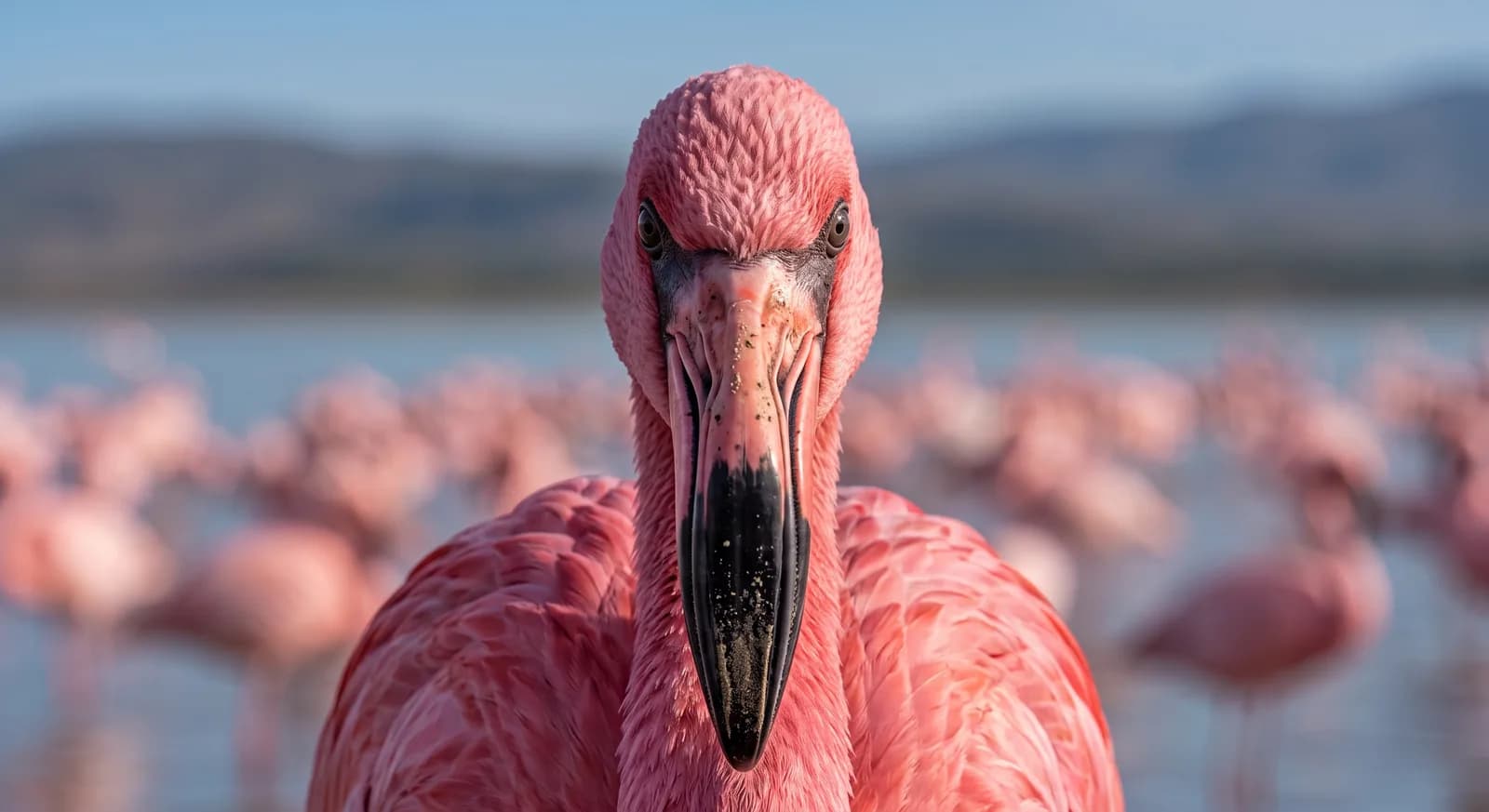
Ethiopia is the roof of Africa: an enormous plateau split in two by the Great Rift Valley and crowned by massifs above four thousand metres, such as Simien and Bale. That altitude creates ecological islands isolated from the rest of the continent, with Afroalpine moorland of giant lobelias and tree heathers, home to a fauna that exists nowhere else. Along the floor of the Rift are strung fresh and salt lakes with flamingos, pelicans and an abundant birdlife, and in the northeast the Danakil depression drops to more than a hundred metres below sea level, with acid springs and salt flats where only extremophile microorganisms thrive. To the southwest, the humid forests of Kaffa keep the wild coffee plants from which all the world's arabica coffee descends.
National animal: The Abyssinian lion, historic symbol of the country and imperial emblem
The gelada is the only primate in the world that feeds almost exclusively on grass: it spends the day sitting on the grasslands of the Simien cliffs pulling up blades with its fingers, in herds that can gather several hundred individuals. It sleeps on the ledges of the vertical walls to escape predators, and the males display a bare red patch on the chest that has earned them the nickname of bleeding-heart baboons.
The Ethiopian wolf is the most endangered canid in the world, with fewer than five hundred animals spread across a handful of mountains and hit by rabies outbreaks transmitted by domestic dogs. The walia ibex, exclusive to Simien, has recovered from critical lows.
Simien year-round for geladas and walia ibex. The Sanetti plateau, in Bale, at dawn for the Ethiopian wolf. The Rift lakes between November and March for waterbirds.
211 species found
Based on what we already know about Ethiopia.