Skip to content
WAnimals
  • Map
  • Species
  • Parks
  • Diving
Log inCreate account
WAnimals

The guide for travellers and animal lovers: discover, plan and share your wild adventures around the world.

Discover wildlife

  • Species
  • Ecosystems
  • Glossary
  • Tags

Explore places

  • Map
  • Countries
  • Parks
  • Diving

Plan experiences

  • Guides

Learn

  • Blog

Resources

  • Help centre
  • Contact
  • Install the app

Follow us

Account

  • Log in
  • Create account

© 2026 WAnimals. All rights reserved.

About usHow we build our profilesTerms of servicePrivacyLegal notice
MapSpeciesParksDiving
  1. Home
  2. Species
  3. Spotted-necked Otter

One of the 8 otters on WAnimals

Spotted-necked Otter (Hydrictis maculicollis)

Mammals · Carnivora · Mustelidae

Spotted-necked Otter

Hydrictis maculicollis

Near Threatened

It could become threatened in the near future if current threats go unchecked.

Spotted something wrong?

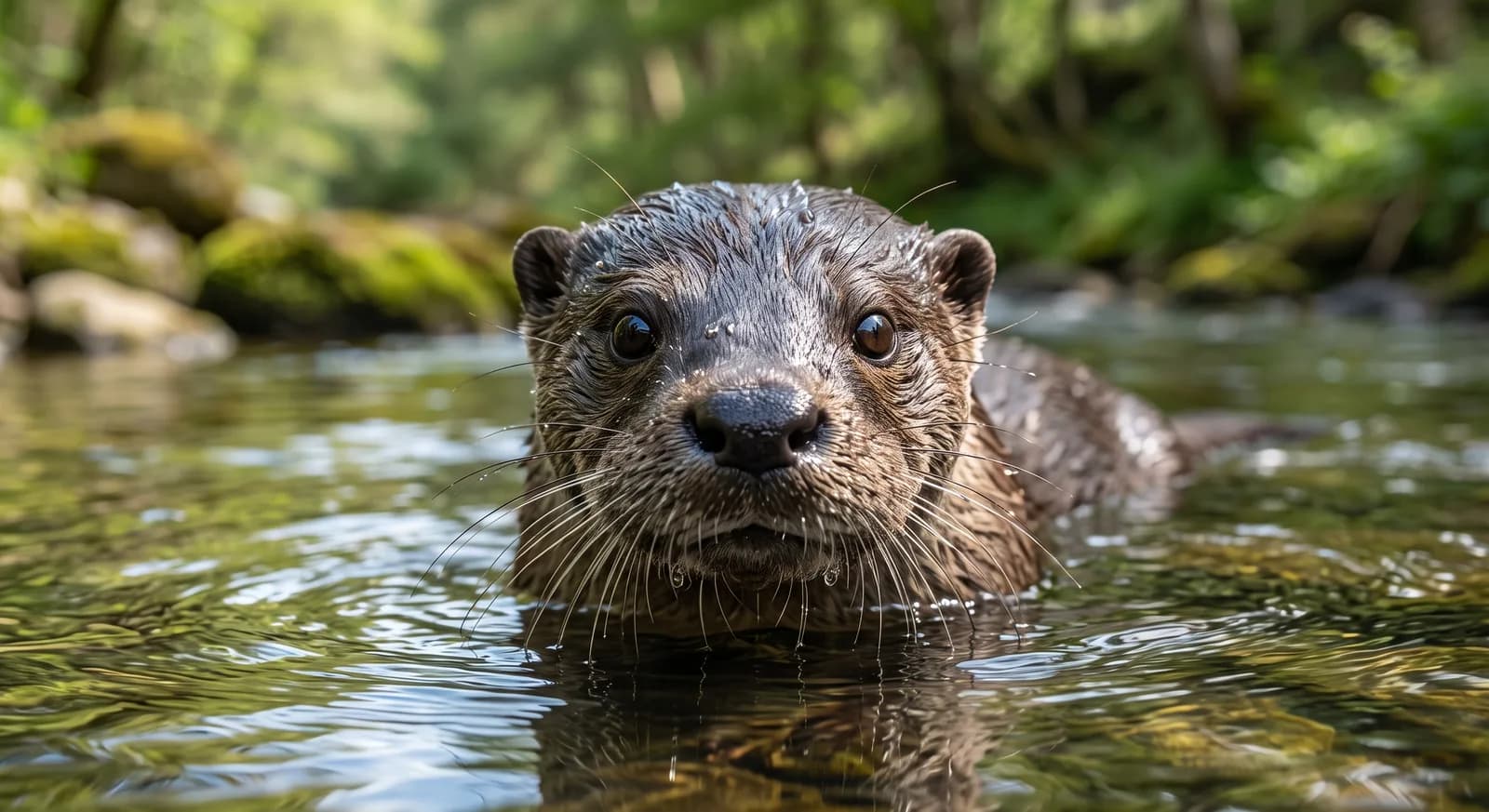
The spotted-necked otter is one of the three otters of sub-Saharan Africa and the most aquatic of them. It owes its name to an irregular cream mottling on the throat and chest, different in every individual. Unlike the African clawless otter, which gropes with its hands, this one chases fish by swimming and depends on clean, clear, permanent water, which makes it a good indicator of river condition. It lives in small groups and is mainly diurnal.

Weight

3 kg – 6.5 kg

Size

57 cm – 76 cm

Life expectancy

12 years
Diet

Carnivore

Feeds mainly on other animals.

Activity

Diurnal

Active mainly during the day.

Sighting difficulty

Moderate

Freshwater
14countries51parks28same family

AI-generated images: illustrations, not photographs.

Fun facts

  • The mottling on its throat is unique to each individual, like a fingerprint, and researchers photograph it to identify animals without catching them.
  • It is highly demanding about water quality: it disappears from turbid or polluted rivers even where fish remain, so its presence certifies a clean, well-preserved river.

Life cycle and biology

Skeleton type
Vertebrate - internal bony skeleton (mammal)
Habitat and environment
Rivers, lakes and wetlands of clean, permanent water in sub-Saharan Africa
Sexual maturity
2.3 years
Gestation / incubation
2 months
Litter / clutch size
2

Sources consulted: https://es.wikipedia.org/wiki/Hydrictis_maculicollis

Where to find it

Loading map…

The pins mark the parks where its presence is documented.

Where to see it

Parks and dive sites where this species has been documented — showing 10 of 51.

Related species

Other species in the catalogue with the most in common with Spotted-necked Otter — same habitat, park, country, tags or family.

Same taxonomic family
Shares a park
Shares a park
Same taxonomic family
Shares a park
Same taxonomic family

Keep exploring

Based on what we already know about spotted-necked otter.

Comments

Share an experience, a fun fact or a tip for seeing the spotted-necked otter.

Be the first to comment.

See full glossary
This page in other languages: Español · Deutsch · Français · Português · Italiano
See its range on the interactive map→
Serengeti National ParkTanzania
Maasai Mara National ReserveKenya
Kruger National ParkSouth Africa
NgorongoroTanzania
AmboseliKenya
TsavoKenya
Lake NakuruKenya
HwangeZimbabwe
South LuangwaZambia
GorongosaMozambique
See all 51 parks
ZorillaLeast Concern

Zorilla

Ictonyx striatus

Near Threatened

Southern Lechwe

Kobus leche

PukuNear Threatened

Puku

Kobus vardonii

Honey BadgerLeast Concern

Honey Badger

Mellivora capensis

Bull SharkNear Threatened

Bull Shark

Carcharhinus leucas

European OtterNear Threatened

European Otter

Lutra lutra

CountriesTanzania
ParksSerengeti National ParkTanzania
TagsCarnivore
Carnivore
Diurnal
Near Threatened
Freshwater
Mammal
Tanzania
Kenya
Uganda
South Africa
Malawi
Mozambique
Angola
Cameroon
Democratic Republic of the Congo
Ethiopia
Ghana
Kenya
Malawi
Mozambique
Nigeria
South Africa
Tanzania
Uganda
Zambia
Zimbabwe