Mammals · Carnivora · Mustelidae
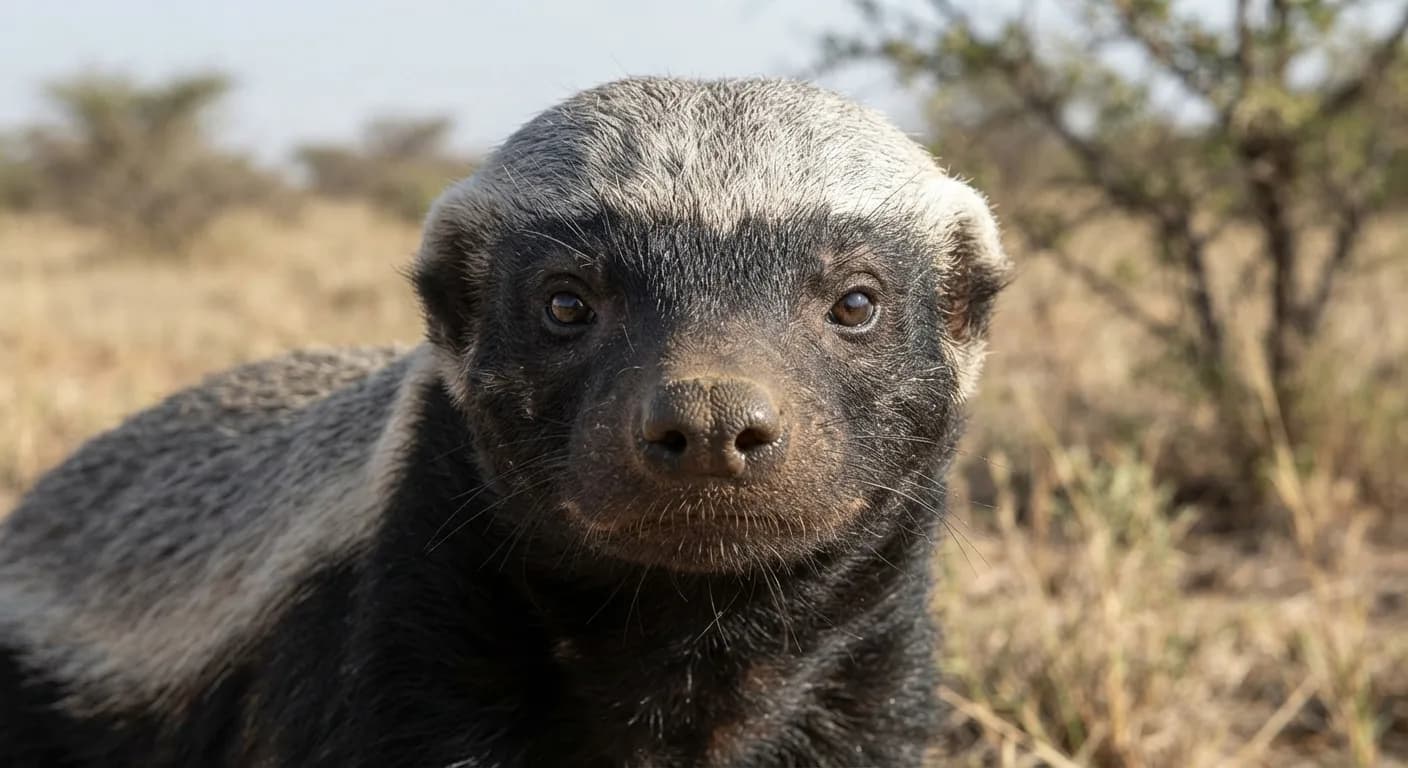
Mellivora capensis
The species is abundant and widely distributed; it faces no significant short-term risk.
It is famous for its remarkable resistance to snake venom and for being extraordinarily aggressive despite its modest size. Its loose, thick skin lets it twist round inside it to bite an attacker that has it by the neck.
Weight
6 kg – 16 kg
Size
60 cm – 77 cm
Life expectancy
15 years
Diet
Omnivore
Combines animal and plant food depending on availability.
Activity
Nocturnal
Active mainly at night.
Social structure
Solitary
Lives and hunts alone, joining others only to breed.
Sighting difficulty
Easy
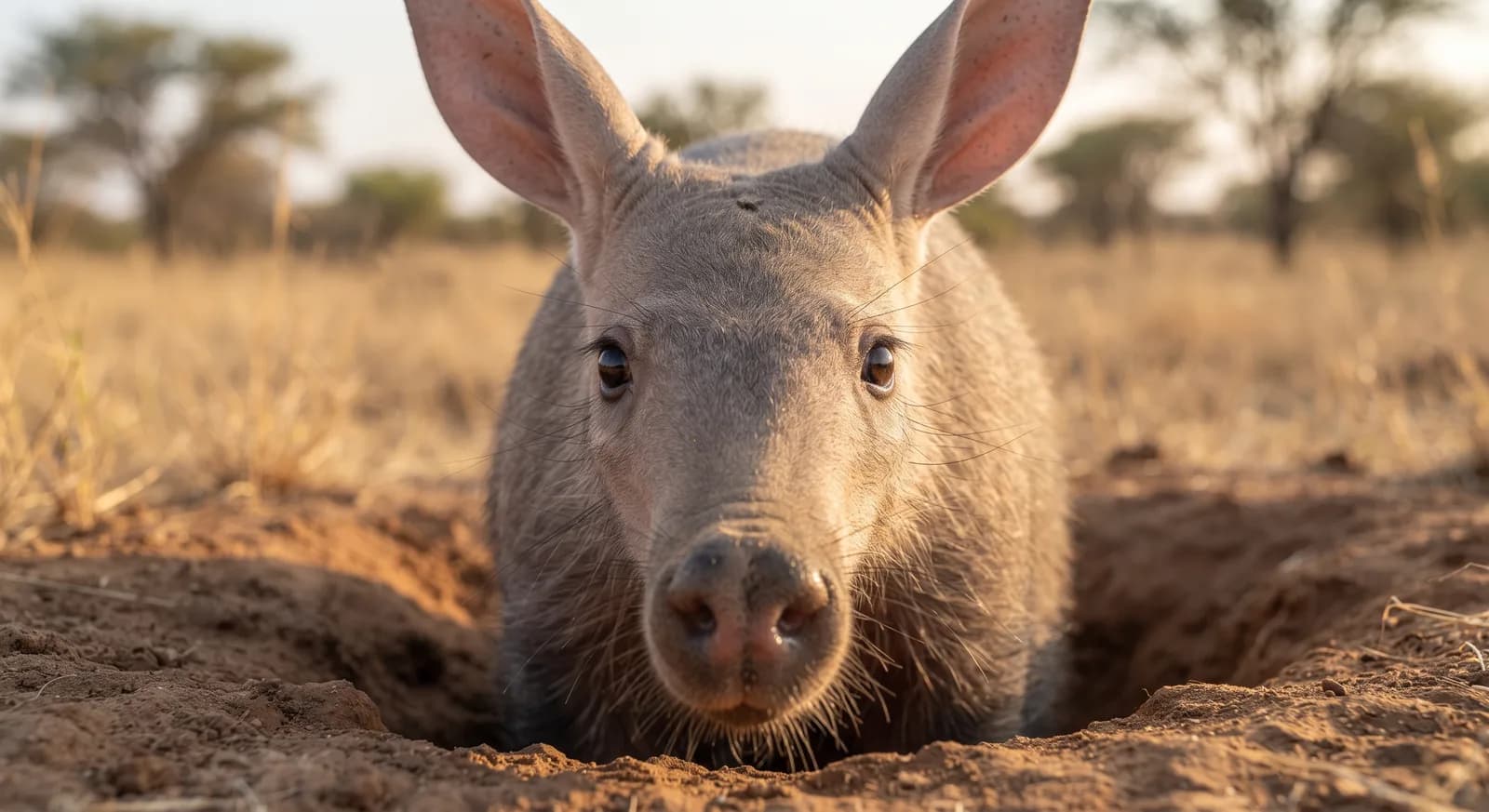
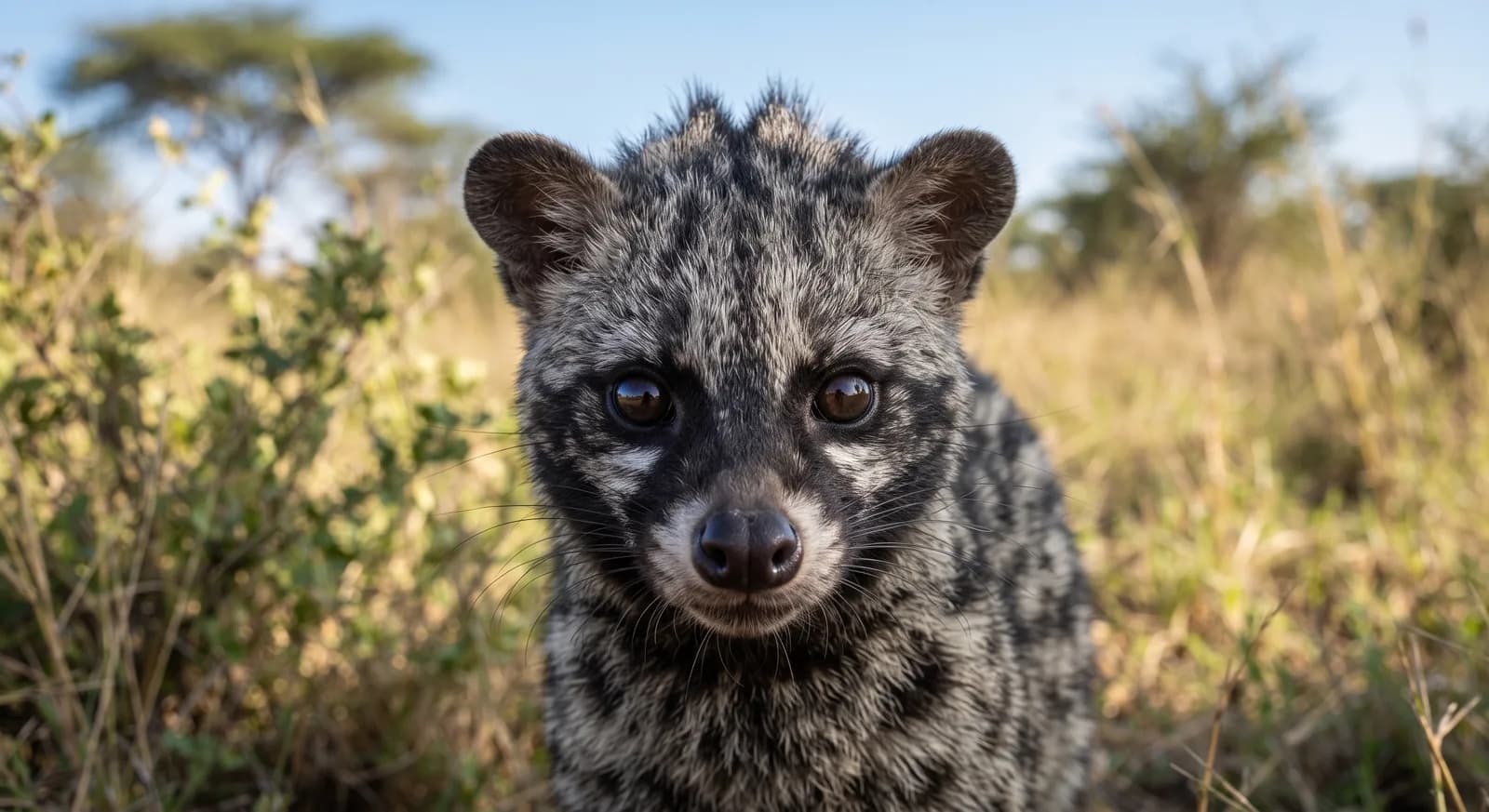
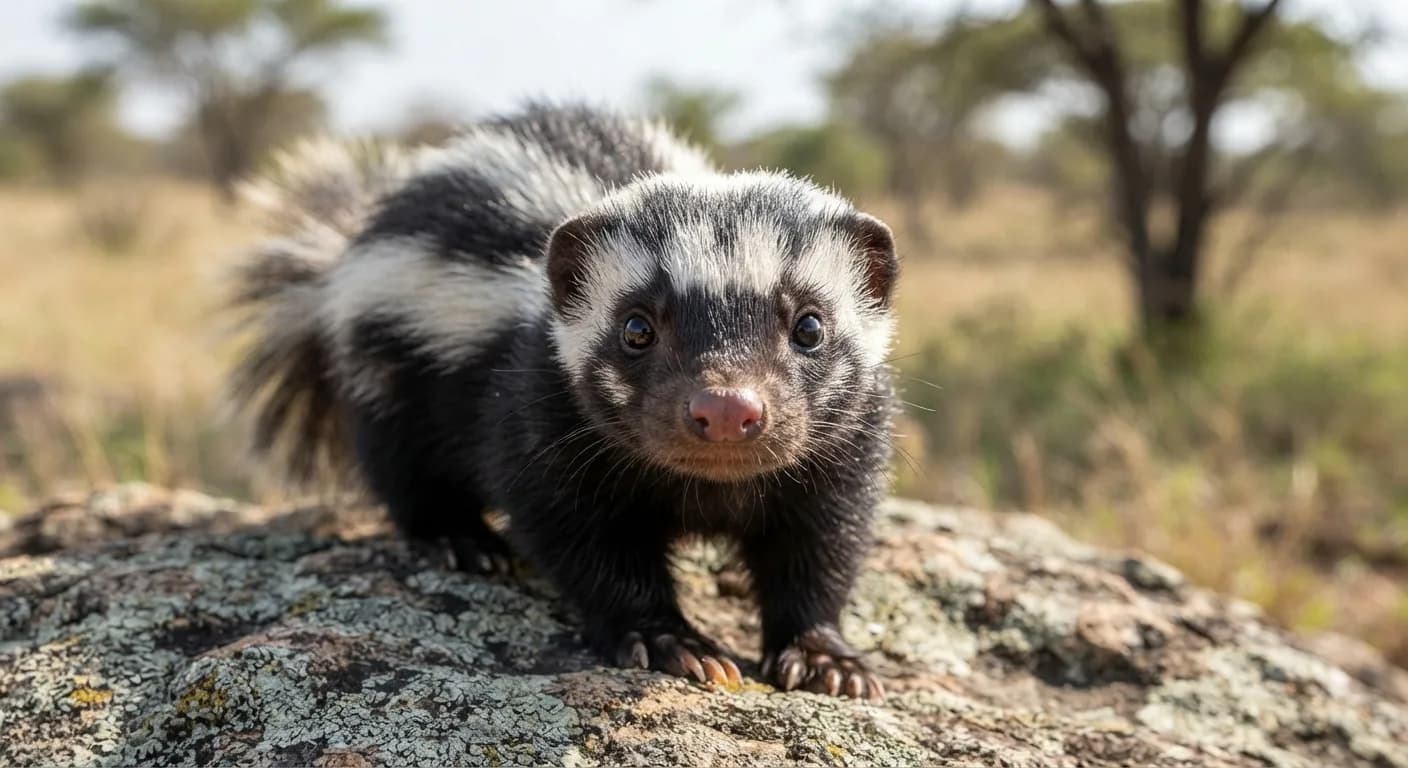
AI-generated images: illustrations, not photographs.
Sources consulted: AnAge; ResearchGate; Wikipedia; SDZWA Library Fact Sheet; Animal Diversity Web
Best time: All year round in Africa, the Middle East and southern Asia, mostly at night; where it is not persecuted it also comes out by day.
Parks and dive sites where this species has been documented — showing 10 of 16.
Other species in the catalogue with the most in common with Honey Badger — same habitat, park, country, tags or family.
Based on what we already know about honey badger.
Share an experience, a fun fact or a tip for seeing the honey badger.
Be the first to comment.
The pins mark the parks where its presence is documented.