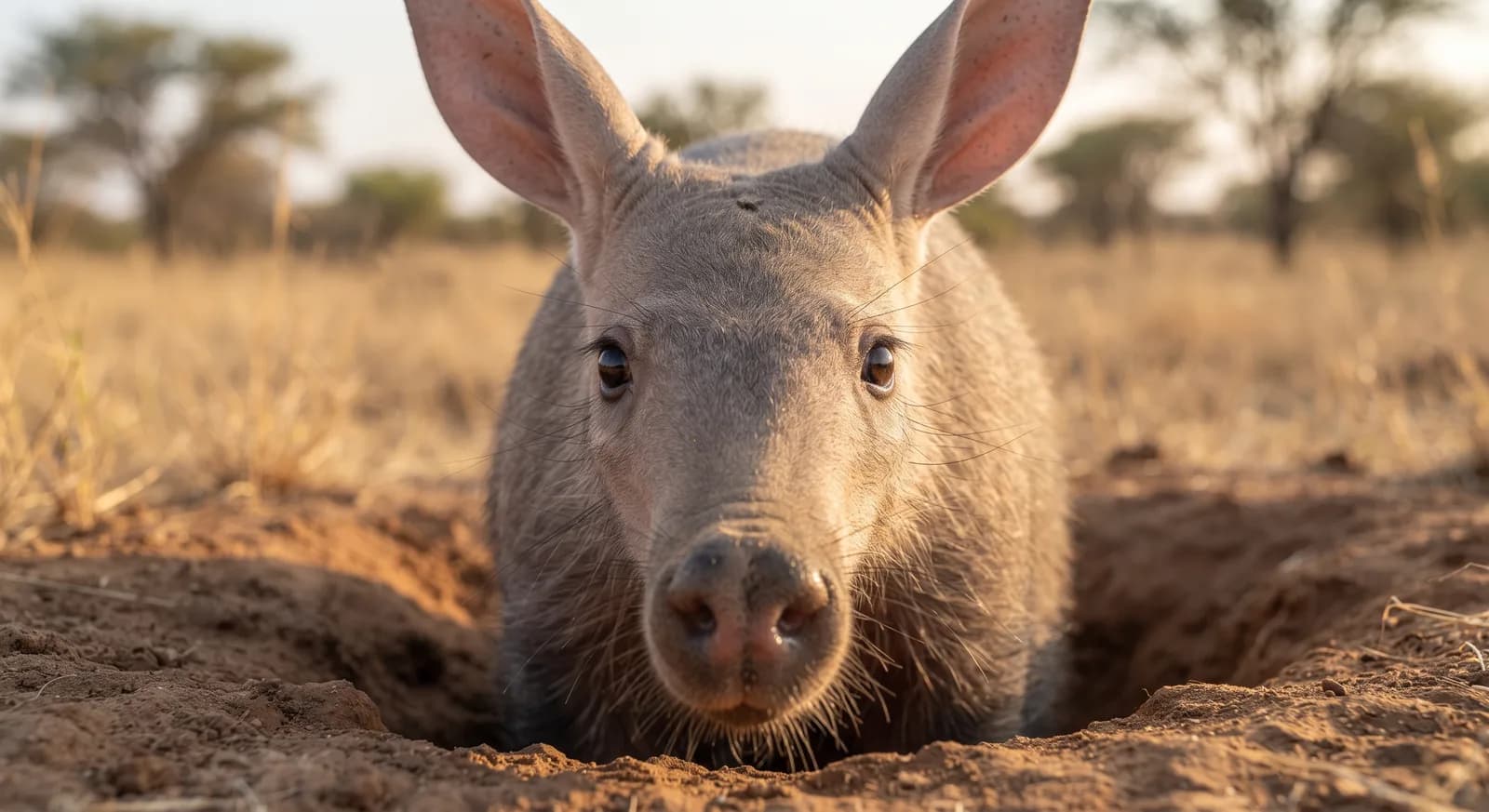
Mammals · Tubulidentata · Orycteropodidae
Orycteropus afer
The species is abundant and widely distributed; it faces no significant short-term risk.
Its evolutionary lineage is so distinctive that it makes up an order of mammals all of its own (Tubulidentata), of which it is the only living member.
Weight
39 kg – 82 kg
Size
1.1 m – 2.2 m
Life expectancy
18 years
Diet
Insectivore
Feeds mainly on insects and other invertebrates.
Activity
Nocturnal
Active mainly at night.
Social structure
Solitary
Lives and hunts alone, joining others only to breed.
Sighting difficulty
Easy
AI-generated images: illustrations, not photographs.
Sources consulted: AnAge (genomics.senescence.info); SANBI; Nature Table (WordPress); African Wildlife Foundation; A-Z Animals; Animal Diversity Web; Animalia.bio; AnimalHub
Best time: All year round, but only at night; it is easily detected by its large burrows and by termite mounds torn open with its claws.
Parks and dive sites where this species has been documented — showing 10 of 11.
Other species in the catalogue with the most in common with Aardvark — same habitat, park, country, tags or family.
Based on what we already know about aardvark.
Share an experience, a fun fact or a tip for seeing the aardvark.
Be the first to comment.
The pins mark the parks where its presence is documented.