One of the 6 tarantulas on WAnimals
Arachnids · Araneae · Theraphosidae
Indian Ornamental
Poecilotheria regalis
The species is abundant and widely distributed; it faces no significant short-term risk. See full glossary
The Indian ornamental tree spider, or simply the Indian ornamental, is a spider belonging to the family Theraphosidae (the tarantulas). It is a fairly large species, with legs that can reach a span of 18 centimetres.
Size
up to 18 cm
Social structure
Solitary
Lives and hunts alone, joining others only to breed.
Sighting difficulty
Easy
Fun facts
- GeneralArboreal and very fast; its venom causes severe cramps though it is not deadly.
- It is arboreal and catches prey on the wing: it seizes and paralyses flying insects in mid-air, which is unusual for a tarantula.
- Every member of its genus carries an elaborate fractal pattern on the abdomen. The name comes from the Greek poikilos, spotted, and therion, wild beast; regalis means royal.
- It can live communally when the hollows available per tree are scarce, although it is a highly defensive species.
- Its leg span sometimes exceeds 18 cm.
- Its venom is medically significant: it causes severe cramps and muscle pain and there is no antivenom. A 2023 study documented that it damages skeletal muscle directly.
- The juveniles are ground-dwelling and dig shallow burrows before taking to the trees.
Life cycle & biology
- Skeleton type
- Invertebrate - chitin exoskeleton (arachnid)
- Habitat & environment
- Dry deciduous forest; tree hollows
Sources consulted: https://es.wikipedia.org/wiki/Poecilotheria_regalis
Where to find it
See its range on the interactive mapWhere to watch it
Parks and dive sites where this species has been documented.
Related species
Other species in the catalogue with the most in common with Indian Ornamental — same habitat, park, country, tags or family.
Ceylon Caecilian
Ichthyophis glutinosus
 Least Concern
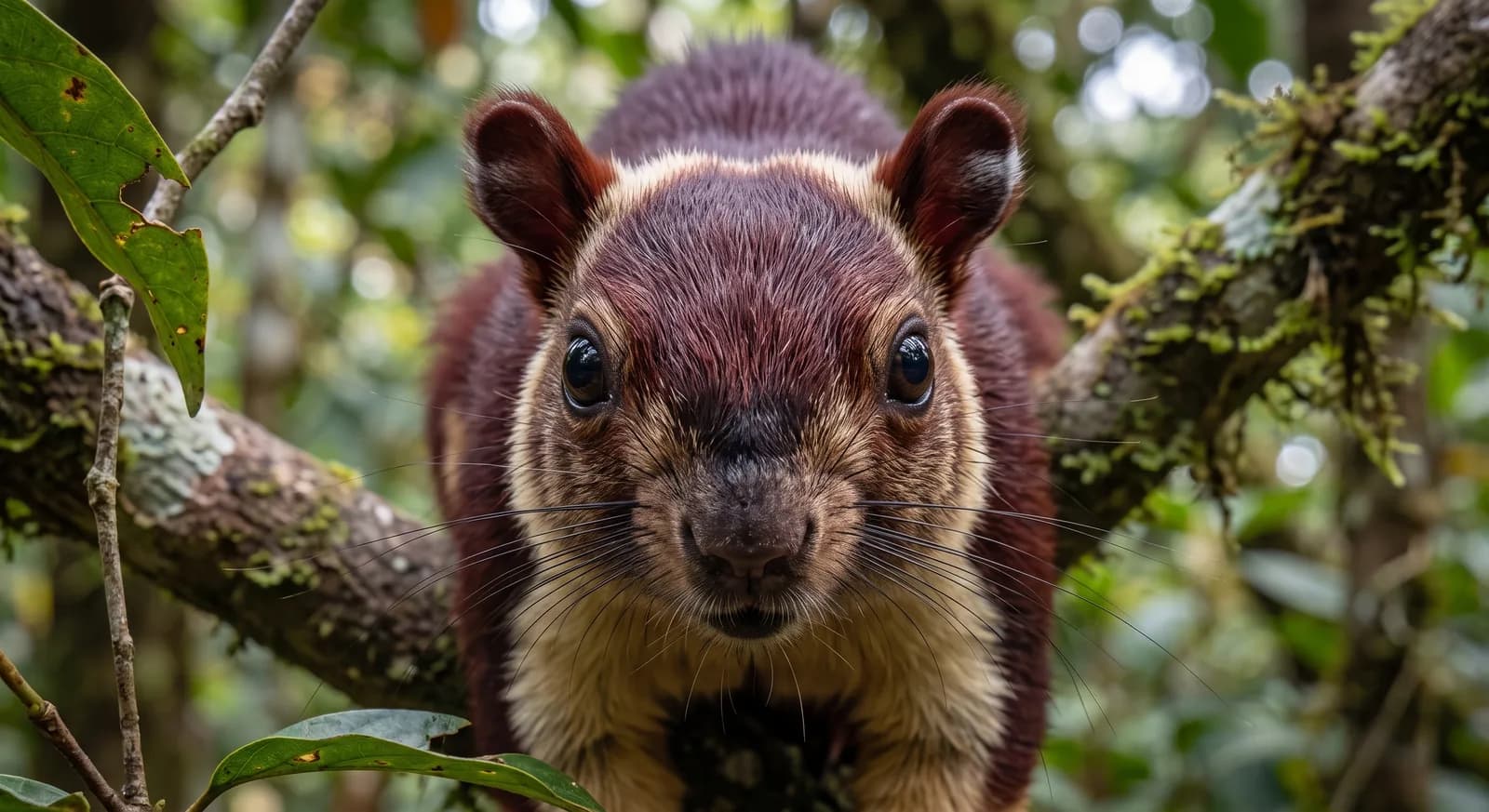
Indian Giant Squirrel
Ratufa indica
Western Russel’s Viper
Daboia russelii
Brown Fish-Owl
Ketupa zeylonensis
Indian Gray Mongoose
Urva edwardsii
Common Krait
Bungarus caeruleus
Keep exploring
Based on what we already know about indian ornamental.
Comments
Share an experience, a fun fact or a tip for seeing the indian ornamental.
Be the first to comment.