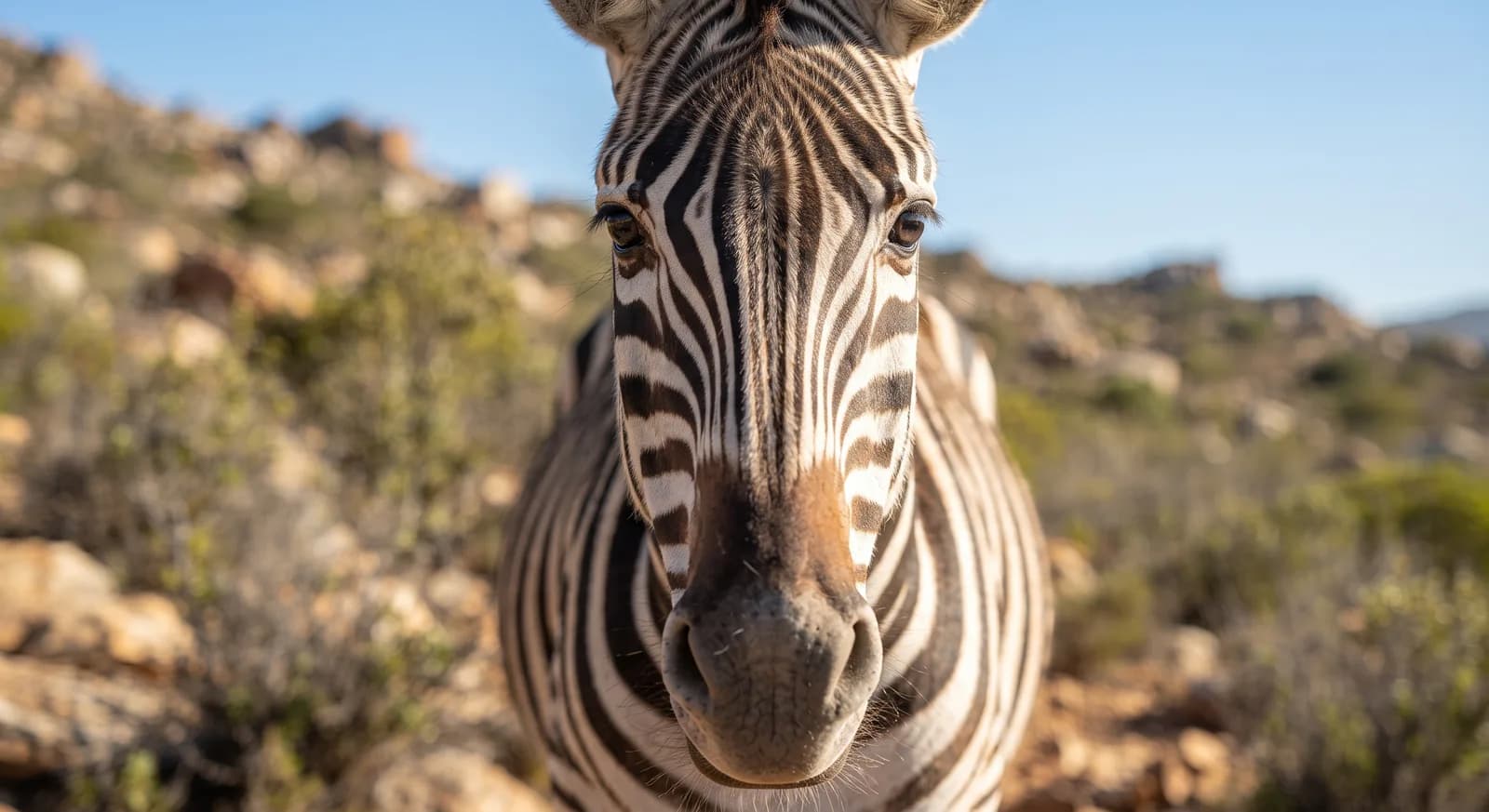
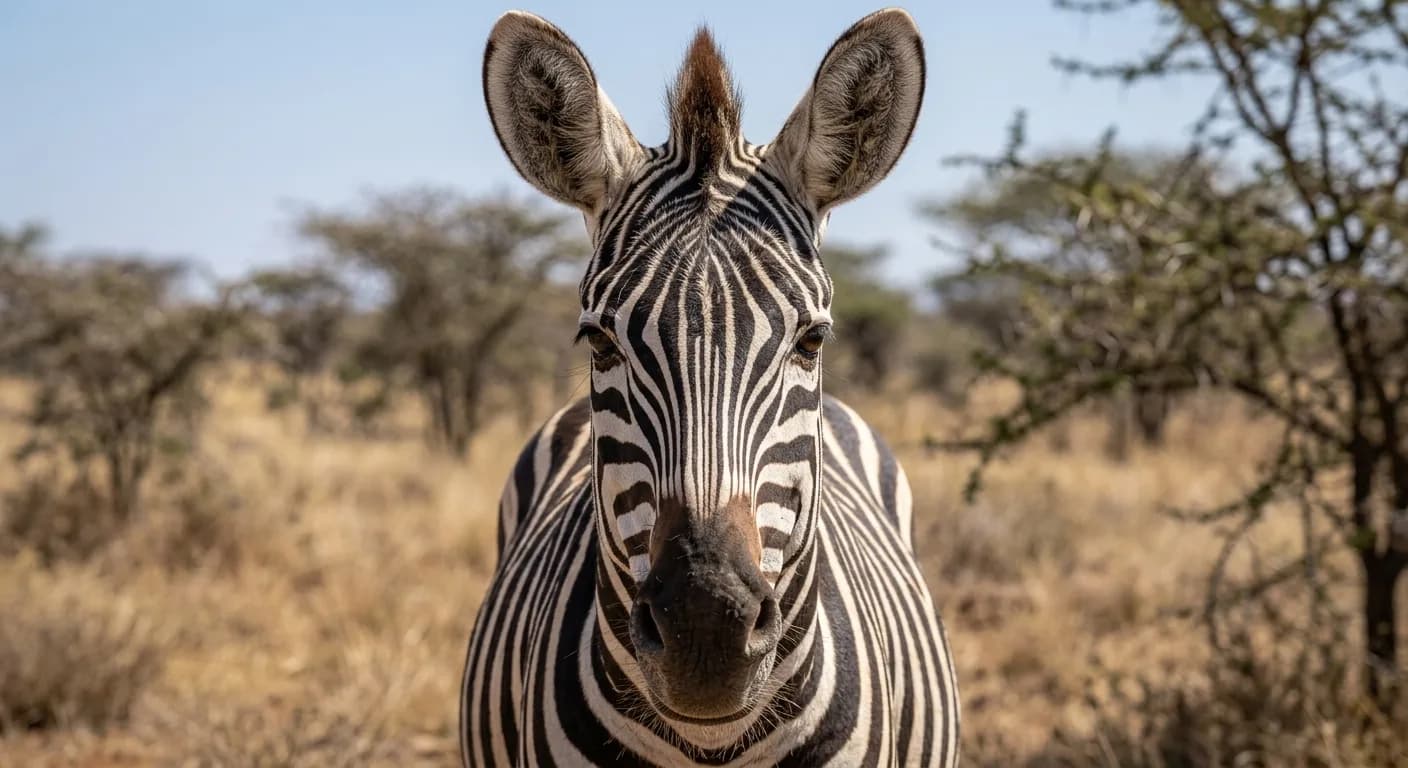
 Endangered
Grevy's Zebra
Equus grevyi
One of the 2 asses on WAnimals
Mammals · Perissodactyla · Equidae
Equus africanus
At extremely high risk of imminent extinction in the wild.
It is the wild ancestor of the domestic donkey, and only a few hundred pure animals remain in the wild. Dominant males hold territories of up to 23 km² marked with dung piles.
Weight
230 kg – 320 kg
Size
2 m – 2.5 m
Life expectancy
25 years
Diet
Herbivore
Feeds mainly on plants.
Activity
Crepuscular
Active mainly at dawn and dusk.
Social structure
Solitary
Lives and hunts alone, joining others only to breed.
Sighting difficulty
Very hard
Estimated population
Fewer than 200 mature individuals in the wild, split between Eritrea and Ethiopia.
Sources consulted: Ultimate Ungulate; AnAge; Animal Spot; Animal Diversity Web; DIY.org; Animalia.bio; Wikipedia
Best time: All year round in the deserts of Eritrea and Ethiopia; it is easiest to see at dawn and dusk, near waterholes.
Other species in the catalogue with the most in common with African Wild Ass — same habitat, park, country, tags or family.
The african wild ass is classified as critically endangered. Organisations such as the IUCN, WWF and the Wildlife Conservation Society work specifically on its conservation and that of its habitat; looking into their programmes is a good starting point if you want to get involved.
Based on what we already know about african wild ass.
Share an experience, a fun fact or a tip for seeing the african wild ass.
Be the first to comment.