Skip to content
WAnimals
  • Map
  • Species
  • Parks
  • Diving
Log inCreate account
WAnimals

The guide for travellers and animal lovers: discover, plan and share your wild adventures around the world.

Discover wildlife

  • Species
  • Ecosystems
  • Glossary
  • Tags

Explore places

  • Map
  • Countries
  • Parks
  • Diving

Plan experiences

  • Guides

Learn

  • Blog

Resources

  • Help centre
  • Contact
  • Install the app

Follow us

Account

  • Log in
  • Create account

© 2026 WAnimals. All rights reserved.

About usHow we build our profilesTerms of servicePrivacyLegal notice
MapSpeciesParksDiving
  1. Home
  2. Species
  3. Chital

One of the 12 deer on WAnimals
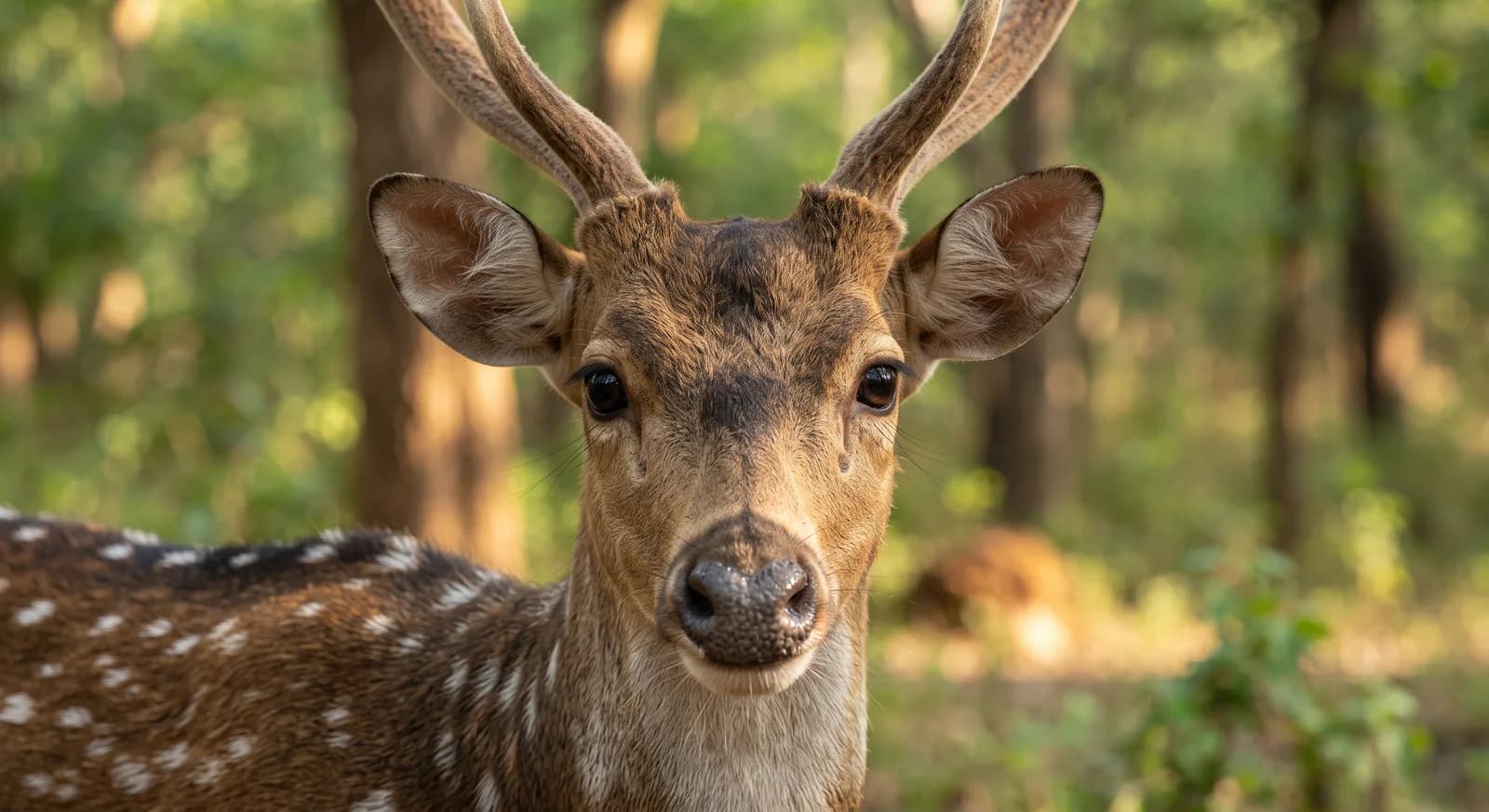
Chital (Axis axis)

Mammals · Artiodactyla · Cervidae

Chital

Axis axis

Least Concern

The species is abundant and widely distributed; it faces no significant short-term risk.

Spotted something wrong?

The chital, or axis deer, is the most abundant deer in India and retains its white spots throughout life, not only as a fawn. It lives in large herds in open woodland with clearings and is the main prey of the tiger and the leopard over much of its range. It maintains a close association with Hanuman langurs: it follows the monkey troops to eat the fruit they drop from the canopy, and in return makes use of their alarm calls, which pick up predators from above.

Weight

30 kg – 110 kg

Size

1.1 m – 1.6 m

Life expectancy

15 years

Diet

Herbivore

Feeds mainly on plants.

Activity

Diurnal

Active mainly during the day.

Sighting difficulty

Easy

Temperate forestGrassland
11countries21parks23same family

AI-generated images: illustrations, not photographs.

Fun facts

  • GeneralIt retains its spotted coat all its life, and is the Bengal tiger's main prey.
  • It follows the langurs through the forest to eat the fruit they drop, and in return benefits from the alarm calls the monkeys give from the canopy on seeing a tiger: an alliance between a primate and a deer that works both ways.
  • It is the deer that retains its spots for life: in most species the dappling belongs to the fawns alone and fades within the first year.

Life cycle and biology

Skeleton type
Vertebrate - internal bony skeleton (mammal)
Habitat and environment
Open deciduous forest with grassy clearings and riverside woodland of the Indian subcontinent
Sexual maturity
2.1 years
Gestation / incubation
7.4 months
Litter / clutch size
1.03 (average)

Sources consulted: https://es.wikipedia.org/wiki/Axis_axis

Where to find it

Loading map…

The pins mark the parks where its presence is documented.

Where to see it

Parks and dive sites where this species has been documented — showing 10 of 21.

Related species

Other species in the catalogue with the most in common with Chital — same habitat, park, country, tags or family.

Same taxonomic family

Keep exploring

Based on what we already know about chital.

Comments

Share an experience, a fun fact or a tip for seeing the chital.

Be the first to comment.

See full glossary
This page in other languages: Español · Deutsch · Français · Português · Italiano
See its range on the interactive map→
Chitwan National ParkNepal
SundarbansIndia
RanthamboreIndia
GirIndia
Jim CorbettIndia
YalaSri Lanka
Sundarbans Forest ReserveBangladesh
Keoladeo (Bharatpur)India
KanhaIndia
BandhavgarhIndia
See all 21 parks
Vulnerable

Barasingha

Rucervus duvaucelii

Hog DeerEndangered

Hog Deer

Axis porcinus

SambarVulnerable

Sambar

Rusa unicolor

Not Evaluated

Indian Muntjac

Muntiacus muntjak

White-Tailed DeerLeast Concern

White-Tailed Deer

Odocoileus virginianus

Least Concern

Roosevelt Elk

Cervus canadensis

CountriesIndia
ParksChitwan National ParkNepal
TagsHerbivore
Herbivore
Diurnal
Temperate forest
Grassland
Mammal

Asia7

South America2

North America1

Oceania1

India
Sri Lanka
Nepal
Bangladesh
Argentina
Australia
Bangladesh
Bhutan
India
Myanmar
Nepal
Pakistan
Sri Lanka
Argentina
Brazil
United States
Australia