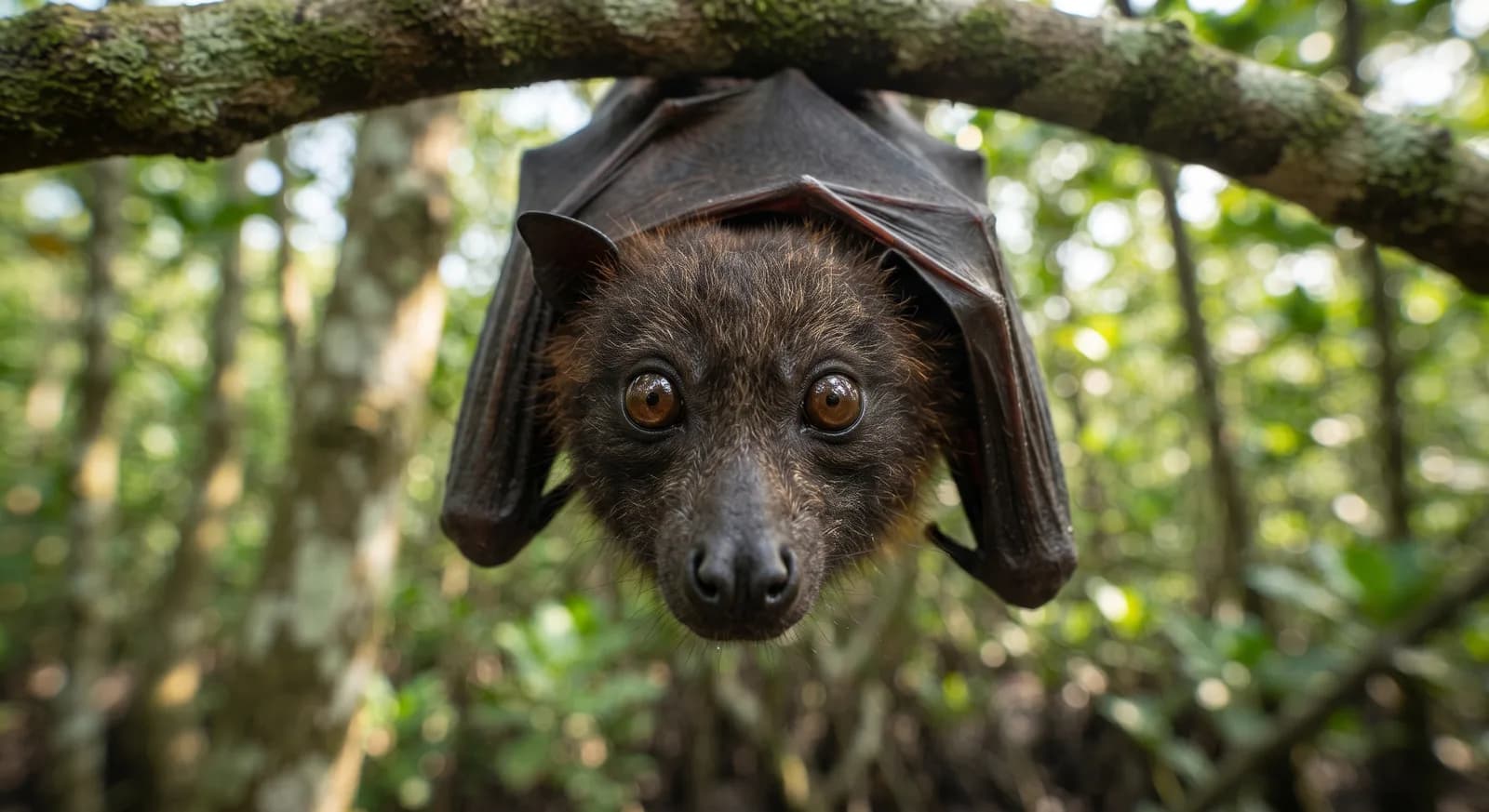
Least Concern
Black Flying Fox
Pteropus alecto
One of the 29 bats on WAnimals
Mammals · Chiroptera · Pteropodidae
Cynopterus sphinx
The species is abundant and widely distributed; it faces no significant short-term risk.
The greater short-nosed fruit bat is one of the commonest fruit bats in southern Asia and a regular inhabitant of gardens and plantations. It feeds on ripe fruit, nectar and pollen, and is an important pollinator of several plants of agricultural interest. Its most striking behaviour is tent building: it bites through the ribs of palm leaves or the stalks of fruit clusters until they fold over into a shelter under which a small group roosts.
Weight
30 g – 60 g
Size
9 cm – 12 cm
Life expectancy
8 years
Diet
Herbivore
Feeds mainly on plants.
Activity
Nocturnal
Active mainly at night.
Social structure
Colony
Lives in large concentrations, often for breeding reasons.
Sources consulted: IUCN Red List · Animal Diversity Web · Wikipedia (es)
Other species in the catalogue with the most in common with Greater Shortnosed Fruit Bat — same habitat, park, country, tags or family.
Based on what we already know about greater shortnosed fruit bat.