Skip to content
WAnimals
  • Map
  • Species
  • Parks
  • Diving
Log inCreate account
WAnimals

The guide for travellers and animal lovers: discover, plan and share your wild adventures around the world.

Discover wildlife

  • Species
  • Ecosystems
  • Glossary
  • Tags

Explore places

  • Map
  • Countries
  • Parks
  • Diving

Plan experiences

  • Guides

Learn

  • Blog

Resources

  • Help centre
  • Contact
  • Install the app

Follow us

Account

  • Log in
  • Create account

© 2026 WAnimals. All rights reserved.

About usHow we build our profilesTerms of servicePrivacyLegal notice
MapSpeciesParksDiving
  1. Home
  2. Species
  3. Western Russell's Viper

One of the 12 vipers on WAnimals
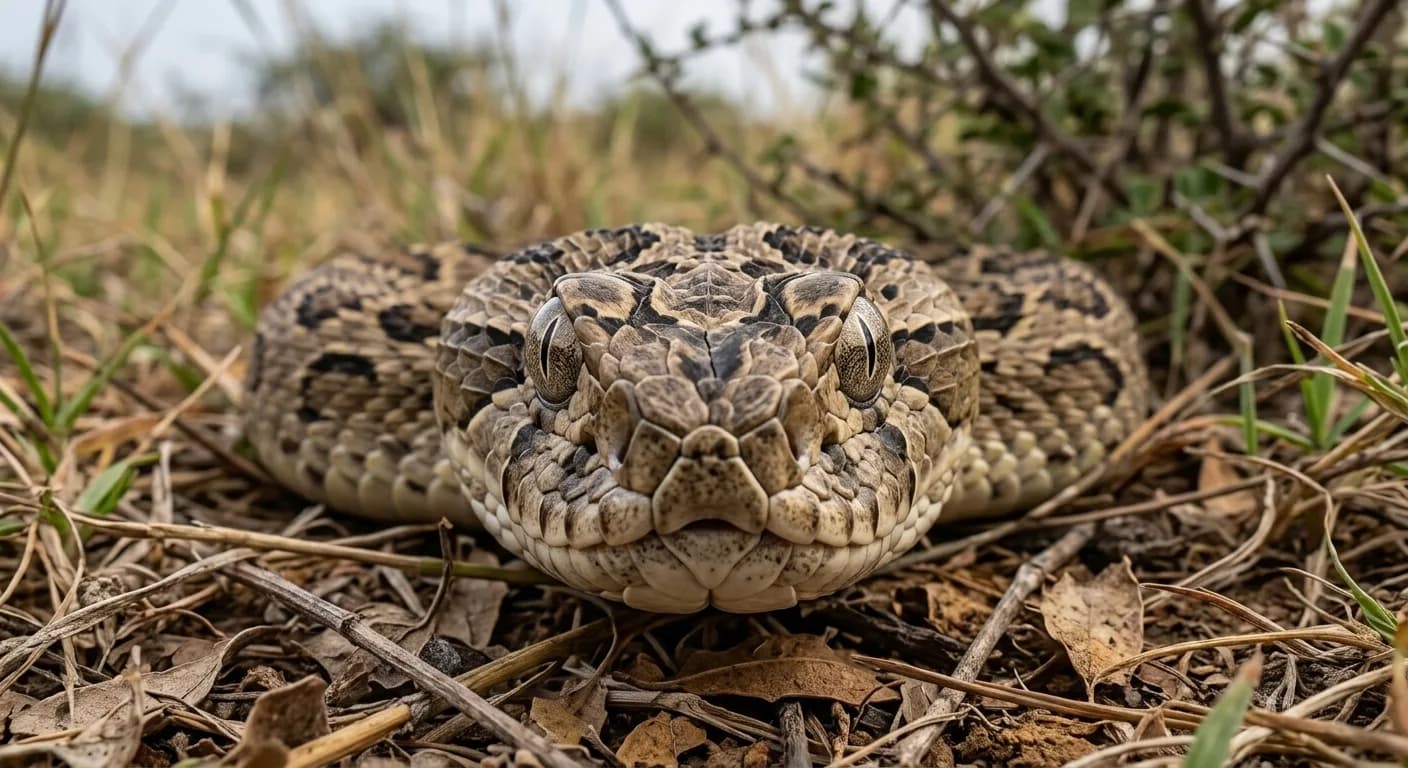
Western Russell's Viper (Daboia russelii)

Reptiles · Squamata · Viperidae

Western Russell's Viper

Daboia russelii

Least Concern

The species is abundant and widely distributed; it faces no significant short-term risk.

Spotted something wrong?

Russell's viper, also called the chain viper, the Indian Russell's viper, or the scissors snake, is a species of venomous viperid snake of the Old World, which lives in Asia across the Indian subcontinent; the former subspecies D. russelii siamensis is spread across most of South-East Asia, southern China and Taiwan. Daboia was, until recently, a monotypic genus. It is one of the "Big Four" venomous snakes of India. This species is responsible for most snakebite cases and deaths in the world because of how often it is found in places populated by humans. Its name was given in honour of Patrick Russell (1726-1805), a Scottish herpetologist, the first to describe many of the snakes of India; its generic name, daboia, comes from Hindi and means "that thing which lies hidden" or "the one that lurks".

Weight

1 kg – 3 kg

Size

1 m – 1.7 m
Life expectancy

15 years

Diet

Carnivore

Feeds mainly on other animals.

Activity

Nocturnal

Active mainly at night.

Social structure

Solitary

Lives and hunts alone, joining others only to breed.

Sighting difficulty

Easy

Temperate forestGrassland
12countries39parks22same family

AI-generated images: illustrations, not photographs.

Fun facts

  • It is one of the big four, the group of snakes responsible for most of the tens of thousands of deaths from snakebite each year on the Indian subcontinent, the region with the most snakebite incidents in the world.
  • Its venom can damage the pituitary gland permanently: some survivors develop a chronic endocrine syndrome, an effect that is very uncommon among snake venoms.
  • Its hiss is one of the loudest of any snake and can be heard several metres away: it is a clear warning that precedes the strike.

Life cycle and biology

Skeleton type
Vertebrate - internal bony skeleton (reptile)
Habitat and environment
Grassland, scrub, farmland and urban fringes of the Indian subcontinent and South-East Asia
Sexual maturity
3 years
Gestation / incubation
6 months of gestation
Litter / clutch size
25 live young

Sources consulted: https://es.wikipedia.org/wiki/Daboia_russelii

Where to find it

Loading map…

The pins mark the parks where its presence is documented.

Where to see it

Parks and dive sites where this species has been documented — showing 10 of 39.

Related species

Other species in the catalogue with the most in common with Western Russell's Viper — same habitat, park, country, tags or family.

Same taxonomic family
Shares a park
Shares a park
Shares a park
Shares a park
Shares a park

Keep exploring

Based on what we already know about western russell's viper.

Comments

Share an experience, a fun fact or a tip for seeing the western russell's viper.

Be the first to comment.

See full glossary
This page in other languages: Español · Deutsch · Français · Português · Italiano
See its range on the interactive map→
Chitwan National ParkNepal
SundarbansIndia
RanthamboreIndia
GirIndia
PeriyarIndia
Jim CorbettIndia
YalaSri Lanka
Khao YaiThailand
Keoladeo (Bharatpur)India
KanhaIndia
See all 39 parks
PhoorsaLeast Concern

Phoorsa

Echis carinatus

Least Concern

Greater False Vampire

Megaderma lyra

Red FoxLeast Concern

Red Fox

Vulpes vulpes

Least Concern

Banded Krait

Bungarus fasciatus

Least Concern

Common House Gecko

Hemidactylus frenatus

Least Concern

Ceylon Caecilian

Ichthyophis glutinosus

CountriesIndia
ParksChitwan National ParkNepal
TagsCarnivore
Carnivore
Nocturnal
Solitary
Reptile
Temperate forest
Grassland
India
Sri Lanka
Nepal
Pakistan
Thailand
Bangladesh
Bangladesh
Bhutan
Cambodia
China
India
Indonesia
Myanmar
Nepal
Pakistan
Sri Lanka
Taiwan
Thailand