One of the 5 armadillos on WAnimals
Mammals · Cingulata · Chlamyphoridae
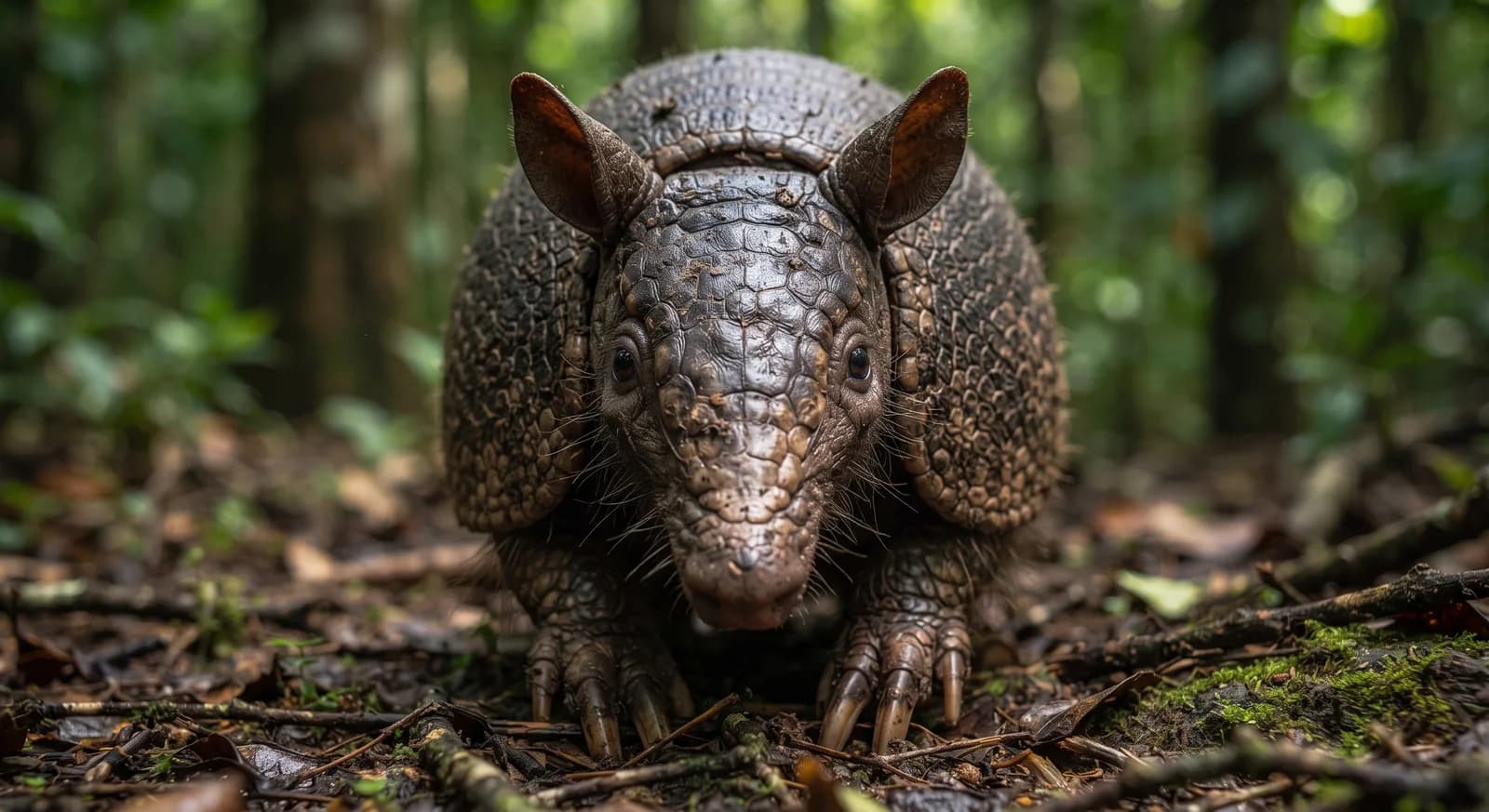
Yellow Armadillo
Euphractus sexcinctus
The species is abundant and widely distributed; it faces no significant short-term risk. See full glossary
Unlike most armadillos, which are strictly insect eaters, it is markedly omnivorous and opportunistic, taking carrion and a good deal of plant matter as well.
Weight
3.2 kg – 6.5 kg
Size
40 cm – 50 cm
Lifespan
10 years
Diet
Omnivore
Combines animal and plant food depending on availability.
Activity
Diurnal
Active mainly during the day.
Social structure
Solitary
Lives and hunts alone, joining others only to breed.
Sighting difficulty
Easy
Fun facts
- It is one of the more day-active armadillos rather than being strictly nocturnal.
- It eats insects, ants, carrion and plant matter.
- It lives in savannah, grassland and dry forest across much of South America.
Life cycle & biology
- Skeleton type
- Vertebrate - internal bony skeleton (mammal)
- Habitat & environment
- Savannah, grassland and dry forest across much of South America
- Birth weight
- Born with a soft shell that hardens over time
- Size at birth
- Born with a soft shell
- Gestation / incubation
- 60-64 days
- Litter / clutch size
- 1 to 3 young per litter
Sources consulted: Wikipedia (Six-banded armadillo)
Where to find it
See its range on the interactive mapBest time: All year round in the Cerrado and the Chaco, mostly by day: it is the most diurnal armadillo in South America.
Where to watch it
Parques y spots de buceo donde se ha documentado esta especie — se muestran 10 de 31 documentados.
Related species
Other species in the catalogue with the most in common with Yellow Armadillo — same habitat, park, country, tags or family.
Amazon Naked-tailed Armadillo
Cabassous unicinctus
Southern Three-banded Armadillo
Tolypeutes matacus
Pink Fairy Armadillo
Chlamyphorus truncatus
 Vulnerable
Giant Armadillo
Priodontes maximus
Large Hairy Armadillo
Chaetophractus villosus
Southern Tamandua
Tamandua tetradactyla
Keep exploring
Based on what we already know about yellow armadillo.
Comments
Share an experience, a fun fact or a tip for seeing the yellow armadillo.
Be the first to comment.