Species group · Bivalves
Clams
WAnimals has 6 species of clam, spread across 6 families (Arcticidae, Cardiidae, Mactridae, Myidae, Nuculanidae, Veneridae).
- 6 species
- 6 families
- 98 countries
- 112 parks
- Weight
- 340 kg
- Length
- 3 cm – 1.4 m
- Lifespan
- 10 – 400 years
Ranges calculated from the entries that record the figure, not from all 6.
All 6 species of clams on WAnimals
Each one has its own full entry. This group does not replace them: it brings them together.
 Critically Endangered
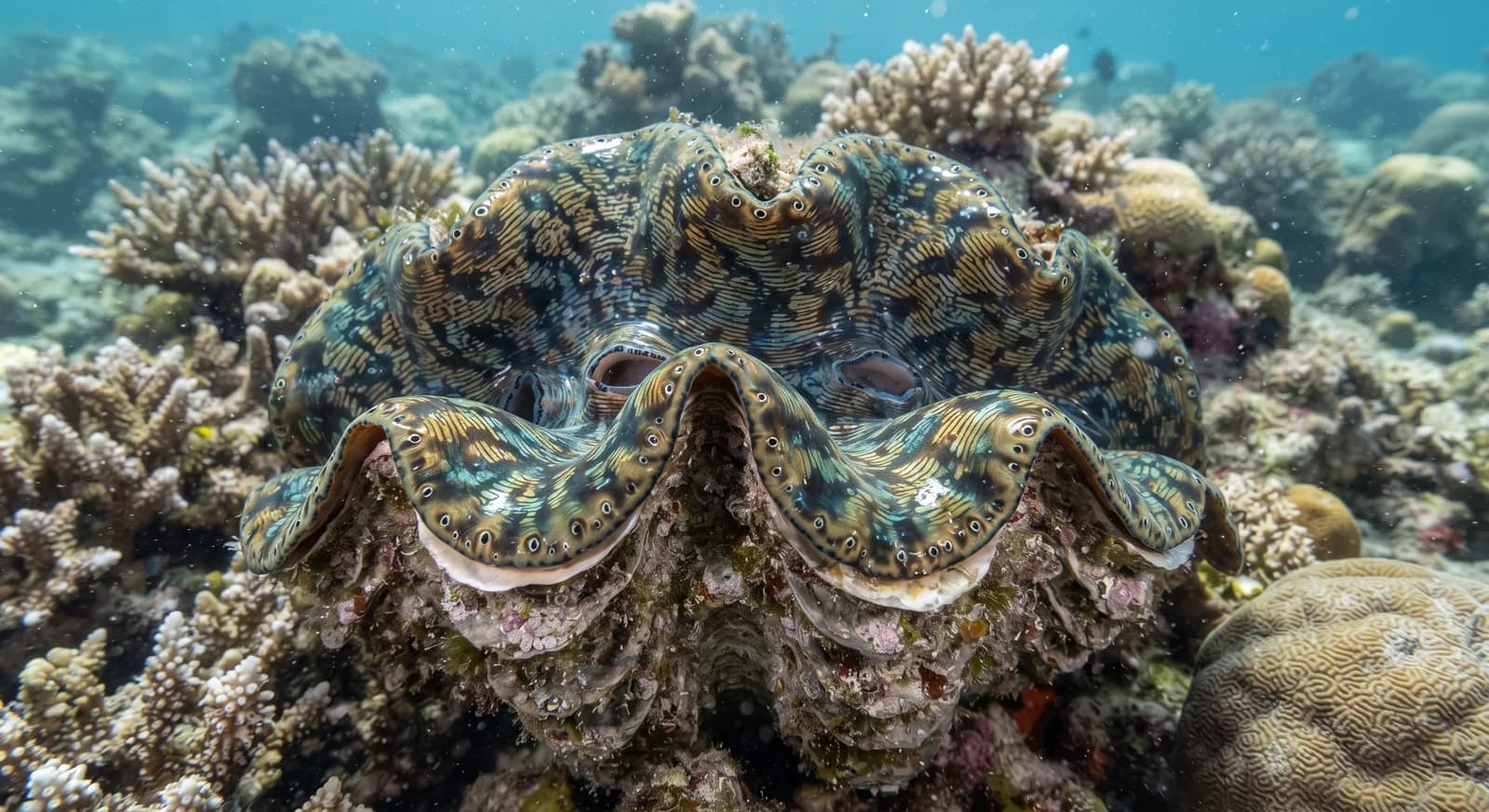
Giant Clam
Tridacna gigas
Chequered Carpet Shell
Ruditapes decussatus
Sand Gaper
Mya arenaria
Northern Nutclam
Nuculana pernula
Ocean Quahog
Arctica islandica
Atlantic Surf Clam
Spisula solidissima
Conservation status
1 especies in this group están en alguna categoría de riesgo real según la UICN.
See the global conservation statusWhere they live
Recorded in 98 countries. The ones with the most species in the group:
Where to see them
- Gros Morne4 species
- Terra Nova4 species
- Archipiélago de Mingan3 species
- Arrábida3 species
- Islas Cies3 species
- Kosterhavet3 species
- Oosterschelde3 species
- Ria Formosa3 species
- Sudoeste Alentejano e Costa Vicentina3 species
- Thy3 species
- Urdaibai3 species
- Acadia2 species
- Andrea Doriadiving
- Bahía de Fundydiving
- Bell Island Wrecksdiving
- Block Island (pecio del Mohawk)diving
- Farne Islandsdiving
- Fiordo del Saguenay (belugas)diving
Did you know…
It is the largest living bivalve mollusc in the world, with shells up to 137 cm across.
From Giant Clam
It can close its shells with considerable force, though contrary to popular legend it poses no real risk of trapping a diver.
From Giant Clam
Contrary to the popular myth, it closes far too slowly to trap a diver.
From Giant Clam
It is told from the introduced Manila clam (Ruditapes philippinarum) by having its two siphons separate right to the base, whereas in the Manila clam they are fused for much of their length.
It is the native European clam and the most prized in the kitchen; in Spain it is the almeja fina, the one used for almejas a la marinera.
Its production has been declining for decades for two reasons that go together: the parasite Perkinsus olseni, which causes perkinsosis, and competition from the introduced Manila clam, Ruditapes philippinarum.
Archaeological shell remains in Denmark dated to the thirteenth century indicate that it reached Europe from America several centuries before Columbus's voyages.
From Sand Gaper
Its siphon is so long that it does not fit inside the shell, a trait that gives its family its name (Myidae).
From Sand Gaper