Species group · Reptiles
Chameleons
WAnimals has 6 species of chameleon, all in the family Chamaeleonidae.
- 6 species
- 1 family
- 26 countries
- 43 parks
- Weight
- 33 g – 700 g
- Length
- 2 cm – 68 cm
- Lifespan
- 3 – 12 years
Ranges calculated from the entries that record the figure, not from all 6.
All 6 species of chameleons on WAnimals
Each one has its own full entry. This group does not replace them: it brings them together.
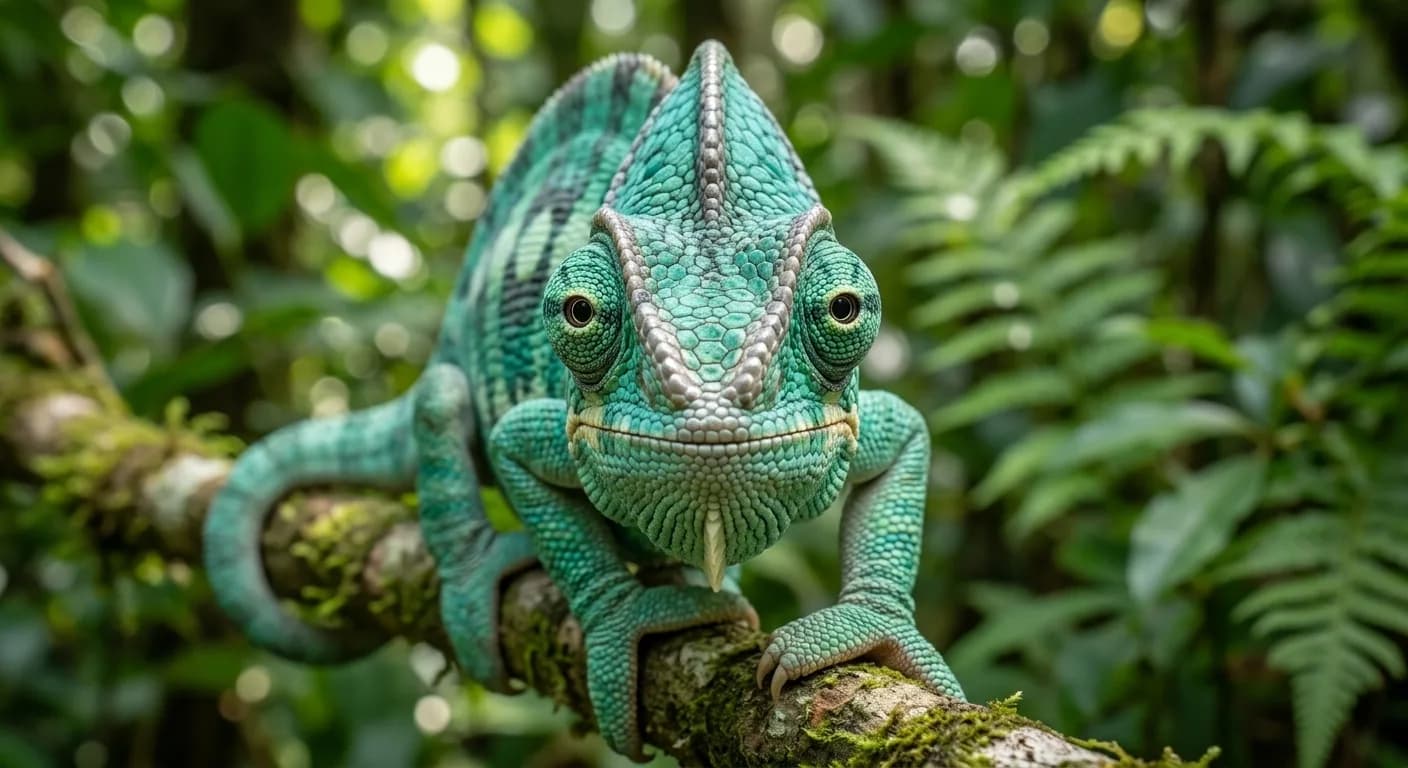 Near Threatened
Parson's Chameleon
Calumma parsonii
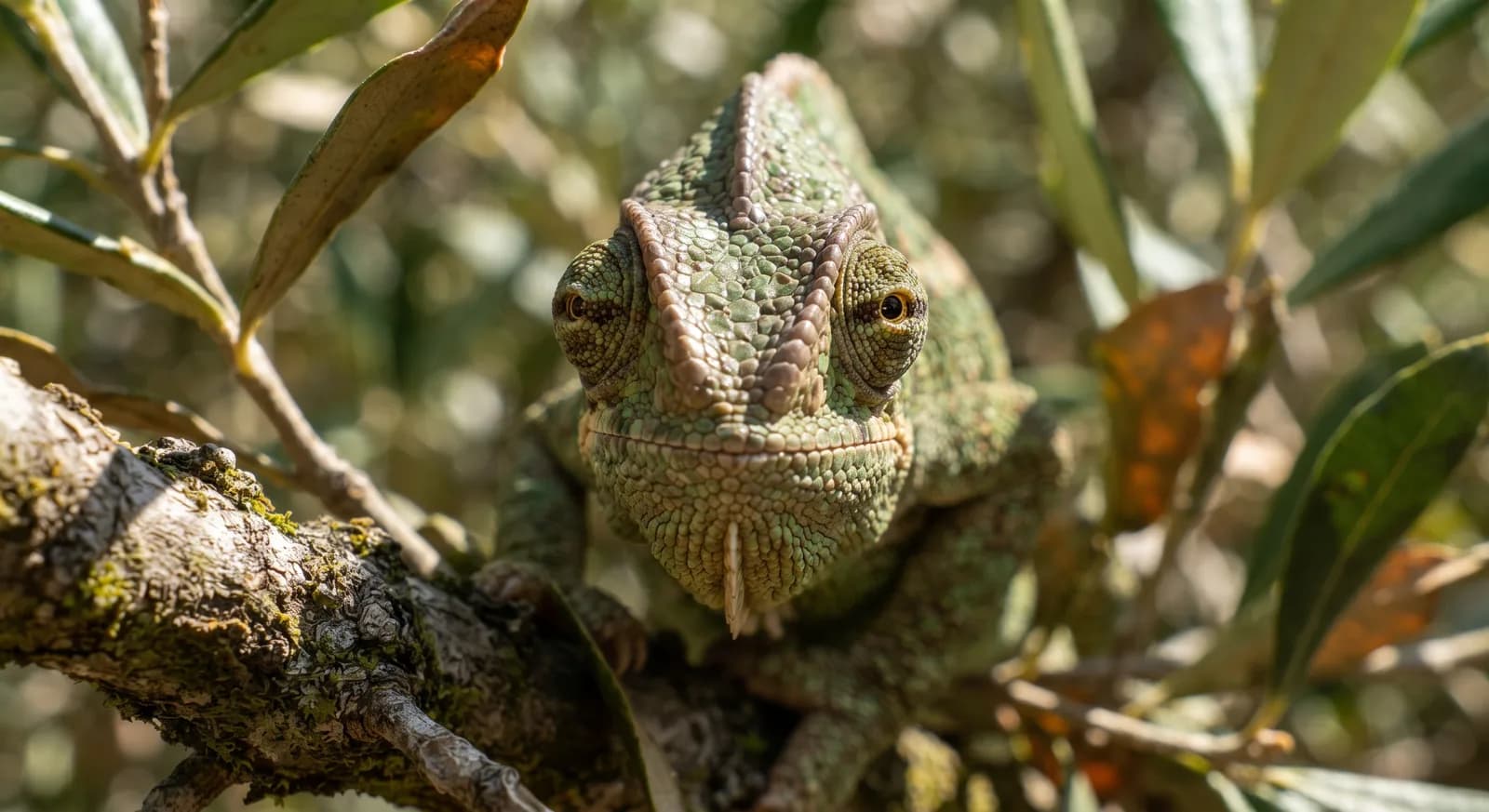 Least Concern
Mediterranean Chameleon
Chamaeleo chamaeleon
Panther Chameleon
Furcifer pardalis
Leaf Chameleon
Brookesia micra
Jackson’s Three-horned Chameleon
Trioceros jacksonii
Veiled Chameleon
Chamaeleo calyptratus
Conservation status
No species documented in this group is genuinely at risk according to the IUCN, with the data available today.
See the global conservation statusWhere they live
Recorded in 26 countries. The ones with the most species in the group:
Where to see them
Did you know…
It is one of the largest chameleons in the world and can take several years to reach full sexual maturity.
From Parson's Chameleon
Its eggs take between one and two years to hatch, one of the longest incubations documented in a reptile: the female buries them and the young emerge from the ground after more than a full seasonal cycle has passed.
From Parson's Chameleon
Its eyes move completely independently, each with a field of view of almost 180 degrees, and the animal processes two different images at once until it spots prey and both converge.
From Parson's Chameleon
It is the only chameleon native to Europe.
Its name means literally 'ground lion' in Greek.
Its eggs incubate for 10 to 12 months, one of the longest periods of any reptile.
It changes colour not only to hide but mainly as a social signal, tied to mood, temperature and territorial dealings with other males.
From Panther Chameleon
Each population on the island has its own recognisable colour palette: genetic studies in 2015 revealed that those local forms are so distinct that they probably make up several different species under a single name.
From Panther Chameleon