One of the 6 chameleons on WAnimals
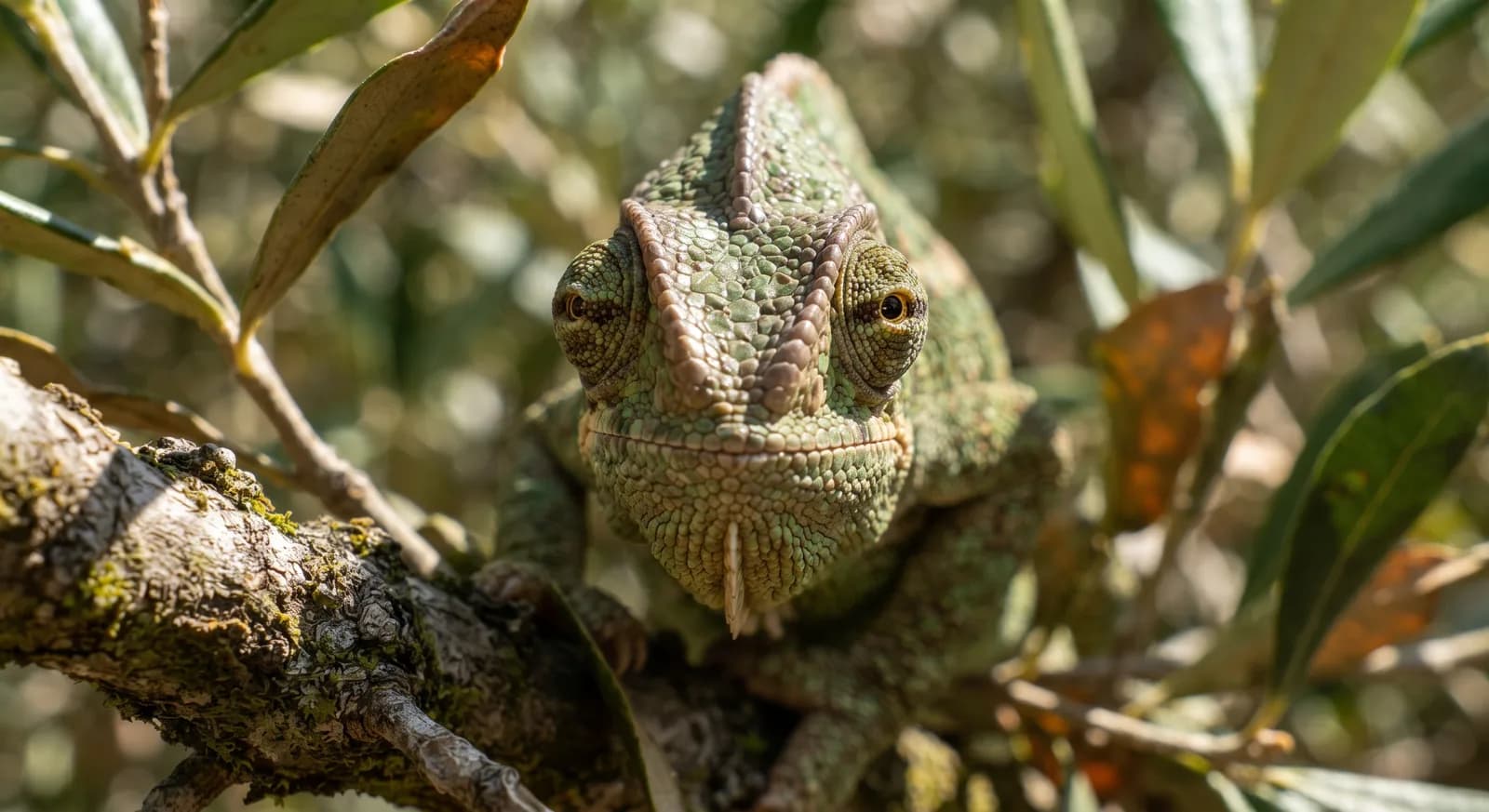
Reptiles · Squamata · Chamaeleonidae
Mediterranean Chameleon
Chamaeleo chamaeleon
The species is abundant and widely distributed; it faces no significant short-term risk. See full glossary
It is the only chameleon whose natural range reaches Europe. Its name comes from the Greek and means literally 'ground lion', a nod to its bearing despite its small size.
Weight
36 g on average
Size
20 cm – 40 cm
Lifespan
3 years
Diet
Insectivore
Feeds mainly on insects and other invertebrates.
Activity
Diurnal
Active mainly during the day.
Social structure
Solitary
Lives and hunts alone, joining others only to breed.
Sighting difficulty
Easy
Fun facts
- It is the only chameleon native to Europe.
- Its name means literally 'ground lion' in Greek.
- Its eggs incubate for 10 to 12 months, one of the longest periods of any reptile.
- distribuciónIt is the only chameleon native to continental Europe, occurring naturally in the south of the Iberian Peninsula.
Life cycle & biology
- Skeleton type
- Vertebrate - internal bony skeleton (reptile)
- Habitat & environment
- Savannah, riverside habitats, woodland and scrub of the Mediterranean basin, the Iberian Peninsula where introduced, and parts of the Levant
- Birth weight
- Egg laid on the ground
- Size at birth
- Precocial and wholly independent on hatching, after 10-12 months of incubation
- Sexual maturity
- 8 months to 1 year depending on the source
- Gestation / incubation
- 10-12 months, among the longest incubations of any reptile
- Litter / clutch size
- 5 to 45 eggs per clutch (a single clutch a year)
- Lifespan in captivity
- Documented record of up to 5 years in captivity
Sources consulted: Chameleon Forums; Animal Diversity Web; Animalia.bio; San Diego Zoo; AnAge (genomics.senescence.info); Wikipedia (Common chameleon); A-Z Animals
Where to find it
See its range on the interactive mapWhere to watch it
Parques y spots de buceo donde se ha documentado esta especie — se muestran 10 de 27 documentados.
Related species
Other species in the catalogue with the most in common with Mediterranean Chameleon — same habitat, park, country, tags or family.
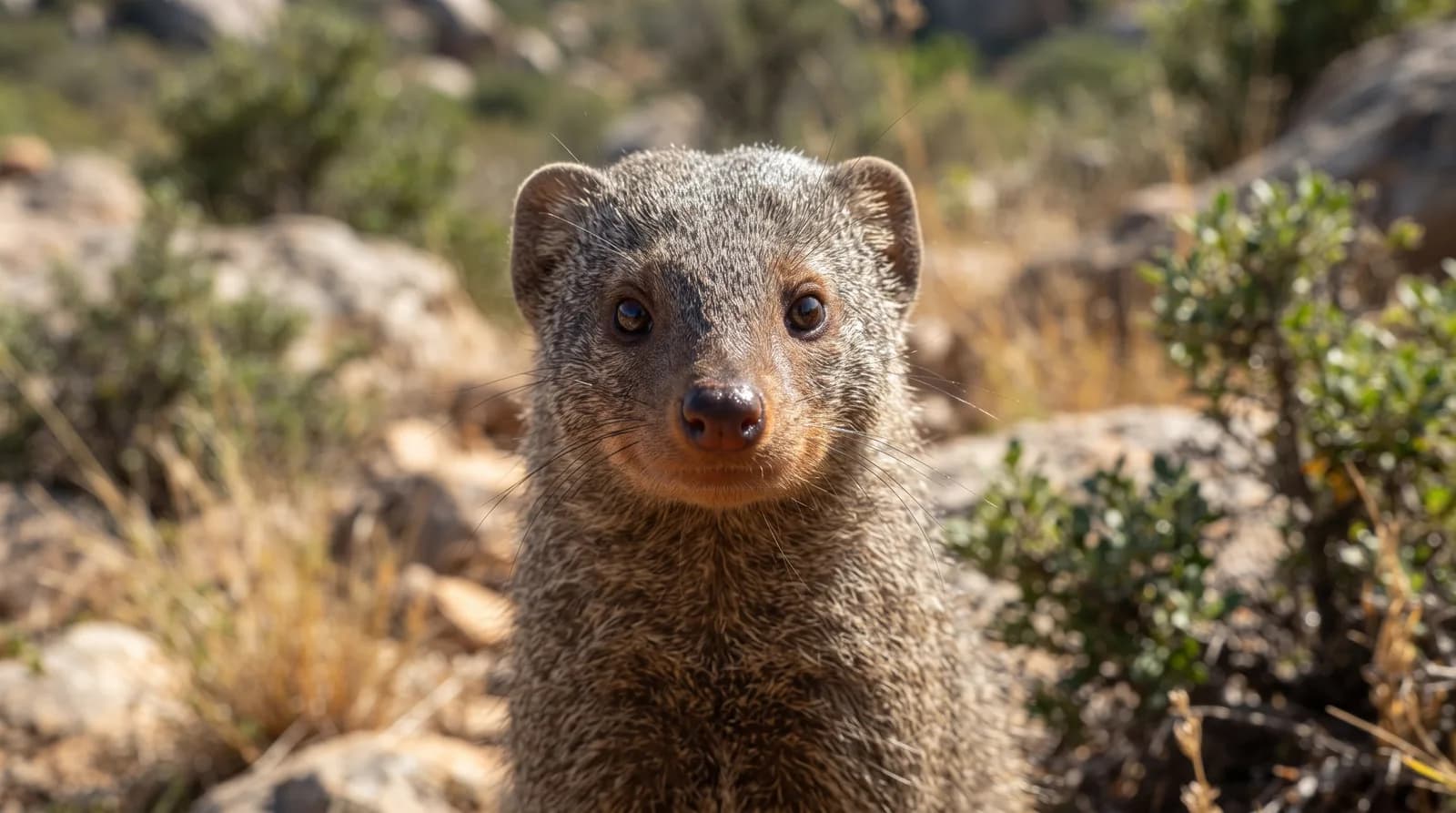 Least Concern
Egyptian Mongoose
Herpestes ichneumon
European Roller
Coracias garrulus
European Bee-eater
Merops apiaster
European Green Woodpecker
Picus viridis
Eurasian Wren
Troglodytes troglodytes
Common Wall Lizard
Podarcis muralis
Keep exploring
Based on what we already know about mediterranean chameleon.
Comments
Share an experience, a fun fact or a tip for seeing the mediterranean chameleon.
Be the first to comment.