Mammals · Carnivora · Herpestidae
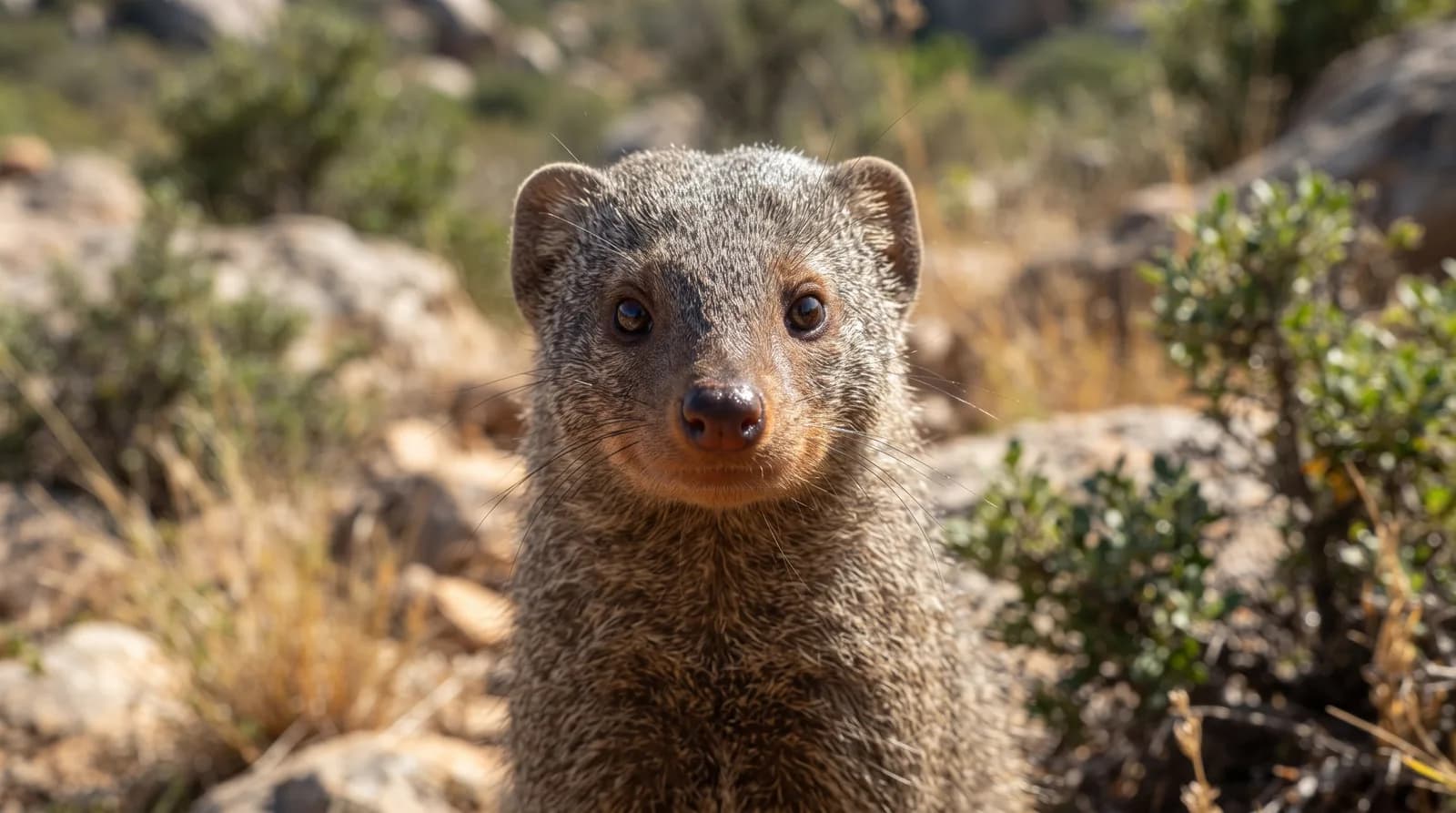
Egyptian Mongoose
Herpestes ichneumon
The species is abundant and widely distributed; it faces no significant short-term risk. See full glossary
It is the largest mongoose in Africa and one of the few Eurasian carnivores able to kill venomous snakes with relative safety, thanks to its agility and a partial resistance to venom.
Weight
1.7 kg – 4 kg
Size
48 cm – 60 cm
Lifespan
12 years
Diet
Carnivore
Feeds mainly on other animals.
Activity
Diurnal
Active mainly during the day.
Social structure
Solitary
Lives and hunts alone, joining others only to breed.
Sighting difficulty
Easy
Fun facts
- comportamientoIt is one of the few mammals that will take young crocodiles and raid their nests for eggs with any regularity, despite the risk of approaching a guarded nest.
Life cycle & biology
- Skeleton type
- Vertebrate - internal bony skeleton (mammal)
- Habitat & environment
- Mediterranean scrub, woodland near watercourses and savannah of the Iberian Peninsula, North Africa and the Near East
- Birth weight
- Naked and blind at birth; no precise weight found
- Size at birth
- Naked, blind and wholly helpless at birth, able to follow its mother at 6-8 days
- Sexual maturity
- 2 years
- Gestation / incubation
- ~11 weeks (74-77 days)
- Litter / clutch size
- 1 to 4 young per litter (most commonly 2-3)
- Lifespan in captivity
- A documented record of up to 20 years (a figure some specialist sources doubt)
Sources consulted: AnAge; Tranquil Safari; ResearchGate; Animalia.bio; Blue Planet Biomes; Website of Everything; Animal Diversity Web; iNature; Animals Fandom
Where to find it
See its range on the interactive mapWhere to watch it
Parks and dive sites where this species has been documented.
Related species
Other species in the catalogue with the most in common with Egyptian Mongoose — same habitat, park, country, tags or family.
Common Buzzard
Buteo buteo
Eurasian Sparrowhawk
Accipiter nisus
Eurasian Hoopoe
Upupa epops
European Roller
Coracias garrulus
Polecat
Mustela putorius
Black-winged Kite
Elanus caeruleus
Keep exploring
Based on what we already know about egyptian mongoose.
Comments
Share an experience, a fun fact or a tip for seeing the egyptian mongoose.
Be the first to comment.