One of the 2 bee-eaters on WAnimals
Birds · Coraciiformes · Meropidae
European Bee-eater
Merops apiaster
The species is abundant and widely distributed; it faces no significant short-term risk. See full glossary
It nests in colonies of over 100 pairs, digging tunnels into clay banks, and non-breeding 'helpers' pitch in to feed the chicks.
Weight
45 g – 80 g
Size
27 cm – 29 cm
Lifespan
5 years
Diet
Insectivore
Feeds mainly on insects and other invertebrates.
Activity
Diurnal
Active mainly during the day.
Social structure
Colony
Lives in large concentrations, often for breeding reasons.
Sighting difficulty
Easy
Fun facts
- It catches bees and wasps in flight, and has techniques for removing the sting before swallowing them.
- It breeds cooperatively, a behaviour that is uncommon among birds.
- It winters in sub-Saharan Africa.
- alimentaciónIt rubs the bees and wasps it catches against a branch to work the venom out of the sting before swallowing them whole.
Life cycle & biology
- Skeleton type
- Vertebrate - pneumatised bony skeleton (bird)
- Habitat & environment
- Open country with broken ground and river banks across southern Europe, North Africa and western Asia; it winters in sub-Saharan Africa
- Birth weight
- Weight at hatching not found as a precise figure
- Size at birth
- Born blind and naked
- Sexual maturity
- 1 year
- Gestation / incubation
- 19-28 days (usual reference 19-20 days)
- Litter / clutch size
- 2 to 10 eggs per clutch (most commonly 4-7)
Sources consulted: A-Z Animals; Wildlife Vagabond; Birds of the World; Birds Discovery; The Animal Facts; Animal Diversity Web; AnAge (genomics.senescence.info); Birdfact
Where to find it
See its range on the interactive mapBest time: From April to September in the Iberian Peninsula; it is a trans-Saharan migrant and is easily located by its liquid call in flight.
Where to watch it
Parques y spots de buceo donde se ha documentado esta especie — se muestran 10 de 55 documentados.
Related species
Other species in the catalogue with the most in common with European Bee-eater — same habitat, park, country, tags or family.
 Least Concern
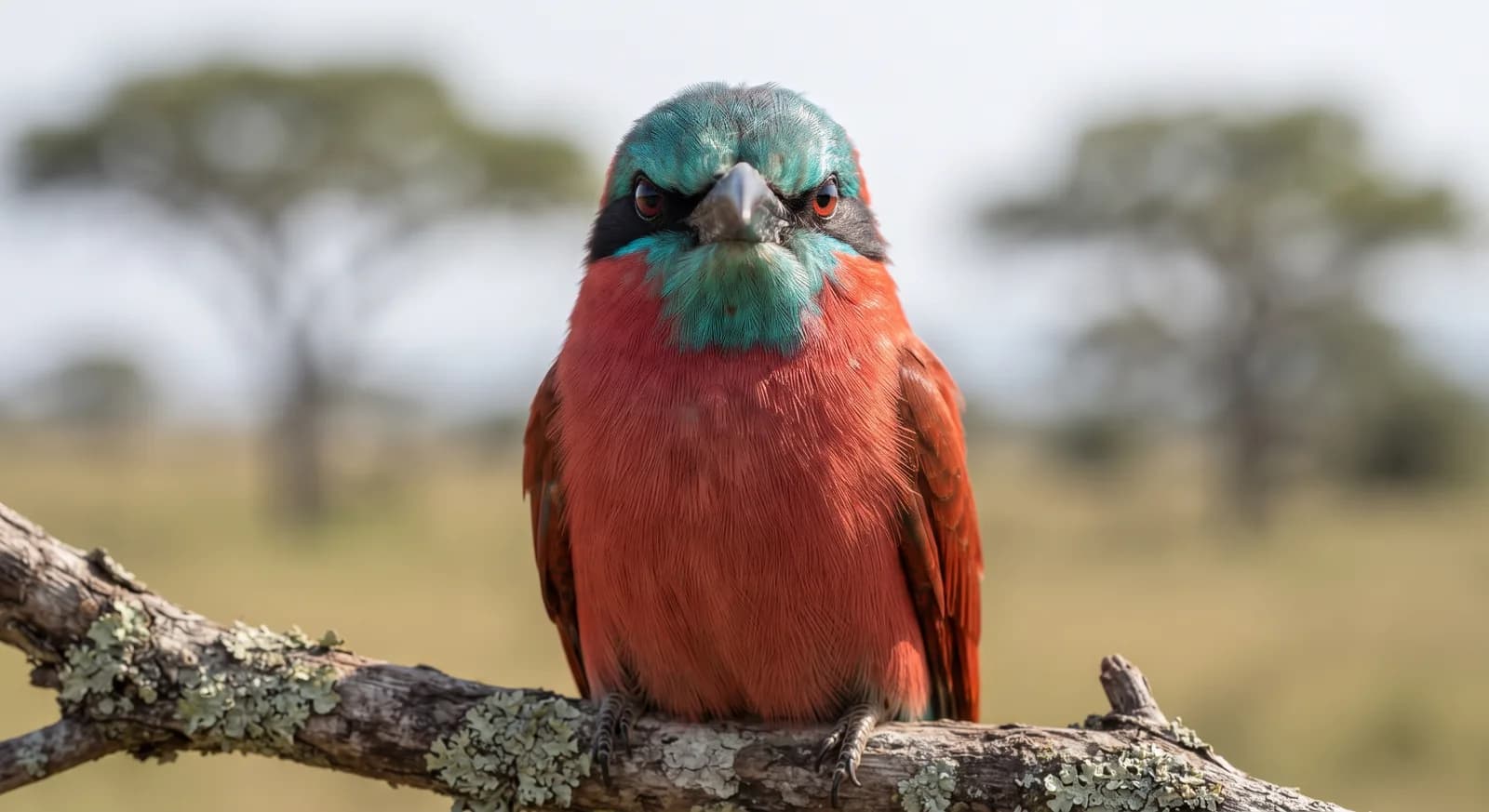
Northern Carmine Bee-eater
Merops nubicus
European Roller
Coracias garrulus
European Green Woodpecker
Picus viridis
Eurasian Wren
Troglodytes troglodytes
 Least Concern
Short-toed Eagle
Circaetus gallicus
Eurasian Wryneck
Jynx torquilla
Keep exploring
Based on what we already know about european bee-eater.
Comments
Share an experience, a fun fact or a tip for seeing the european bee-eater.
Be the first to comment.