Cartilaginous fish · Rajiformes · Rhinobatidae
Common Guitarfish
Rhinobatos rhinobatos
It faces an extremely high risk of imminent extinction in the wild. See full glossary
The common guitarfish is a fish of the class Elasmobranchii. It combines the features of a ray at the front with those of a shark at the rear, with a long, pointed snout and skin bearing a row of central spines. Its dorsal colour ranges from greyish brown to yellowish, and the underside is white. These fish can reach up to 1 metre in length.
Weight
up to 26.6 kg
Size
up to 1.9 m
Diet
Carnivore
Feeds mainly on other animals.
Social structure
Solitary
Lives and hunts alone, joining others only to breed.
Sighting difficulty
Very hard
Fun facts
- It is halfway between a shark and a ray: an elongated, tubular body with fins on the trunk and tail, and a broad, flat pectoral disc at the head.
- It ambushes prey half-buried in the sand: it pins crustaceans and small fish with its elongated snout and sucks them in.
- It is viviparous: the females give birth to fully formed young.
- Its life on shallow bottoms makes it an easy target for trawling and small-scale fishing; it has disappeared from parts of its former range and in 2021 it was classified as Critically Endangered.
Life cycle & biology
- Skeleton type
- Vertebrate - cartilaginous skeleton (chondrichthyan fish)
- Habitat & environment
- Soft sandy and muddy coastal bottoms of the eastern Atlantic and the Mediterranean, between 0 and 100 m; it buries itself partly and waits for prey
- Sexual maturity
- Length at first maturity 87 cm (range from 79 cm)
Sources consulted: https://es.wikipedia.org/wiki/Rhinobatos_rhinobatos
Where to find it
See its range on the interactive mapWhere to watch it
Parques y spots de buceo donde se ha documentado esta especie — se muestran 20 de 43 documentados.
Related species
Other species in the catalogue with the most in common with Common Guitarfish — same habitat, park, country, tags or family.
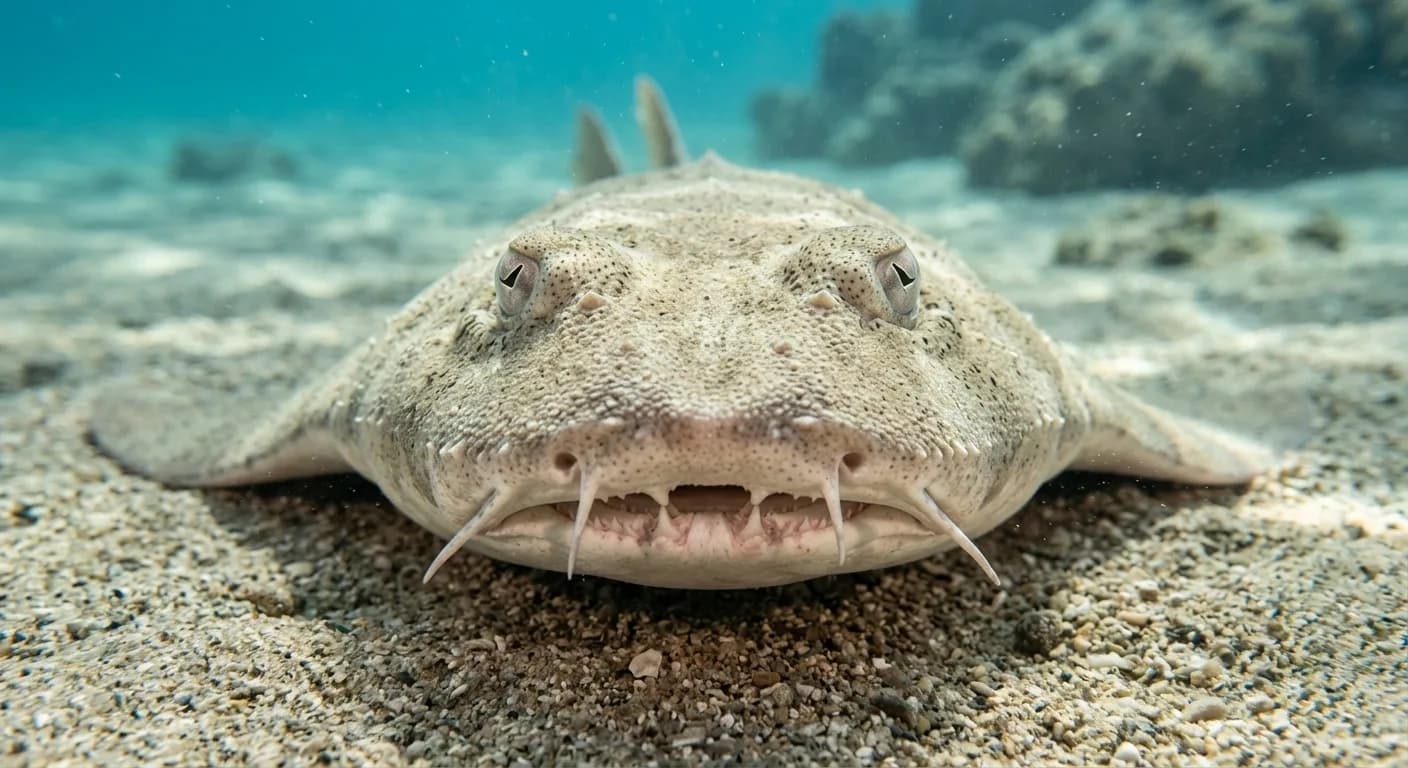 Critically Endangered
Angelshark
Squatina squatina
Tope
Galeorhinus galeus
Shortfin Mako
Isurus oxyrinchus
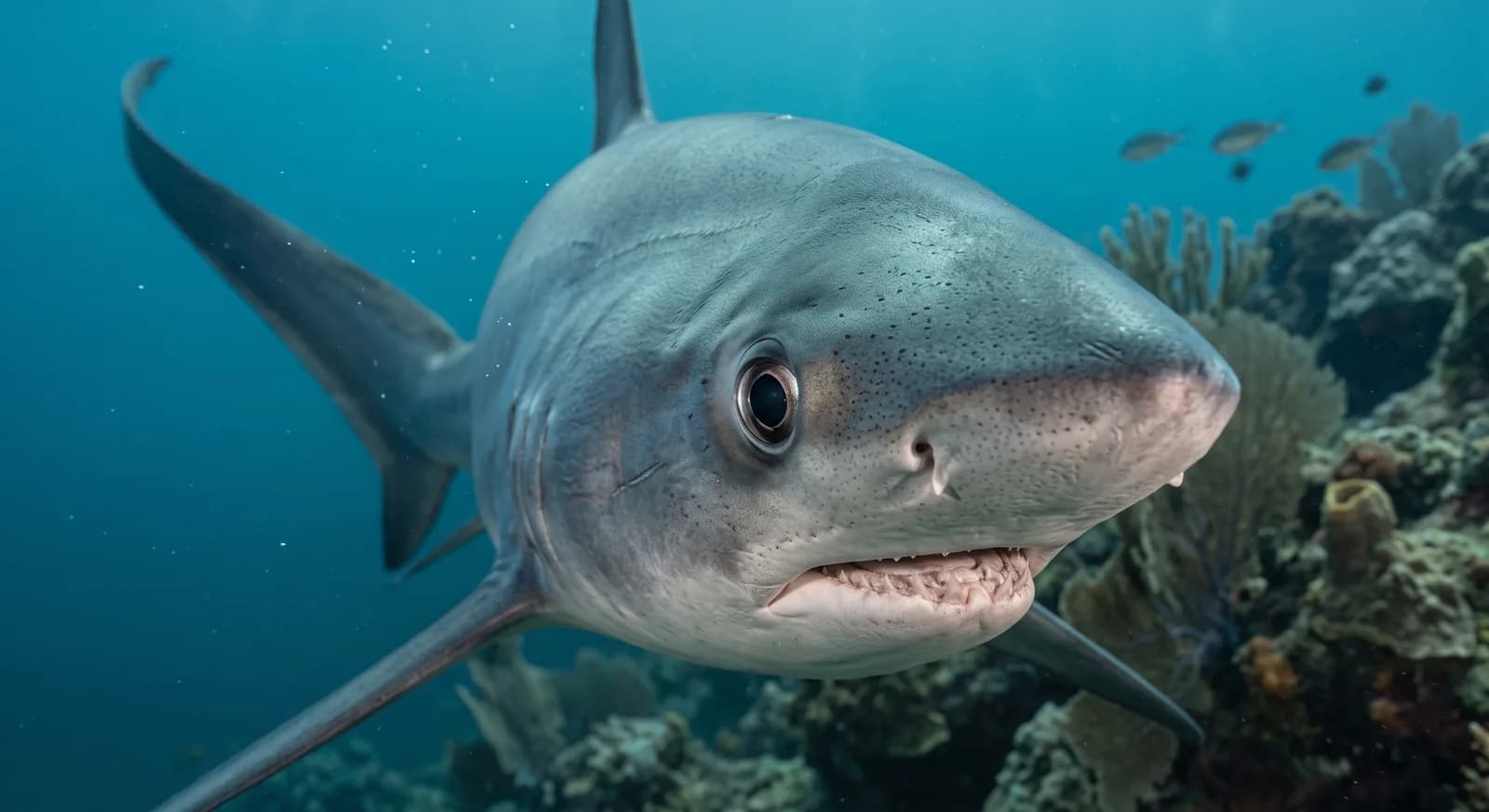 Vulnerable
Grayfish
Alopias vulpinus
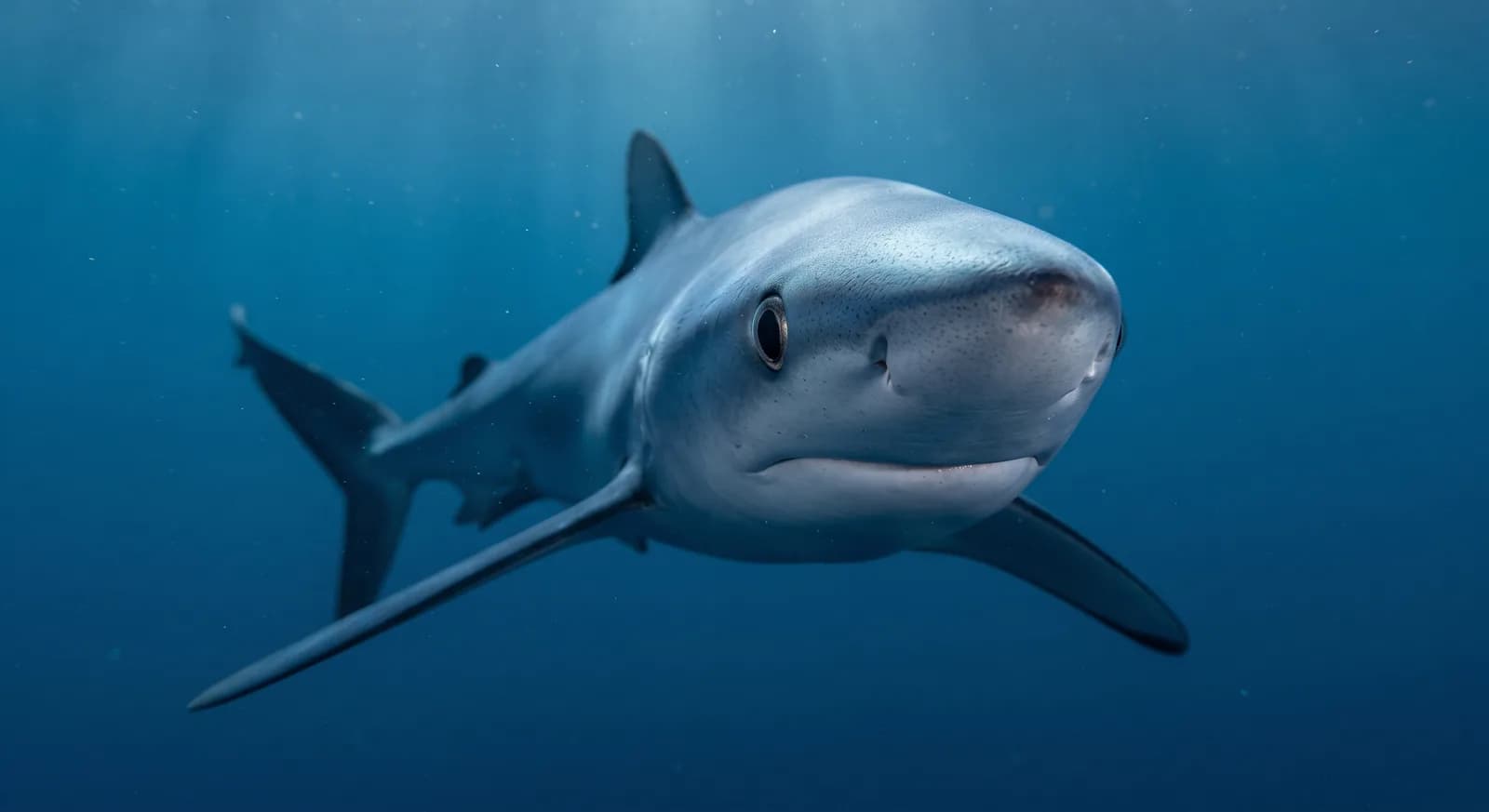 Near Threatened
Blue Shark
Prionace glauca
Thornback Ray
Raja clavata
How to help
The common guitarfish is classified as critically endangered. Organizations such as UICN, WWF y Wildlife Conservation Society work specifically on its conservation and that of its habitat; looking into their programs is a good starting point if you want to get involved.
It's documented in 16 real protected areas — part of why protecting these places matters for its conservation.
Keep exploring
Based on what we already know about common guitarfish.
Comments
Share an experience, a fun fact or a tip for seeing the common guitarfish.
Be the first to comment.