Mammals · Artiodactyla · Bovidae
Nyala
Tragelaphus angasii
The species is abundant and widely distributed; it faces no significant short-term risk. See full glossary
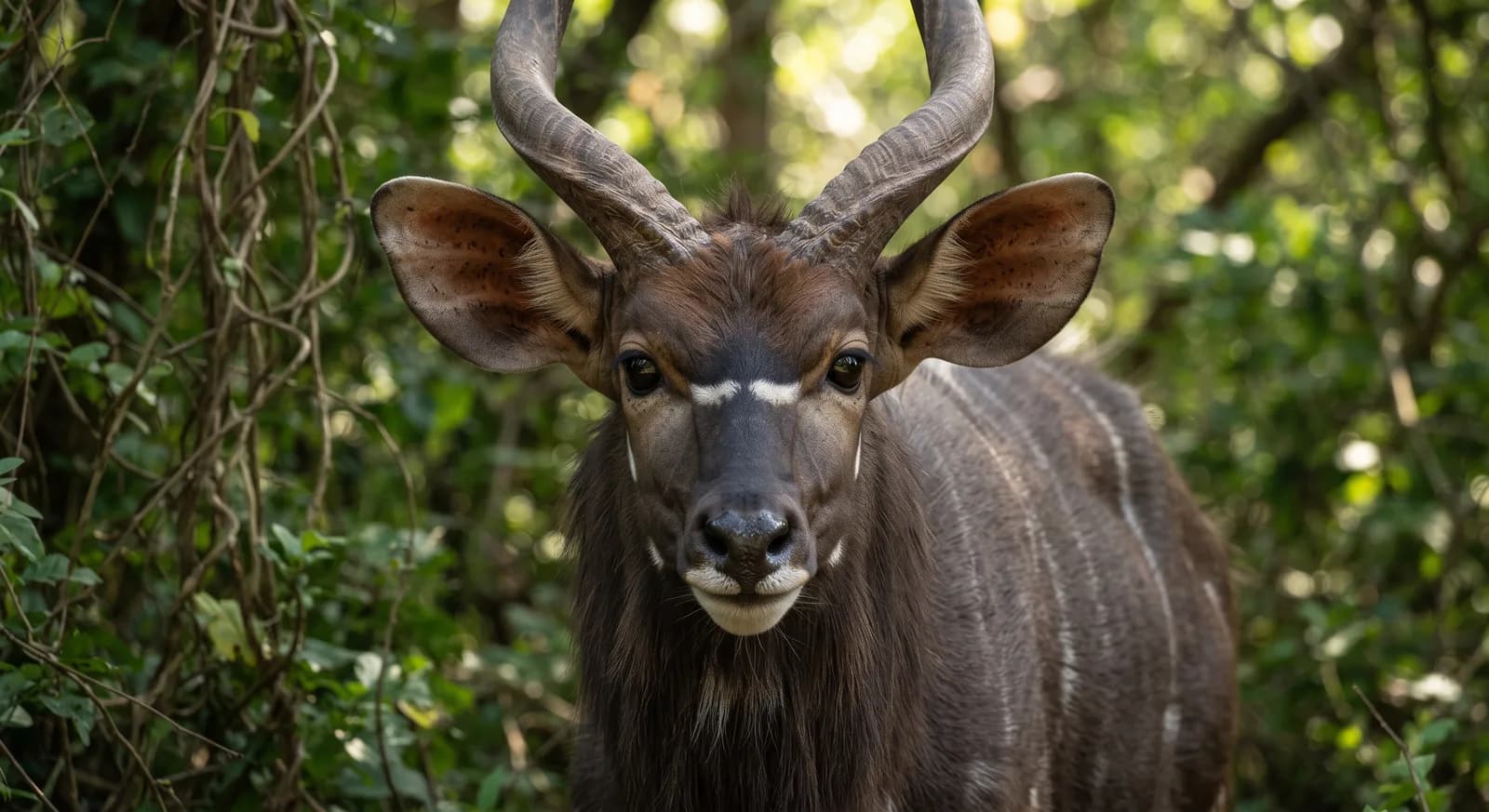
The nyala is an antelope of south-eastern Africa with one of the most marked cases of sexual dimorphism in the family. The male is slate grey, with a long mane along the back and belly, spiral horns with pale tips and intensely orange legs; the female is chestnut, striped with white and hornless, to the point of looking like a different species. It lives in dense scrub near water and browses leaves and fruit, often beneath the trees where monkeys are feeding, taking what they drop.
Weight
55 kg – 140 kg
Size
1.4 m – 2 m
Lifespan
16 years
Diet
Herbivore
Feeds mainly on plants.
Activity
Crepuscular
Active above all at dawn and dusk.
Sighting difficulty
Easy
Fun facts
- GeneralOne of the most sexually dimorphic antelopes: only the males have horns, and a dark grey coat with a mane.
- Male and female look like different species: he is slate grey, maned and horned; she is chestnut, striped and hornless, and less than half his weight.
- It often feeds beneath the trees where baboons and vervet monkeys are eating, taking the fruit and leaves they drop from the canopy.
Life cycle & biology
- Skeleton type
- Vertebrate - internal bony skeleton (mammal)
- Habitat & environment
- Riverine forest and dense thicket near water
- Sexual maturity
- 14.8 months
- Gestation / incubation
- 7.4 months
- Litter / clutch size
- 1
Sources consulted: https://es.wikipedia.org/wiki/Tragelaphus_angasii
Where to find it
See its range on the interactive mapWhere to watch it
Parks and dive sites where this species has been documented.
Related species
Other species in the catalogue with the most in common with Nyala — same habitat, park, country, tags or family.
 Least Concern
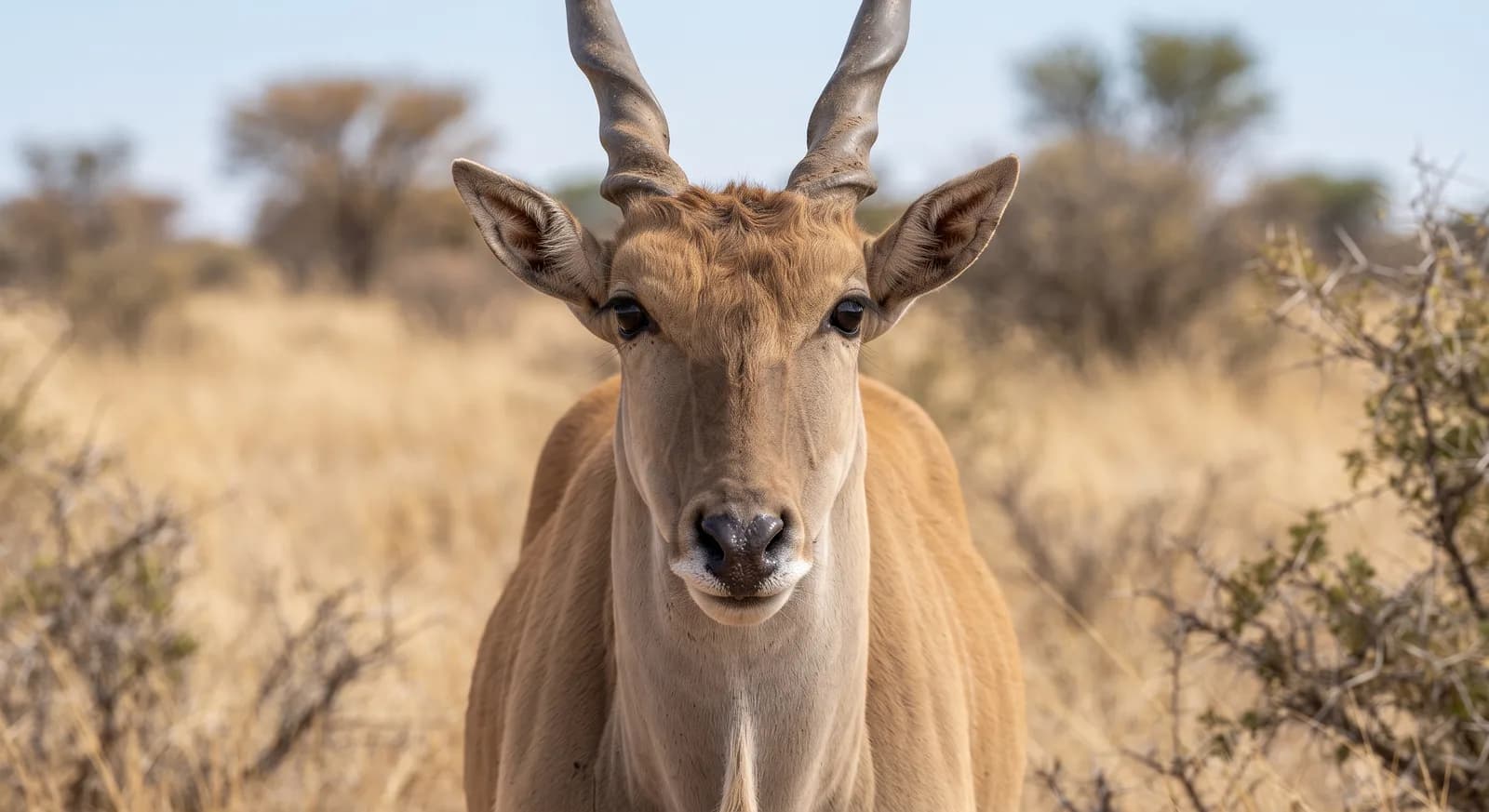
Common Eland
Taurotragus oryx
 Least Concern
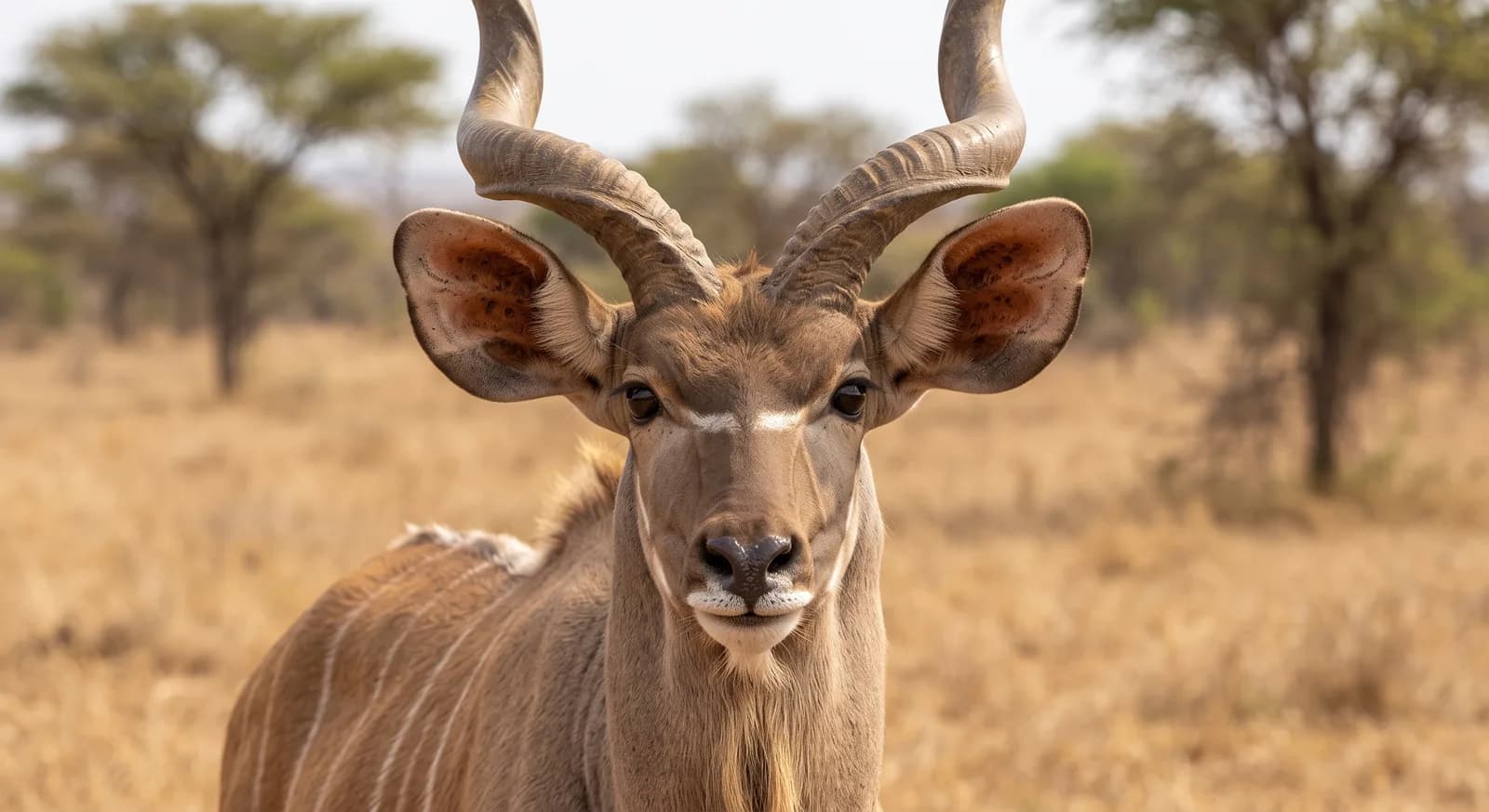
Greater Kudu
Tragelaphus strepsiceros
 Least Concern
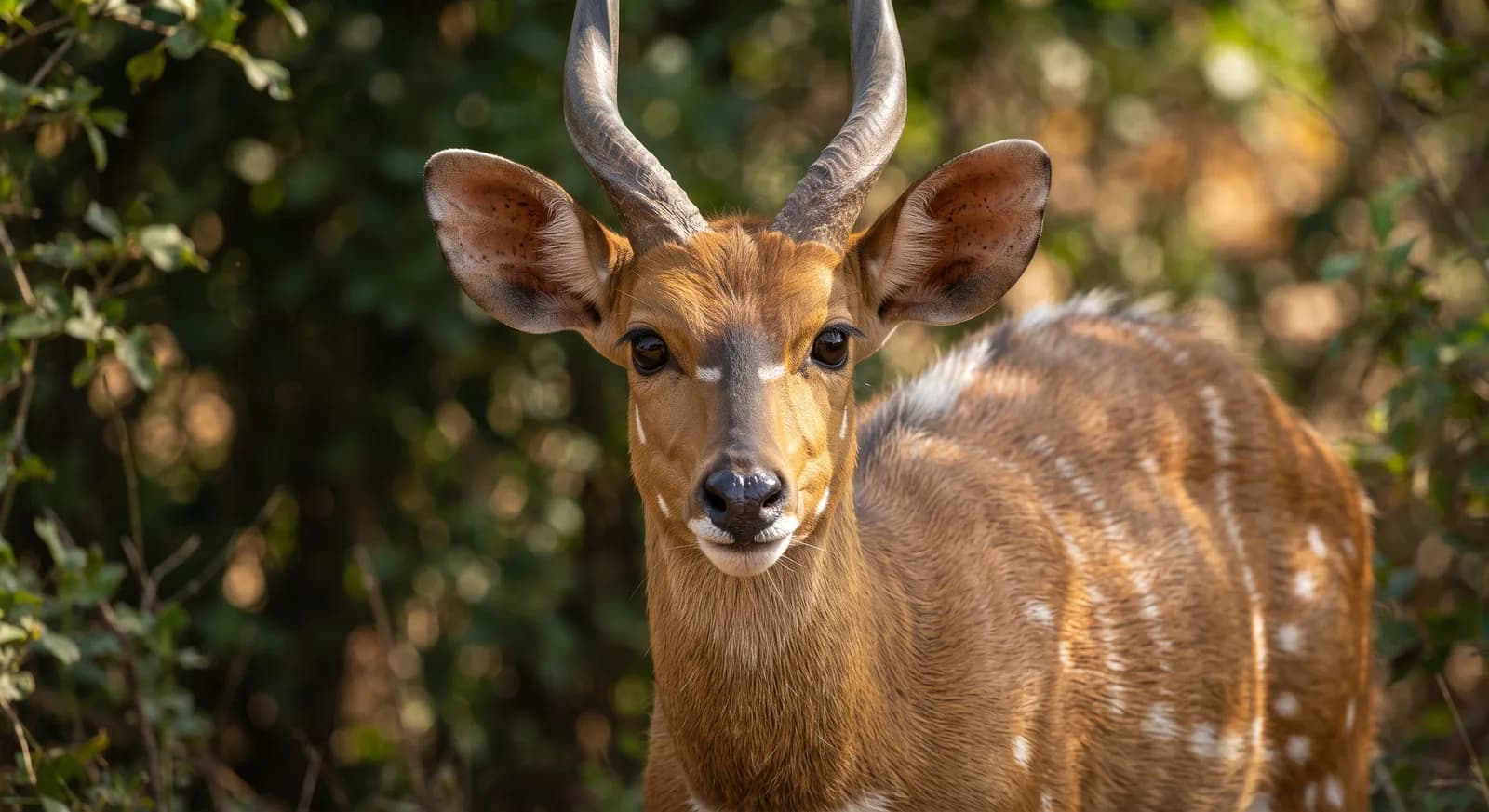
Bushbuck
Tragelaphus scriptus
Waterbuck
Kobus ellipsiprymnus
Klipspringer
Oreotragus oreotragus
Common Duiker
Sylvicapra grimmia
Keep exploring
Based on what we already know about nyala.
Comments
Share an experience, a fun fact or a tip for seeing the nyala.
Be the first to comment.