Lungfish · Lepidosireniformes · Lepidosirenidae
South American Lungfish
Lepidosiren paradoxa
It has not yet been assessed against the IUCN criteria. See full glossary
The South American lungfish has an eel-like body and paired fins reduced to two filaments. It breathes air with two true lungs and depends on them to survive: it drowns if it is kept from reaching the surface.
Size
80 cm – 1.3 m
Lifespan
20 years
Diet
Carnivore
Feeds mainly on other animals.
Activity
Nocturnal
Active mainly at night.
Social structure
Solitary
Lives and hunts alone, joining others only to breed.
Sighting difficulty
Unknown
Fun facts
- When the pool dries out it digs a burrow in the bottom, curls up inside and secretes a cocoon of hardened mucus in which it can remain for months in aestivation, its metabolism almost at a standstill, until the rains return.
- During the breeding season the male grows richly veined filaments on his pelvic fins with which, on the most widely accepted hypothesis, he releases oxygen into the water of the nest for his young.
- The lungfish are the closest living relatives of land vertebrates, more closely related to us than to most fish.
- It breathes air and depends on it: its gills are much reduced and it drowns if it cannot reach the surface, the opposite of any other fish.
- It survives drought by burying itself. When the swamp dries out, it digs a tunnel in the mud, coils up at the bottom, plugs the entrance with a perforated cap that lets air through and enters aestivation, with its metabolism almost at a standstill, until the rains return.
- Its genome is the largest sequenced for any vertebrate to date: some 91 billion base pairs, around thirty times the human genome. It was published in 2024, and its size is explained by a massive accumulation of transposable elements.
- Lungfishes are the sister group of the tetrapods: they are more closely related to us than to any other fish, and studying them sheds light on the transition from water to land.
- The male guards the clutch in the nest and, in the breeding season, grows highly vascularised filaments on his pelvic fins, which are thought to supply oxygen to the eggs.
- Its paired fins are reduced to slender, almost thread-like filaments, hence its eel-like appearance.
Life cycle & biology
- Skeleton type
- Vertebrate - internal bony skeleton (fish)
- Habitat & environment
- Swamps, temporary pools and backwaters of the Amazon, the Paraná and the Orinoco
Sources consulted: Schartl et al. (2024), Nature, sobre el genoma de Lepidosiren; Amemiya et al.; FishBase; Lista Roja de la UICN
Where to find it
See its range on the interactive mapWhere to watch it
Parques y spots de buceo donde se ha documentado esta especie — se muestran 10 de 11 documentados.
Related species
Other species in the catalogue with the most in common with South American Lungfish — same habitat, park, country, tags or family.
Water Opossum
Chironectes minimus
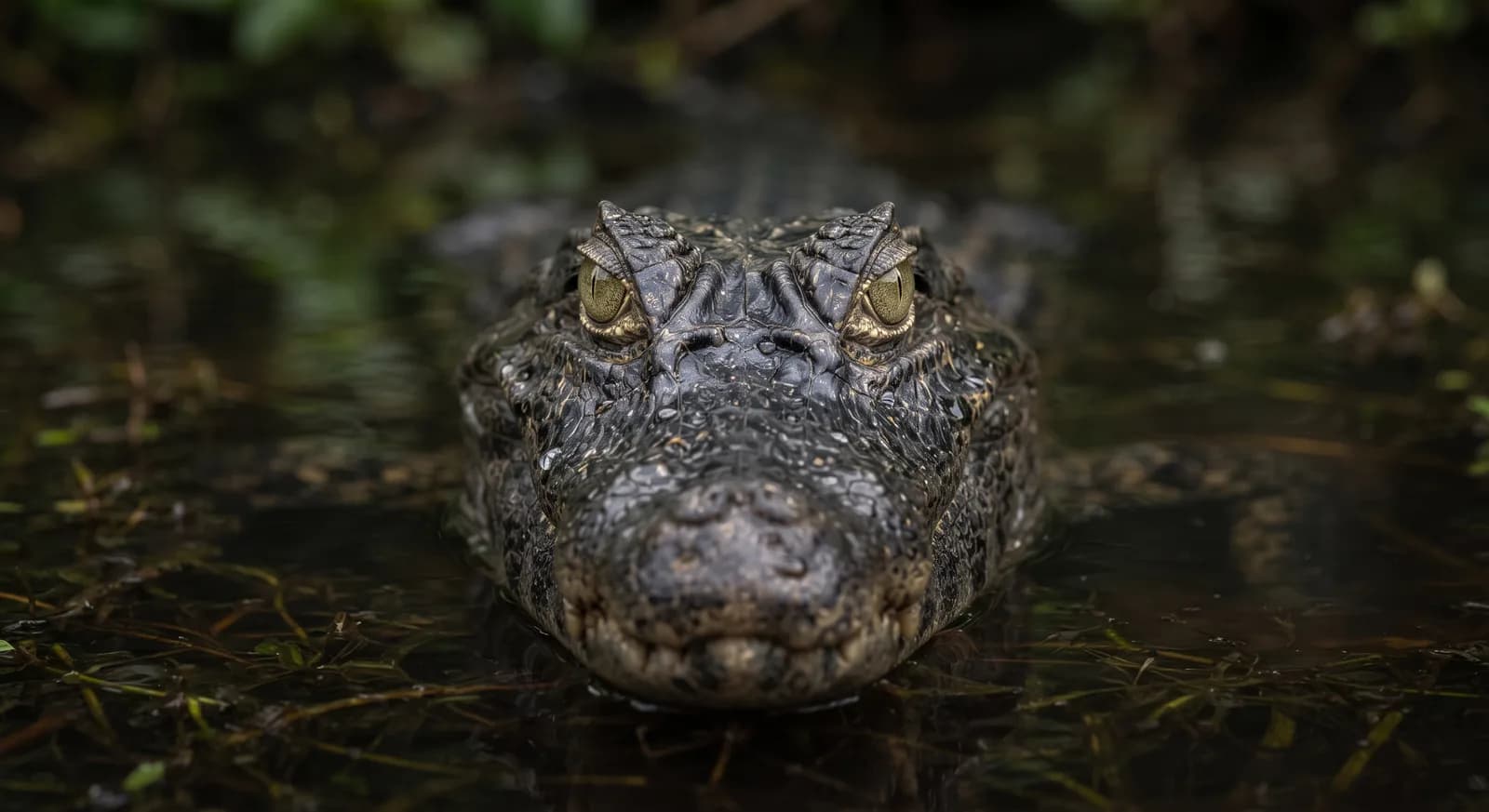 Least Concern
Black Caiman
Melanosuchus niger
Dwarf Caiman
Paleosuchus palpebrosus
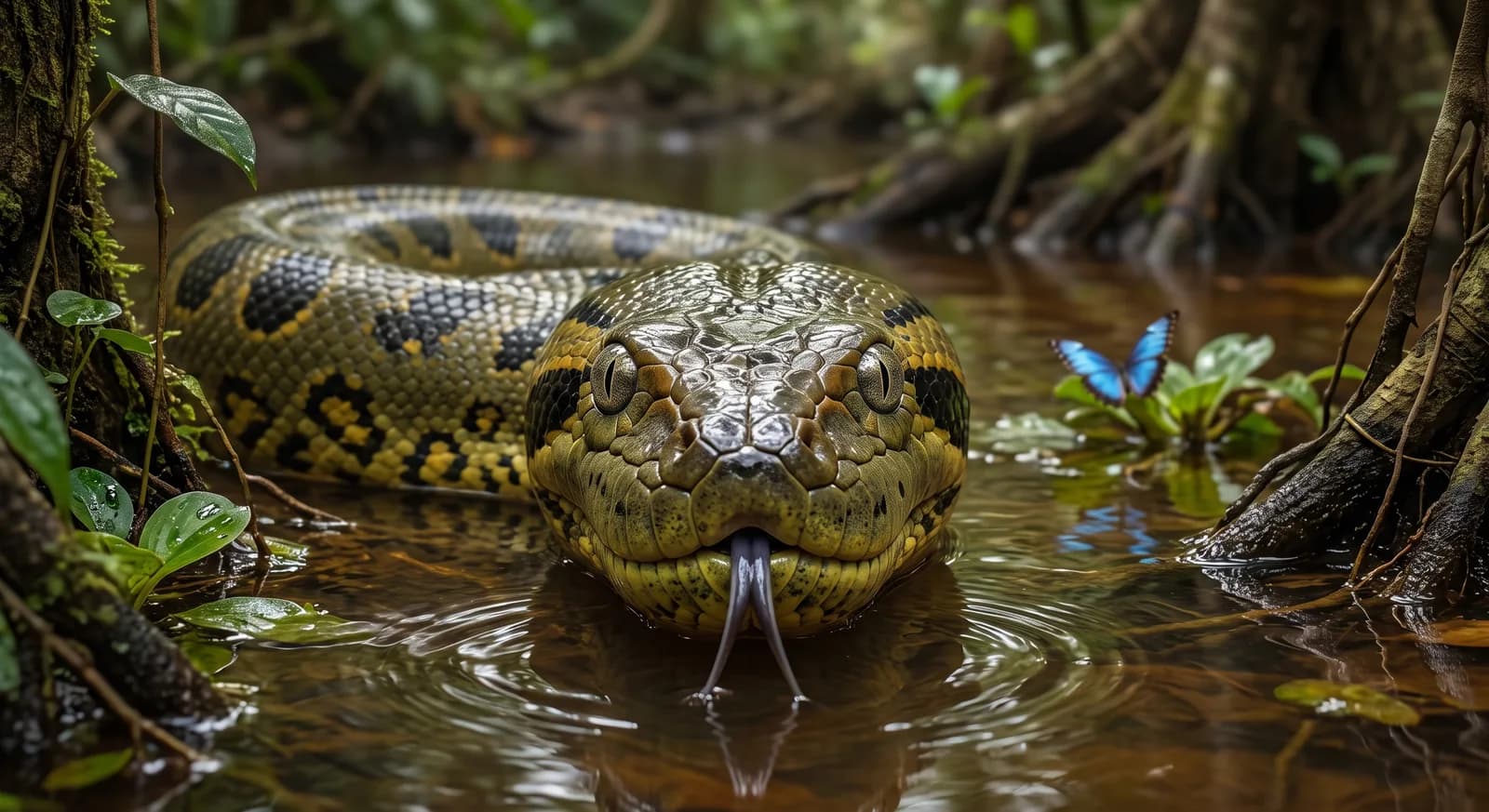 Least Concern
Green Anaconda
Eunectes murinus
Yellow Anaconda
Eunectes notaeus
Surinam Toad
Pipa pipa
Keep exploring
Based on what we already know about south american lungfish.
Comments
Share an experience, a fun fact or a tip for seeing the south american lungfish.
Be the first to comment.