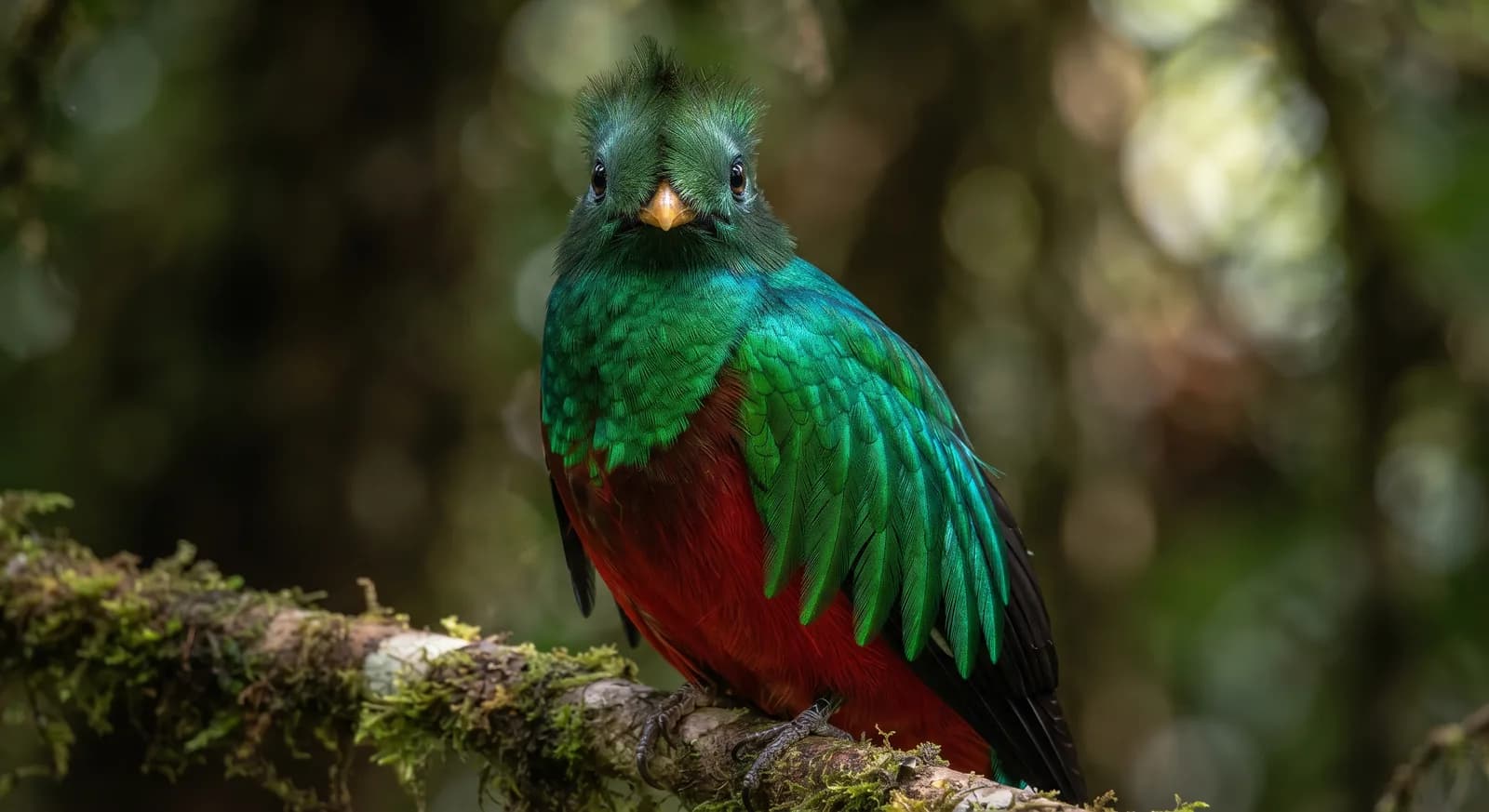
Birds · Trogoniformes · Trogonidae
Resplendent Quetzal
Pharomachrus mocinno
It could become endangered in the near future if current threats go unchecked. See full glossary
The quetzal, also known as the resplendent quetzal, quetzal, Mesoamerican quetzal or Central American quetzal, is a small bird found in southern Mexico and Central America that lives in tropical forests, particularly montane cloud forest. They belong to the trogon family (Trogonidae) and have two recognised subspecies, P. m. mocinno and P. m. costaricensis. The quetzal is mainly omnivorous; its diet consists primarily of fruit from plants of the family Lauraceae, but it also feeds occasionally on insects, lizards, frogs and snails. It developed during the geological period known as the Cenozoic, specifically during the Eocene, which ran from roughly 56 to 34 million years ago.
Weight
180 g – 210 g
Size
36 cm – 1.1 m
Lifespan
20 years
Diet
Omnivore
Combines animal and plant food depending on availability.
Activity
Diurnal
Active mainly during the day.
Social structure
In pairs
Usually lives in pairs, sometimes for life.
Sighting difficulty
Moderate
Fun facts
- reproducciónIn the breeding season males grow tail streamers that can exceed a metre in length, held sacred by several ancient Mesoamerican cultures.
- The Aztecs and Maya held its feathers to be more valuable than gold, and killing a quetzal was punishable by death: the birds were caught alive, their tail feathers pulled out and then released.
- It is the national bird of Guatemala, appears on the country's flag and coat of arms, and the national currency is named after it.
- Its nest always has two entrances, and the male incubates with his tail folded over his back and the very long feathers sticking out of the hole, waving outside the trunk.
Life cycle & biology
- Skeleton type
- Vertebrate - internal bony skeleton (bird)
- Habitat & environment
- Montane cloud forests of Mesoamerica, between 1,200 and 3,000 metres of altitude
- Sexual maturity
- 2 years
- Gestation / incubation
- 18 days of incubation
- Litter / clutch size
- 2 eggs
Sources consulted: https://es.wikipedia.org/wiki/Pharomachrus_mocinno
Where to find it
See its range on the interactive mapWhere to watch it
Parques y spots de buceo donde se ha documentado esta especie — se muestran 10 de 14 documentados.
Related species
Other species in the catalogue with the most in common with Resplendent Quetzal — same habitat, park, country, tags or family.
Collared Trogon
Trogon collaris
Mountain Trogon
Trogon mexicanus
Great Tinamou
Tinamus major
 Near Threatened
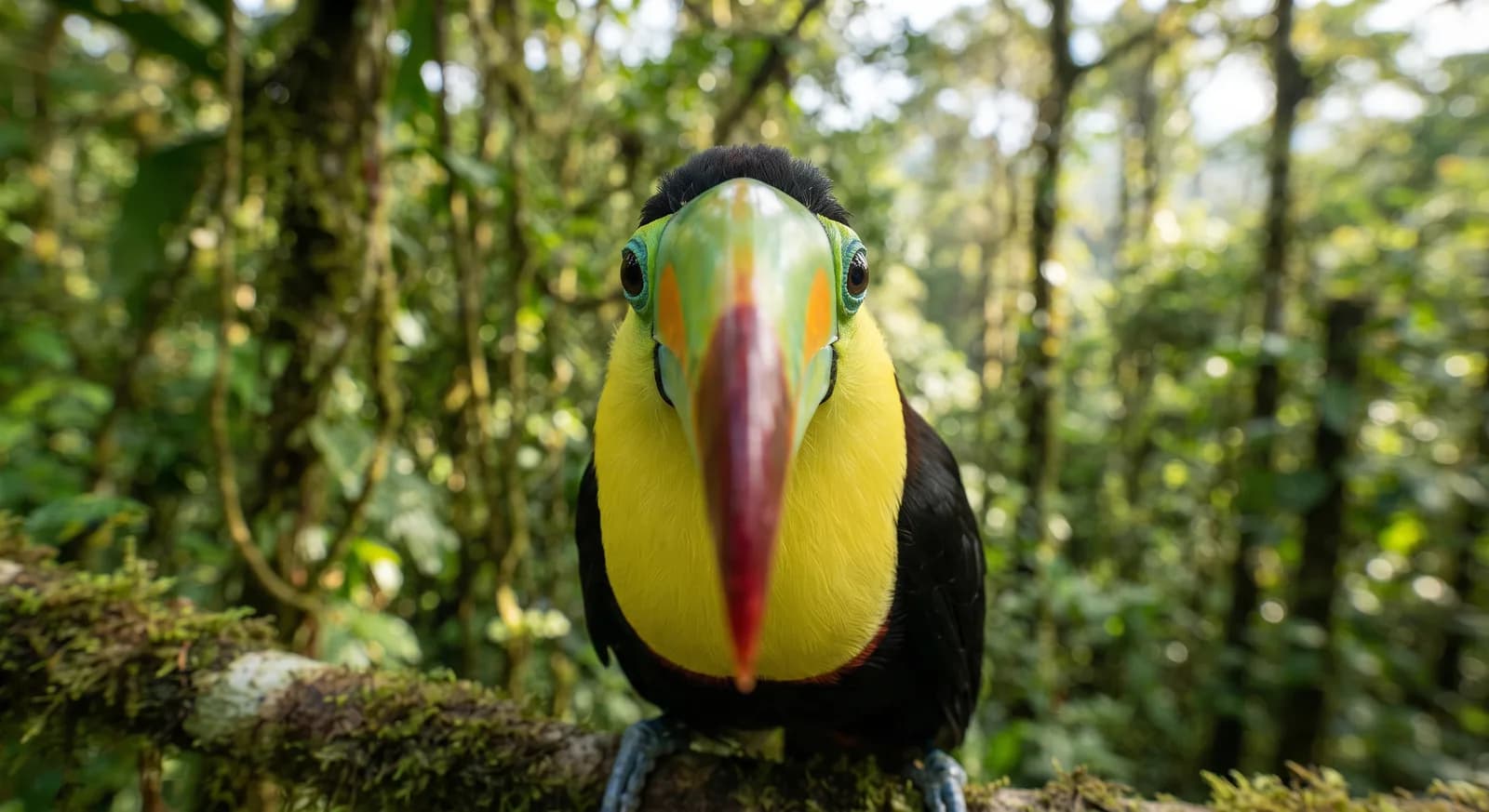
Keel-billed Toucan
Ramphastos sulfuratus
 Near Threatened
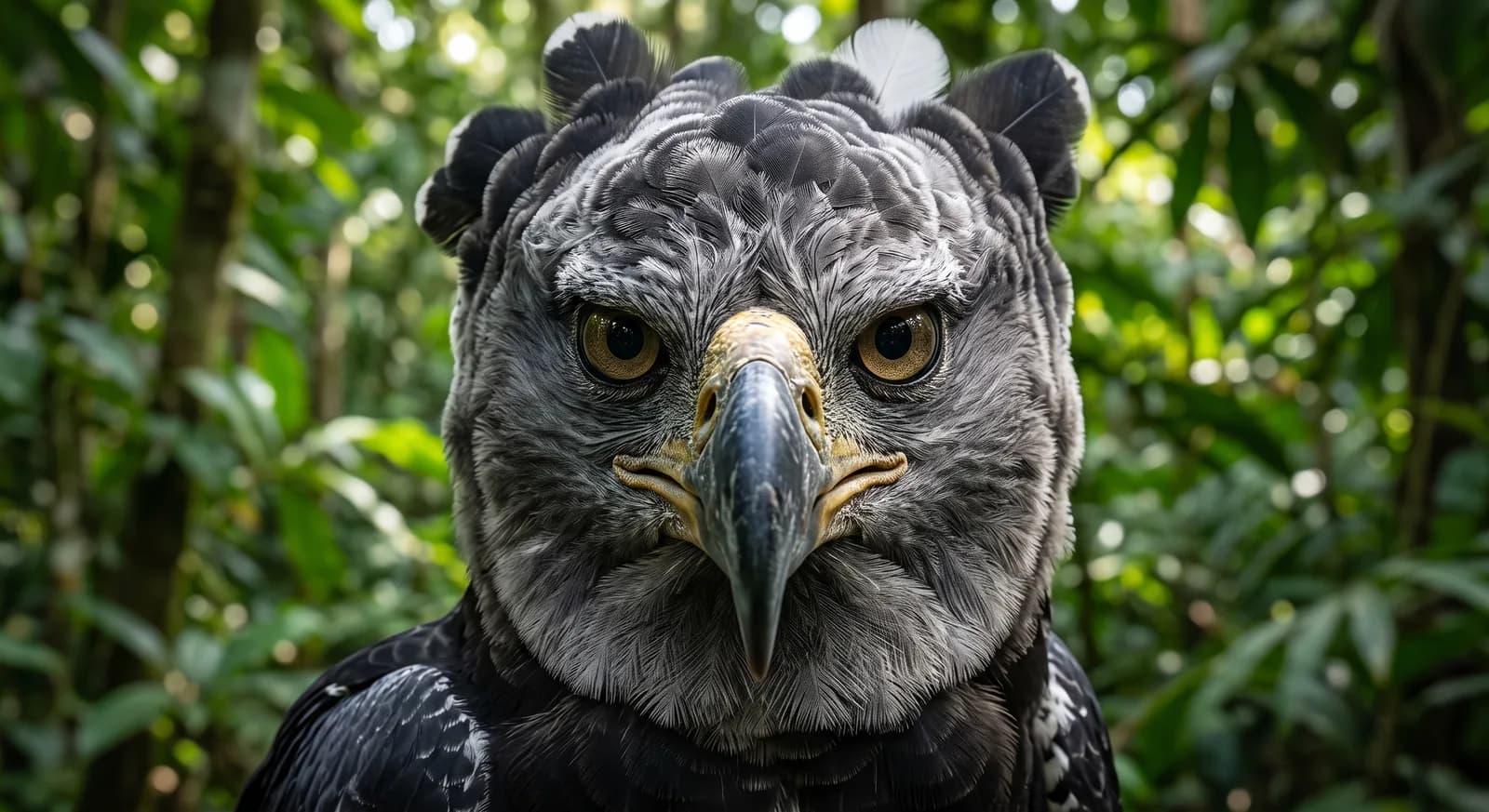
Harpy Eagle
Harpia harpyja
Ornate Hawk-Eagle
Spizaetus ornatus
Keep exploring
Based on what we already know about resplendent quetzal.
Comments
Share an experience, a fun fact or a tip for seeing the resplendent quetzal.
Be the first to comment.