One of the 12 vipers on WAnimals
Reptiles · Squamata · Viperidae
Rhinoceros Viper
Bitis nasicornis
The species is abundant and widely distributed; it faces no significant short-term risk. See full glossary
The rhinoceros viper is one of the most spectacular snakes in the world: its skin combines purple, blue, green, red and yellow in a geometric mosaic, and it carries two or three pairs of scaly horns on its snout. Despite those colours it is almost invisible on the leaf litter of the African forest floor, where it hunts by ambush.
Weight
2 kg – 4 kg
Size
70 cm – 1.2 m
Lifespan
15 years
Diet
Carnivore
Feeds mainly on other animals.
Activity
Nocturnal
Active mainly at night.
Social structure
Solitary
Lives and hunts alone, joining others only to breed.
Sighting difficulty
Easy
Fun facts
- GeneralIts skin, patterned in geometric blues and greens, makes it invisible in the leaf litter.
- It is probably the most colourful snake in Africa: a mosaic of purple, blue, green, red and yellow that, against the damp leaf litter of the forest floor, works as perfect camouflage despite looking impossible in the hand.
- The horns on the snout are modified scales and their function is still unclear, although it has been suggested that they break up the outline of the head.
- It is a patient ambusher: it can stay motionless in the same spot for weeks waiting for a rodent to pass, and strikes with extraordinary speed for such a heavy snake.
Life cycle & biology
- Skeleton type
- Vertebrate - internal bony skeleton (reptile)
- Habitat & environment
- Rainforest, swamp forest and waterlogged ground of Central and West Africa
- Sexual maturity
- 3 years
- Gestation / incubation
- 7 months of gestation
- Litter / clutch size
- 20 live young
Sources consulted: https://en.wikipedia.org/wiki/Bitis_nasicornis
Where to find it
See its range on the interactive mapWhere to watch it
Parques y spots de buceo donde se ha documentado esta especie — se muestran 10 de 19 documentados.
Related species
Other species in the catalogue with the most in common with Rhinoceros Viper — same habitat, park, country, tags or family.
Gaboon Viper
Bitis gabonica
Puff Adder
Bitis arietans
 Least Concern
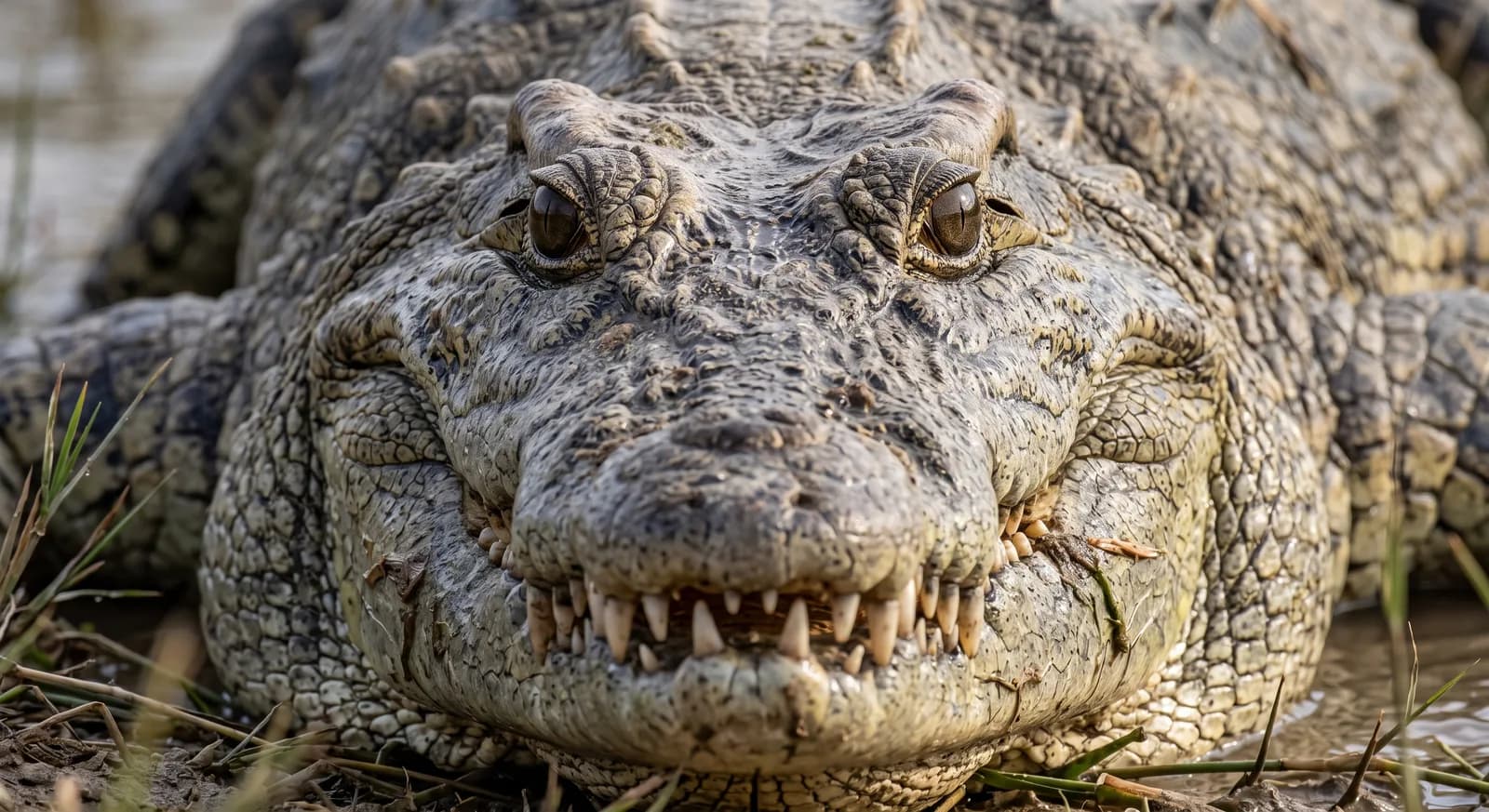
Nile Crocodile
Crocodylus niloticus
Helmeted Turtle
Pelomedusa subrufa
Spotted Ctenopoma
Ctenopoma acutirostre
Zaire Dwarf Clawed Frog
Hymenochirus boettgeri
Keep exploring
Based on what we already know about rhinoceros viper.
Comments
Share an experience, a fun fact or a tip for seeing the rhinoceros viper.
Be the first to comment.