 Least Concern
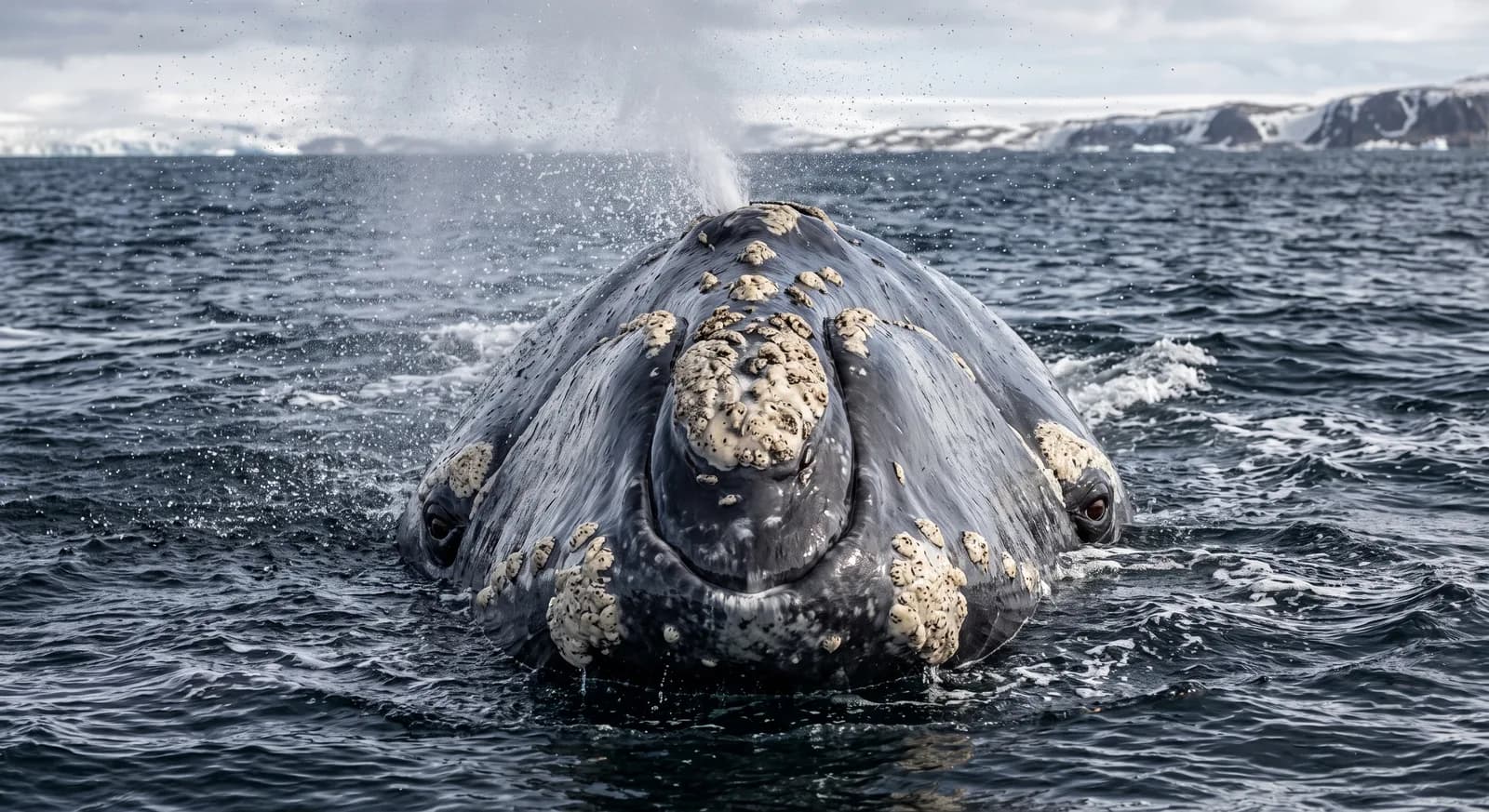
Southern Right Whale
Eubalaena australis
The heart of the Succulent Karoo, setting for the most spectacular mass wildflower bloom on the planet.
Area
1,400 km²
Designated in
1999
Region
Southern Africa
The spring bloom of the Succulent Karoo
Namaqua National Park was established in 1999 in the Northern Cape province, in the Namaqualand region, and protects some 1,400 km² of the Succulent Karoo biome, one of the planet's two arid biodiversity hotspots and the only desert recognised as such.
The Succulent Karoo holds the greatest concentration of succulent plants in the world, with thousands of species adapted to a regime of scant but predictable winter rains, and an extremely high degree of endemism. For most of the year the landscape looks arid and bare, with low shrubs, quartzite and stony soils.
Everything changes between August and September. After the winter rains, millions of annual plants germinate and flower simultaneously, covering the ground in orange, white, yellow and purple to the horizon in what is regarded as the most spectacular mass flowering in the world. The phenomenon lasts only a few weeks, varies greatly from year to year with the rains and draws a concentrated influx of visitors that is the park's main management challenge. Namaqua also includes an Atlantic coastal sector added later, with beaches and dunes. The wildlife is that of the semi-desert, with gemsbok, springbok and a notable diversity of reptiles and specialised pollinating invertebrates.
Ecosystems found in South Africa, where Namaqua lies.
What is worth looking out for this month in South Africa?
Now is a good time: Southern right whales at Hermanus (June to November (peak August to October))
Which other parks are like this one?
Same country: South Africa
Same country: South Africa
Same country: South Africa
Same country: South Africa
Based on what we already know about this park.
Share your experience visiting Namaqua, or a tip for other travellers.
Be the first to comment.
Climate
Tropical, Arid / desert, Temperate, Mediterranean
Best season
May to September
Threatened:
 South Africa