One of the 47 frogs on WAnimals
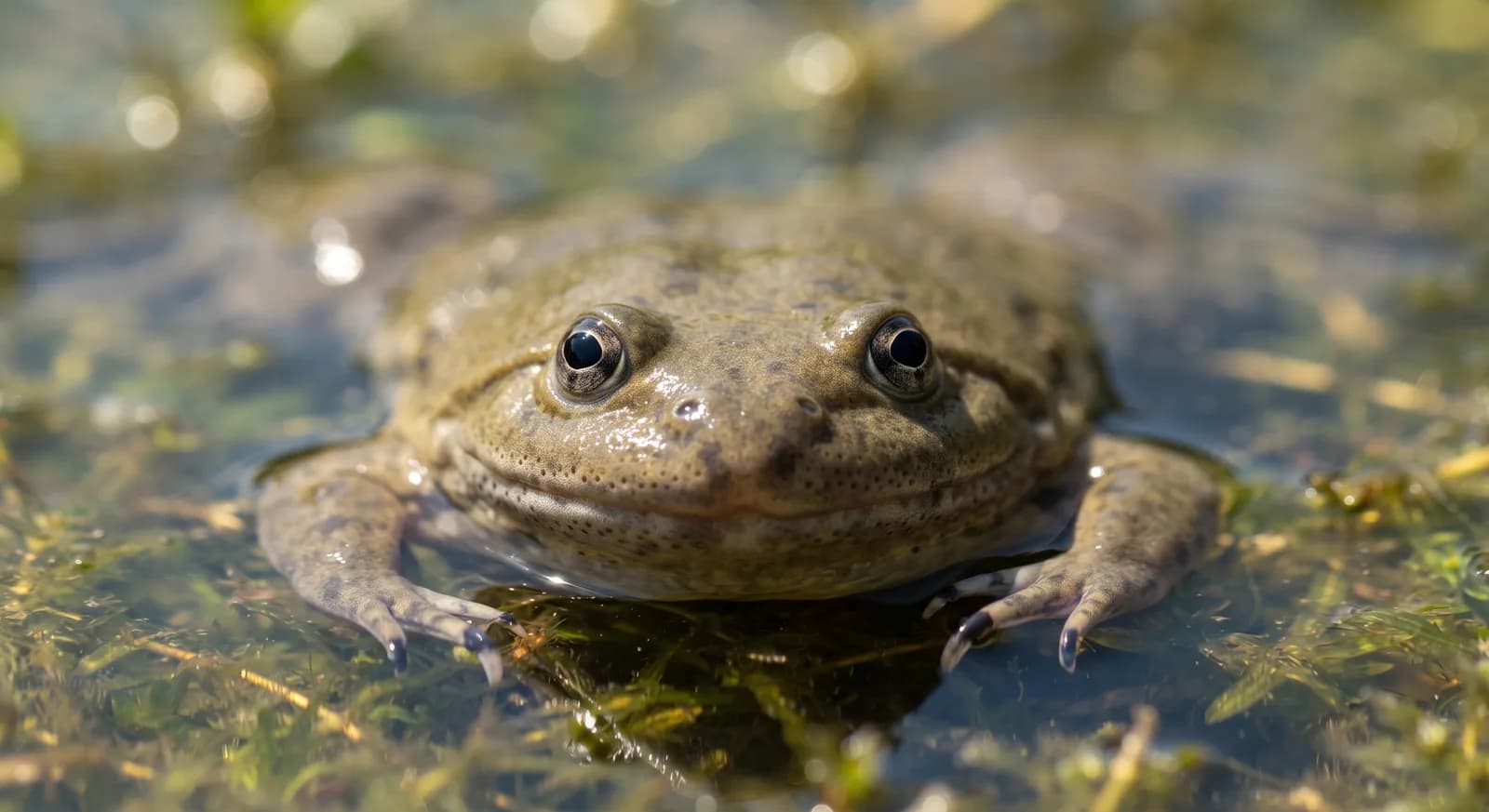
Amphibians · Anura · Pipidae
Xenopus laevis
It has not yet been assessed against the IUCN criteria.
It was widely used between 1930 and 1960 as a living pregnancy test: the urine of pregnant women, injected into the frog, made it lay eggs.
Weight
60 g – 200 g
Size
5 cm – 13 cm
Life expectancy
15 years
Diet
Carnivore
Feeds mainly on other animals.
Activity
Nocturnal
Active mainly at night.
Social structure
Solitary
Lives and hunts alone, joining others only to breed.
Sighting difficulty
Unknown
AI-generated images: illustrations, not photographs.
Sources consulted: Animal Diversity Web; A-Z Animals; Columbia University (invasive species summary); AnAge (genomics.senescence.info); Reptiles' Cove; FrogsToad.com; USGS Species Profile
Parks and dive sites where this species has been documented — showing 10 of 19.
Other species in the catalogue with the most in common with African Clawed Frog — same habitat, park, country, tags or family.
Based on what we already know about african clawed frog.
Share an experience, a fun fact or a tip for seeing the african clawed frog.
Be the first to comment.
The pins mark the parks where its presence is documented.