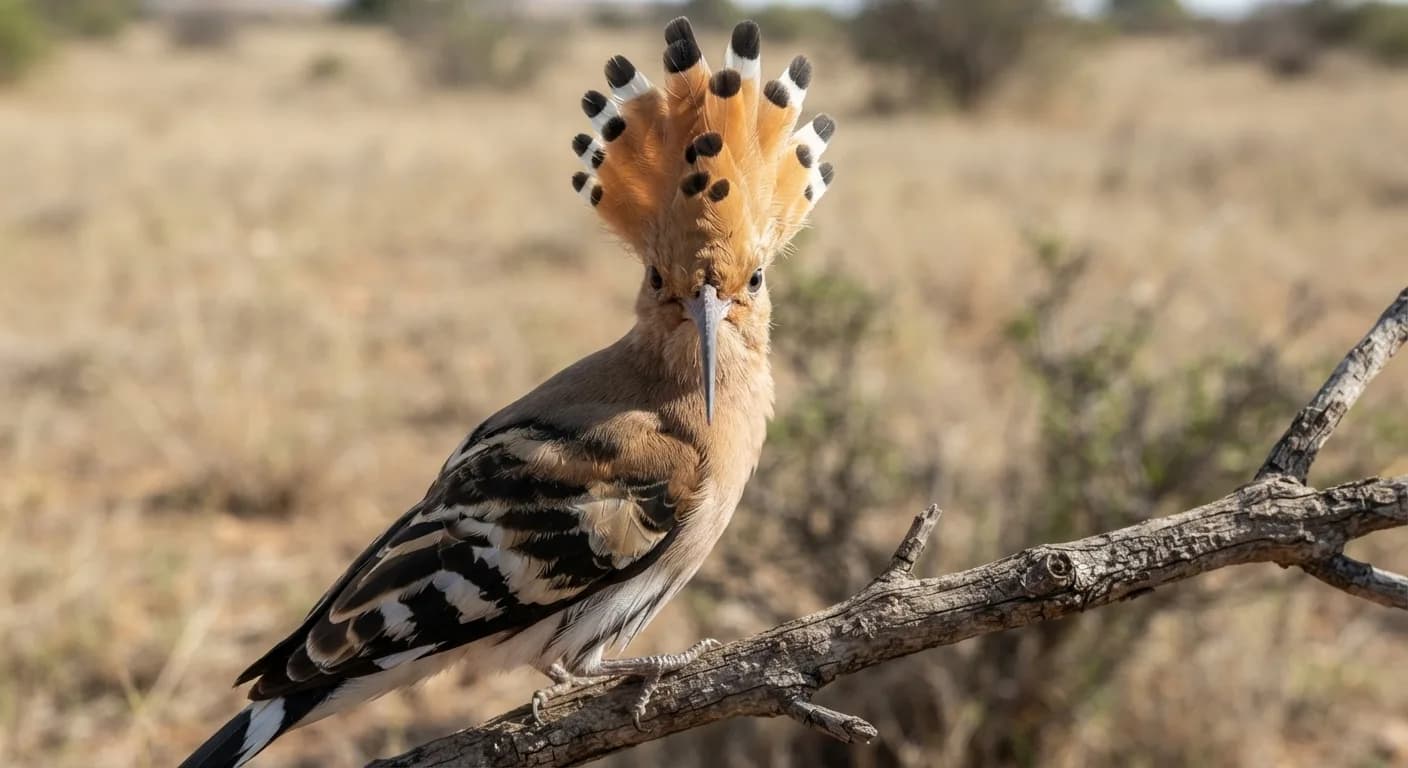
 Least Concern
Eurasian Hoopoe
Upupa epops
One of the oldest and deepest lakes in the world, with endemism comparable to Baikal's, and a mixed property since 1980.
Area
830 km²
Designated in
1979
Region
The Balkans
A tectonic lake of Tertiary origin with extreme endemism
The Ohrid Region was inscribed on the World Heritage List in 1979 for its natural values and in 1980 was extended with the cultural ones, becoming one of the few mixed properties in the world. In 2019 the property was extended to the Albanian shore of the lake, becoming transboundary between North Macedonia and Albania.
Lake Ohrid is one of the oldest on the planet: it formed in a tectonic trough between two and three million years ago and has maintained its conditions unbroken ever since, without drying out or freezing over completely. That exceptional continuity, shared by only a few lakes such as Baikal or Tanganyika, has allowed an extraordinary evolutionary radiation: it holds more than two hundred endemic species, among them the Ohrid trout, molluscs, freshwater sponges and crustaceans that exist nowhere else. It reaches 288 metres deep.
The cultural component is equally dense: the town of Ohrid was a Slavic centre of the first order from the ninth century, seat of the literary school of Clement and Naum, and preserves an extraordinary group of Byzantine and medieval churches with frescoes and icons, among them St Sophia and St John at Kaneo. Tradition credits it with three hundred and sixty-five churches, one for each day of the year.
4 dive sites within 300 km are also shown.
Ecosystems found in North Macedonia, where Ohrid Region lies.
Where can I dive near here?
155 km away
176 km away
226 km away
Which other parks are like this one?
Same country: North Macedonia
Same country: North Macedonia
Same country: North Macedonia
Same type of protected area: World Heritage Site (Mixed)
Based on what we already know about this park.
Share your experience visiting Ohrid Region, or a tip for other travellers.
Be the first to comment.
Climate
Temperate
282 km away



 North Macedonia
 United Kingdom