Birds · Passeriformes · Corvidae
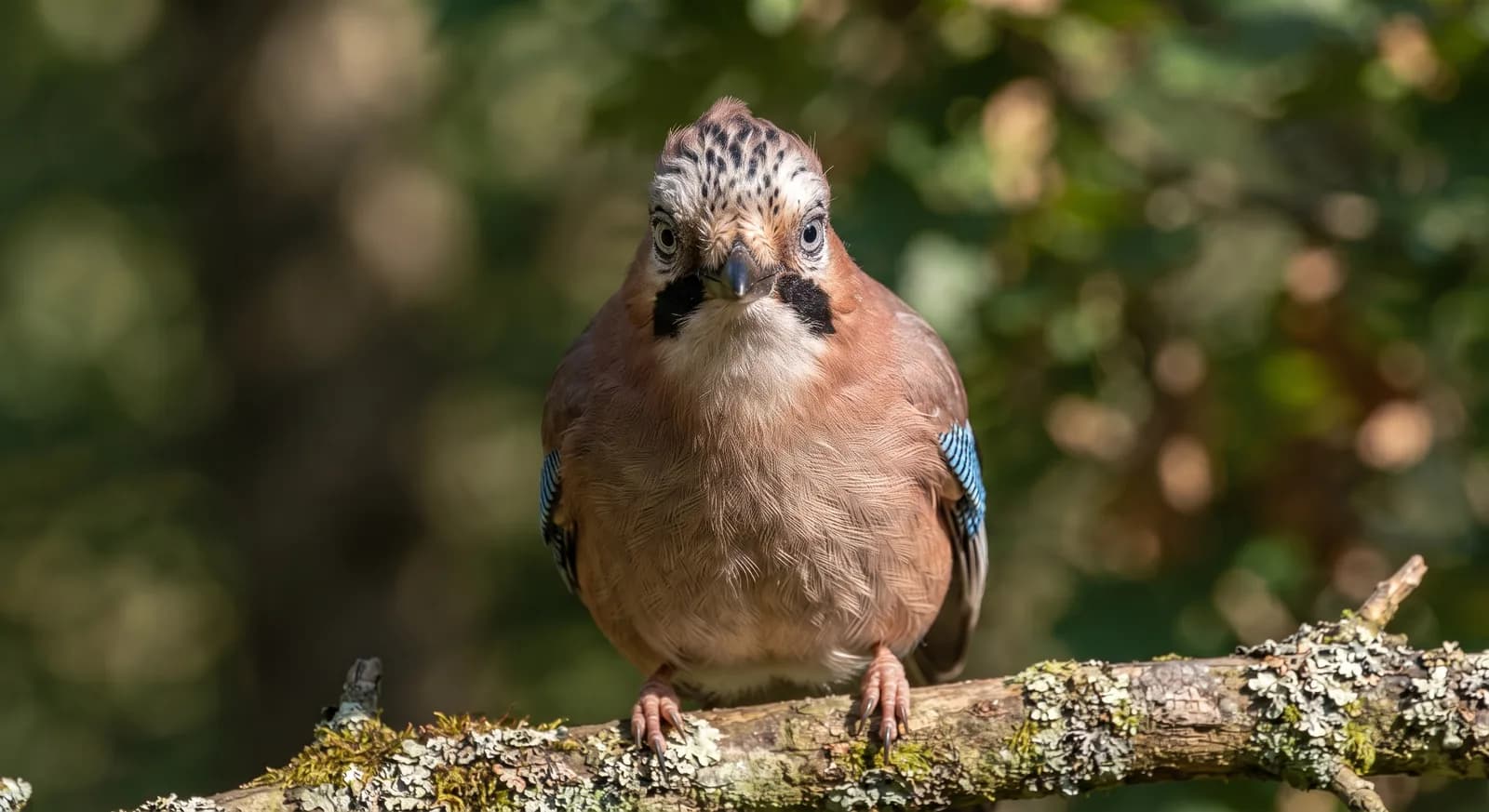
Garrulus glandarius
The species is abundant and widely distributed; it faces no significant short-term risk.
It is recognised as a key agent in the spread of oak woodland after the last ice age, thanks to its habit of carrying and burying acorns as far as 20 km away.
Weight
140 g – 190 g
Size
32 cm – 35 cm
Life expectancy
5 years
Diet
Omnivore
Combines animal and plant food depending on availability.
Activity
Diurnal
Active mainly during the day.
Social structure
Solitary
Lives and hunts alone, joining others only to breed.
AI-generated images: illustrations, not photographs.
Sources consulted: Birdfact · AnAge (genomics.senescence.info) · A-Z Animals · Dibird.com · MammalWeb · Animalia.bio · Songbird Survival · Animal Diversity Web · PMC (jay predation case report)
Best time: All year round; it is most visible in autumn, when it carries and buries acorns without a pause.
Parks and dive sites where this species has been documented — showing 10 of 261.
Other species in the catalogue with the most in common with Eurasian Jay — same habitat, park, country, tags or family.
Based on what we already know about eurasian jay.
The pins mark the parks where its presence is documented.