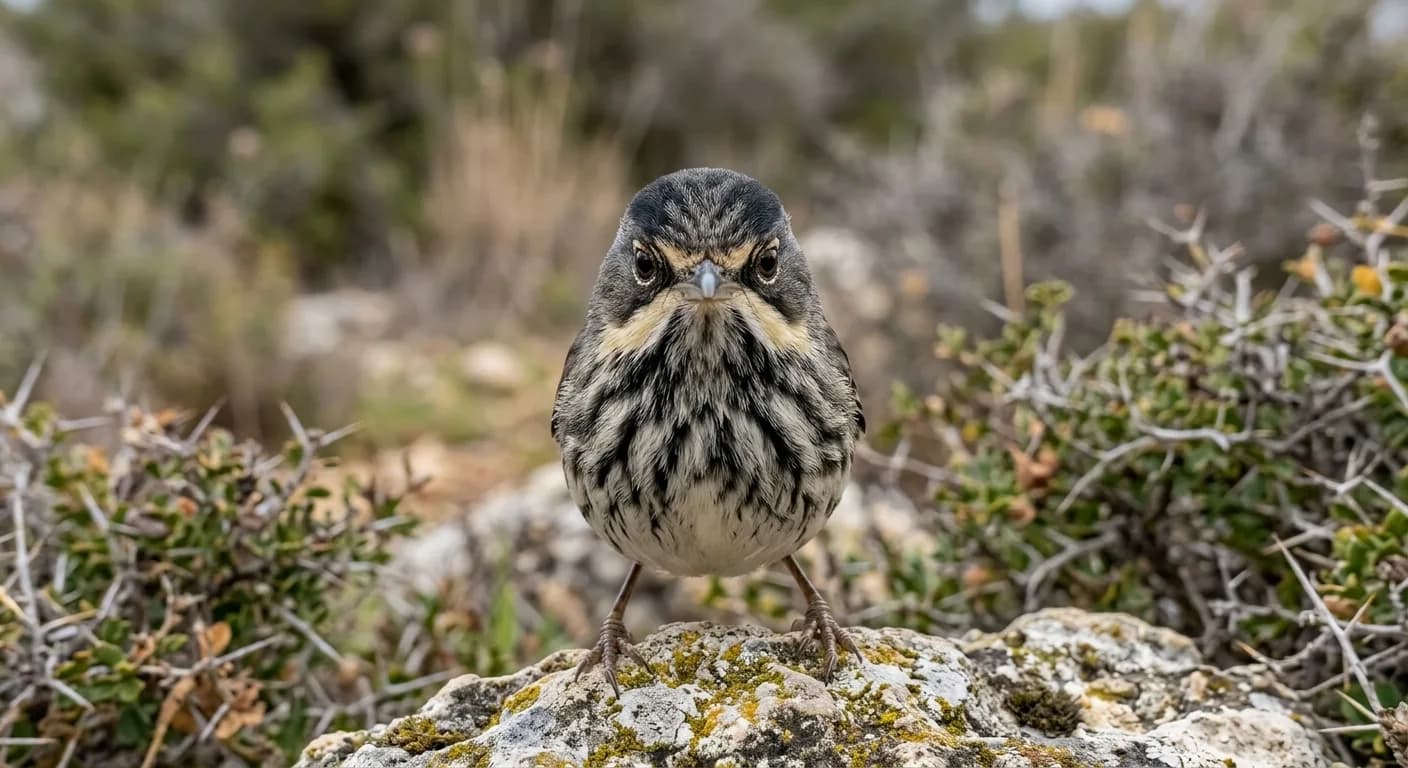
One of the 5 warblers on WAnimals
Birds · Passeriformes · Sylviidae
Curruca communis
The species is abundant and widely distributed; it faces no significant short-term risk.
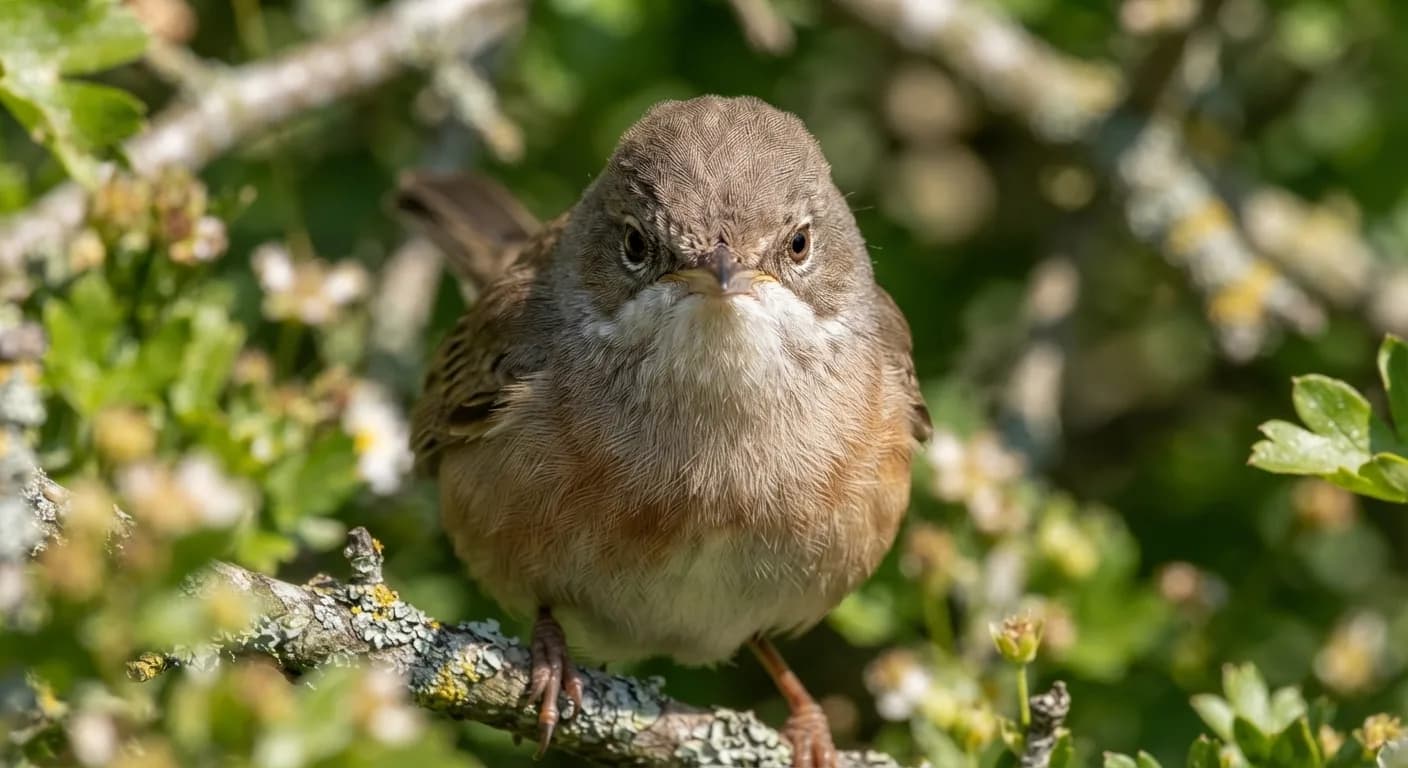
A medium-sized warbler with a long tail and white outer tail feathers. The male has an ash-grey head in breeding plumage, a brown back, strongly contrasting reddish-brown wings, a white throat and pinkish-toned underparts. The female repeats the pattern in duller tones. Both have a reddish iris and pale legs.
Weight
17 g on average
Size
13 cm – 15 cm
Diet
Insectivore
Feeds mainly on insects and other invertebrates.
Activity
Diurnal
Active mainly during the day.
Social structure
In pairs
Usually lives in pairs, sometimes for life.
Sighting difficulty
Easy
Estimated population
Between 39.2 and 59.2 million mature individuals in Europe, with an increasing trend
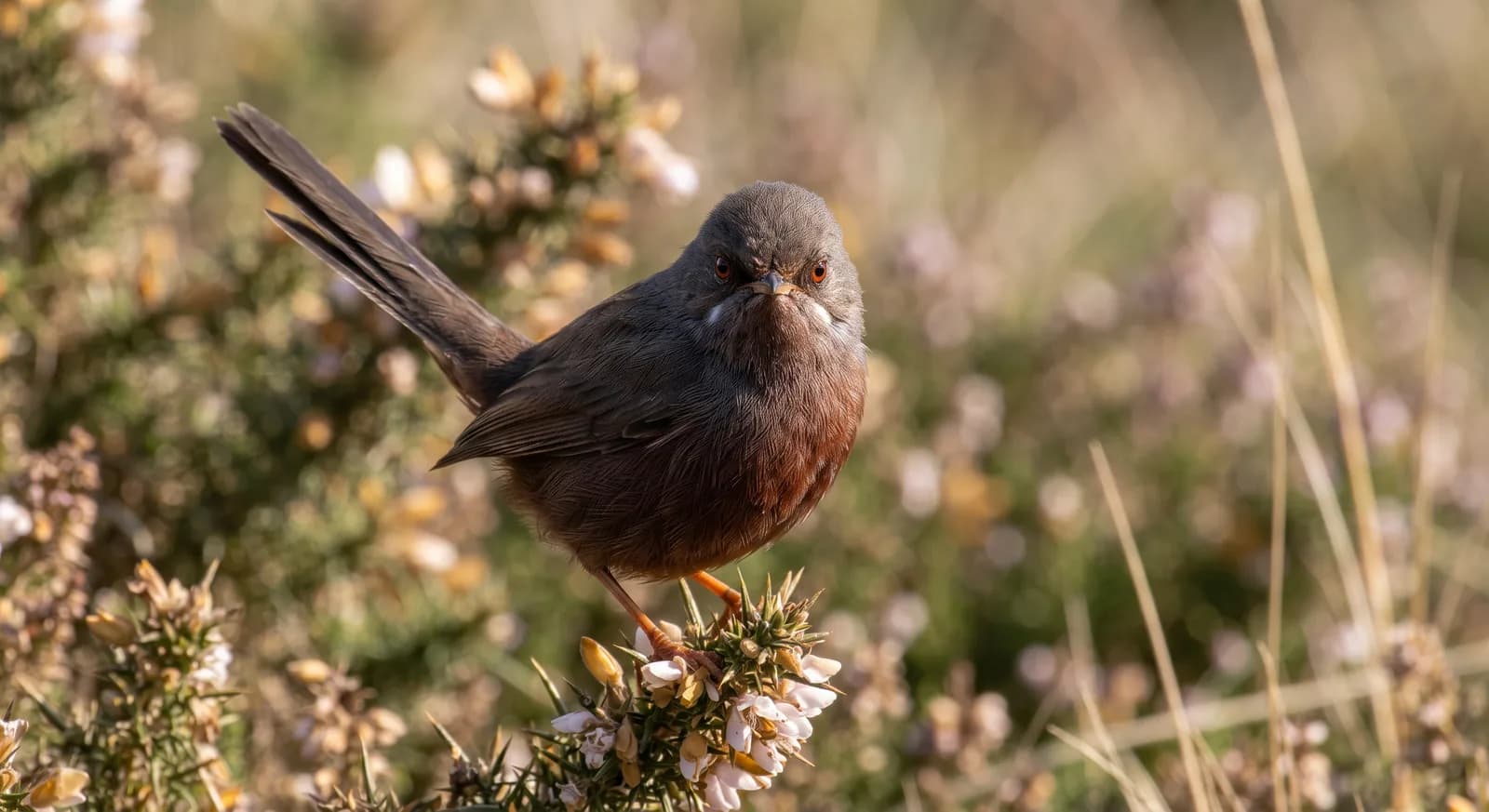
AI-generated images: illustrations, not photographs.
Sources consulted: SEO/BirdLife (ficha y III Atlas de las aves en época de reproducción en España); IUCN Red List; Asturnatura; Aparicio 2022, III Atlas; Aparicio 2014, Enciclopedia Virtual de los Vertebrados Españoles (MNCN-CSIC); Shirihai et al. 2001; Tapia-Harris y Cresswell 2022, Ecology and Evolution 12
Best time: From April to September; the male sings from prominent perches and also in flight, and is far less skulking than other warblers
Parks and dive sites where this species has been documented — showing 10 of 244.
Other species in the catalogue with the most in common with Common Whitethroat — same habitat, park, country, tags or family.
Based on what we already know about common whitethroat.
Share an experience, a fun fact or a tip for seeing the common whitethroat.
Be the first to comment.
The pins mark the parks where its presence is documented.