Skip to content
WAnimals
  • Map
  • Species
  • Parks
  • Diving
Log inCreate account
WAnimals

The guide for travellers and animal lovers: discover, plan and share your wild adventures around the world.

Discover wildlife

  • Species
  • Ecosystems
  • Glossary
  • Tags

Explore places

  • Map
  • Countries
  • Parks
  • Diving

Plan experiences

  • Guides

Learn

  • Blog

Resources

  • About us
  • How we build our profiles
  • Help centre
  • Contact
  • Install the app

Follow us

Account

  • Log in
  • Create account

© 2026 WAnimals. All rights reserved.

Terms of servicePrivacyCookiesLegal notice
MapSpeciesParksDiving
  1. Home
  2. Species
  3. Eastern Subterranean Termite

One of the 2 termites on WAnimals

Insects · Blattodea · Rhinotermitidae

Eastern Subterranean Termite

Reticulitermes flavipes

Not Evaluated

It has not yet been assessed against the IUCN criteria.

Spotted something wrong?

Reticulitermes flavipes, also known as the eastern subterranean termite, is the commonest termite in North America. These are the economically most important wood-destroying insects in the United States and are classed as pests. They feed on the cellulose found in the structural timber of buildings, in fittings, paper, books and cotton. A mature colony can range from twenty thousand to five million workers, and the primary queen lays five thousand to ten thousand eggs a year to add to that total.

Size

0.3 cm – 1 cm

Life expectancy

10 years

Diet

Herbivore

Feeds mainly on plants.

Activity

Nocturnal

Active mainly at night.

Social structure

Colony

Lives in large concentrations, often for breeding reasons.

Temperate forest
9countries11parks

Fun facts

  • The workers are blind and soft-bodied: they cannot bear light or dry air, so they build mud tubes to cross exposed surfaces, and those tubes are the first sign of an infestation.
  • It digests cellulose thanks to symbiotic protists housed in its gut, which it passes from one individual to another by exchanging fluids.
  • A colony can keep several secondary kings and queens, which lets it survive even if the founding pair is removed.
  • It does not digest cellulose by itself: it depends on symbiotic protists in its gut, a trait of the so-called lower termites.
  • A mature colony has between 60,000 and several million workers and can last ten years; the soldiers make up only 1 or 2% and cannot feed themselves.
  • A colony gets through about five grams of wood a day, the equivalent of some thirty centimetres of a two-by-four a year.
  • In the United States, treating and preventing subterranean termites costs some 2 billion dollars a year.
  • It is regarded as native to the south-eastern United States and invasive in Canada, Europe and South America; what was called Reticulitermes santonensis in France turned out to be this same species.

Life cycle and biology

Skeleton type
Invertebrate - chitin exoskeleton (insect)
Habitat and environment
Underground nests in damp soil close to wood; it builds mud tubes to reach the wood without losing moisture, and the colony spreads across satellite nests linked by tunnels
Sexual maturity
The king and queen mate continuously throughout the life of the colony and can live around 20 years; unlike ants, termite colonies have a permanent breeding male because the female cannot store as much sperm
Gestation / incubation
The eggs hatch into an earlier stage called a larva, with no wing buds or eyes; that larva moults into a worker, and the workers can then moult into a soldier or a nymph, and from there into an alate or a secondary reproductive
Litter / clutch size
A mature colony ranges from 20,000 to five million workers. The primary queen lays between 5,000 and 10,000 eggs, though sources disagree on whether that is per year or per day.

Sources consulted: Wikipedia (es): Reticulitermes flavipes · GBIF, ficha Reticulitermes flavipes (por ano) · Encyclopedia MDPI y otras fichas (por dia) · Ohio State University Extension (BYGL), ficha Eastern subterranean termite · Fichas de identificacion de Reticulitermes flavipes · Ninnescah Biology Field Station (Wichita State University), ficha Eastern subterranean termite

Where to find it

Best time: Spring, when the swarms of alates emerge after days of rain

Loading map…

The pins mark the parks where its presence is documented.

Where to see it

Parks and dive sites where this species has been documented — showing 10 of 11.

Related species

Other species in the catalogue with the most in common with Eastern Subterranean Termite — same habitat, park, country, tags or family.

Shares a park
Shares a park
Shares a park
Shares a park
Shares a park
Shares a park

Keep exploring

Based on what we already know about eastern subterranean termite.

Share an experience, a fun fact or a tip for seeing the eastern subterranean termite.
See full glossary
This page in other languages: Español · Deutsch · Français · Português · Italiano
See its range on the interactive map→
EvergladesUnited States
Great Smoky MountainsUnited States
Mammoth CaveUnited States
CongareeUnited States
ShenandoahUnited States
Cuyahoga ValleyUnited States
Indiana DunesUnited States
Assateague IslandUnited States
Gulf IslandsCanada
Hot SpringsUnited States
See all 11 parks
Not Evaluated

North American Luna Moth

Actias luna

Near Threatened

Decim Periodical Cicada

Magicicada septendecim

Not Evaluated

Woodroach

Cryptocercus punctulatus

Critically Endangered

Little Brown Bat

Myotis lucifugus

Least Concern

Big Brown Bat

Eptesicus fuscus

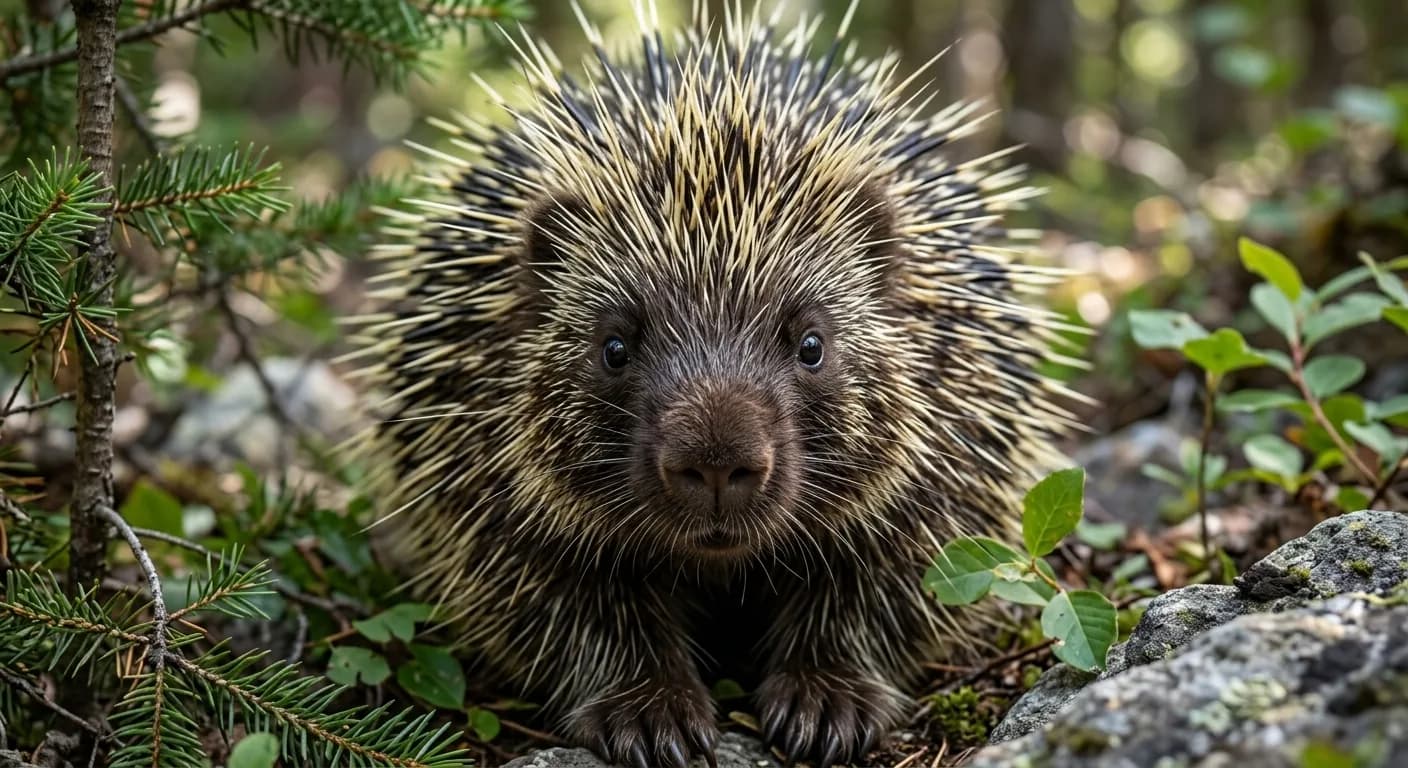
North American PorcupineLeast Concern

North American Porcupine

Erethizon dorsatum

CountriesUnited States
ParksEvergladesUnited States
TagsHerbivore
Herbivore
Nocturnal
Colonial
Insect
Temperate forest

Europe4

North America3

South America2

United States
Canada
Austria
Bahamas
Chile
France
Austria
France
Germany
Italy
Bahamas
Canada
United States
Chile
Uruguay