 Least Concern
Pygmy White-toothed Shrew
Suncus etruscus
One of the 10 shrews on WAnimals
Mammals · Eulipotyphla · Soricidae
Crocidura russula
The species is abundant and widely distributed; it faces no significant short-term risk.
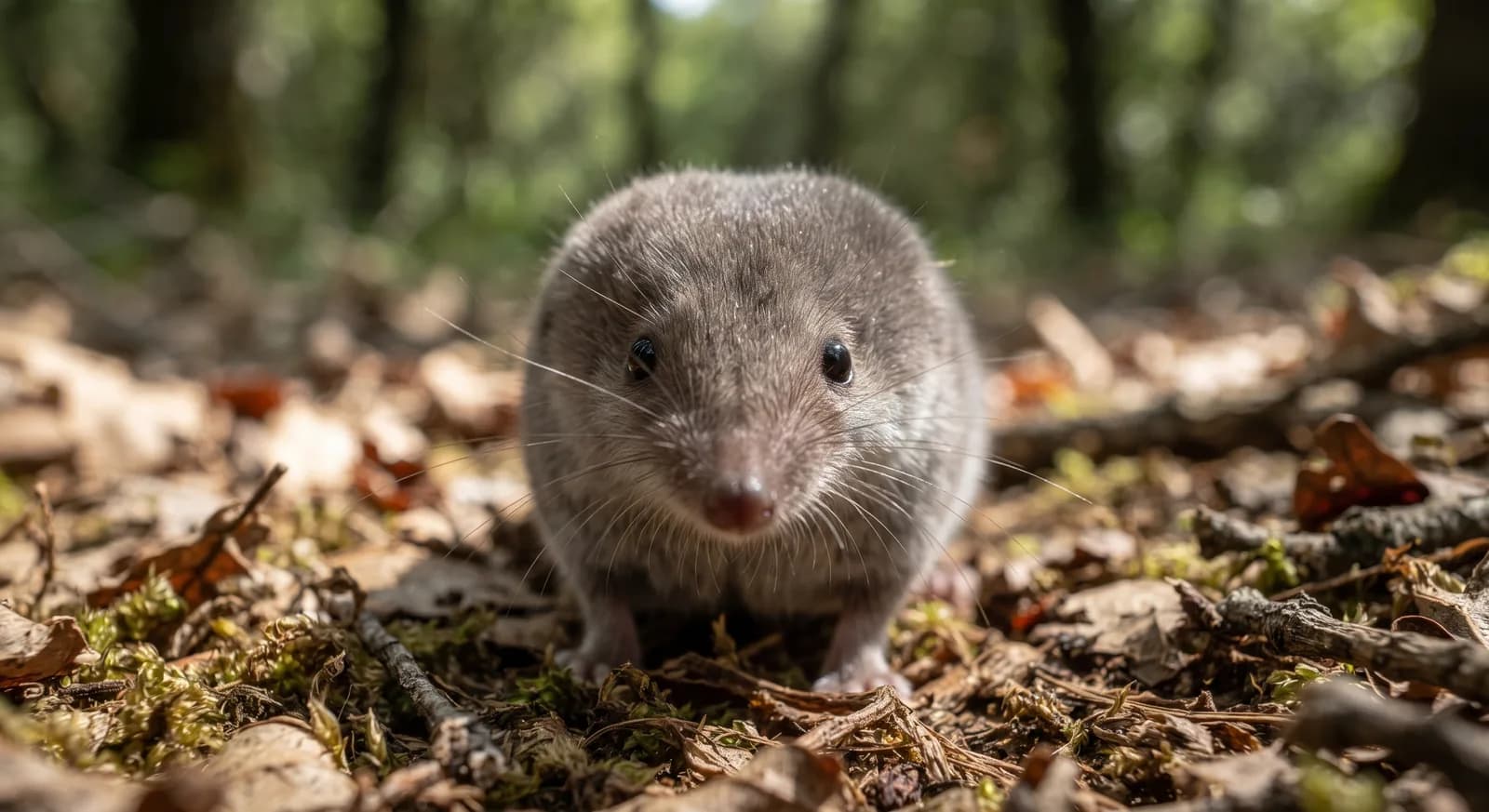
The greater white-toothed shrew is one of the commonest mammals of western Europe and North Africa, even though it almost always goes unnoticed. It measures some eight centimetres and weighs about as much as two coins. Its metabolism is so fast that it has to eat almost continuously: it alternates short bouts of activity and rest around the clock, with no clear day or night pattern. It feeds on worms, insects, spiders and snails. It is frequent in gardens and stone walls and is a common victim of domestic cats.
Weight
6 g – 14 g
Size
6 cm – 9 cm
Life expectancy
2 years
Diet
Insectivore
Feeds mainly on insects and other invertebrates.
Activity
Irregular activity
Active at irregular times, by day or night depending on circumstances.
Social structure
Solitary
Lives and hunts alone, joining others only to breed.
Sighting difficulty
Easy
Sources consulted: https://es.wikipedia.org/wiki/Crocidura_russula
The pins mark the parks where its presence is documented.
Parks and dive sites where this species has been documented — showing 10 of 34.
Other species in the catalogue with the most in common with Greater White-toothed Shrew — same habitat, park, country, tags or family.
Based on what we already know about greater white-toothed shrew.
Share an experience, a fun fact or a tip for seeing the greater white-toothed shrew.
Be the first to comment.