One of the 2 shrews on WAnimals
Mammals · Eulipotyphla · Soricidae
Suncus etruscus
The species is abundant and widely distributed; it faces no significant short-term risk.
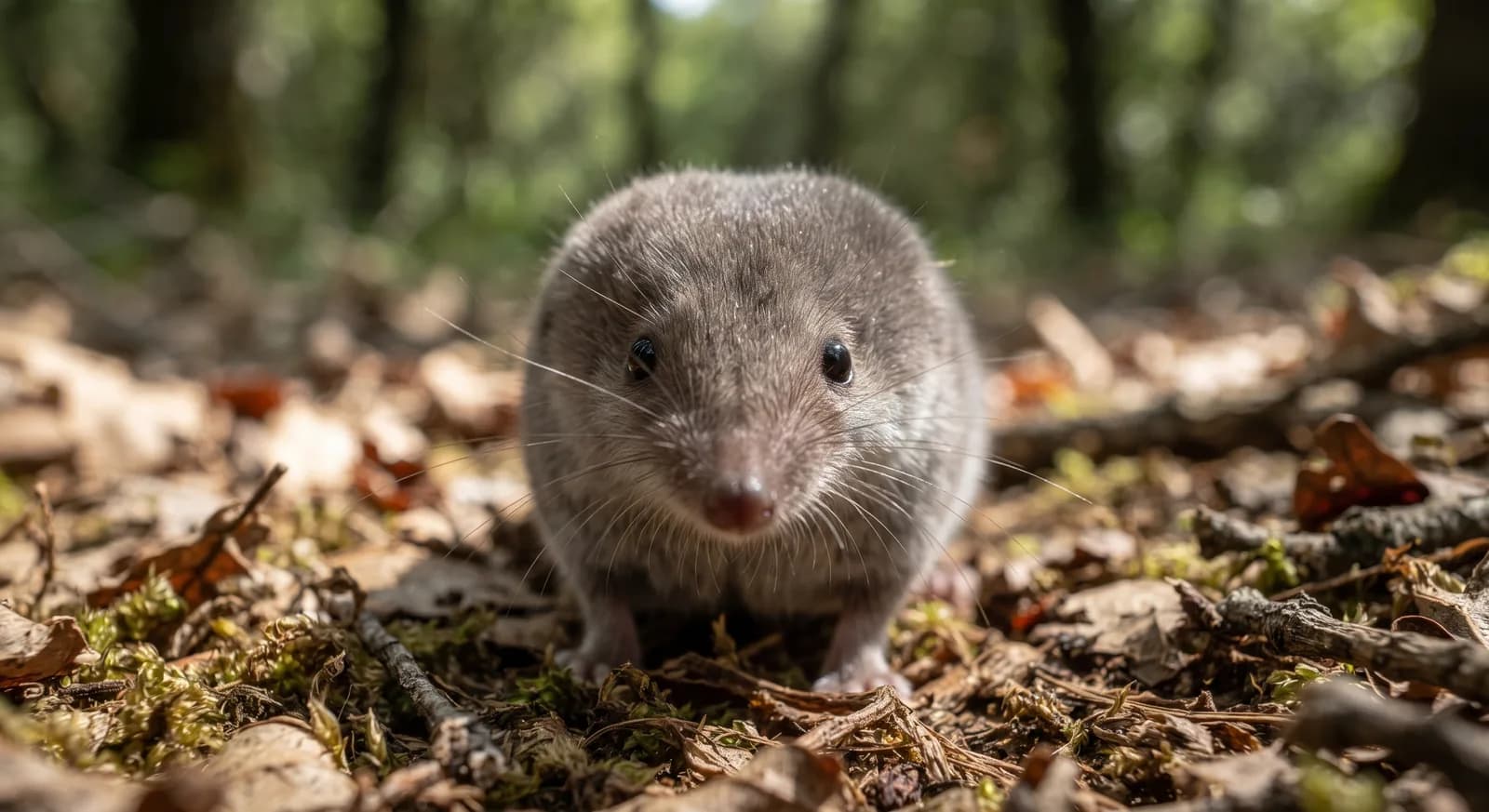
The lightest mammal in the world. A proportionally large head with a very flattened skull, an elongated snout with long whiskers, tiny eyes and clearly visible ears that project beyond the fur. Greyish-brown fur with no seasonal variation, somewhat paler on the belly.
Weight
1 g – 3 g
Size
3.5 cm – 5.3 cm
Life expectancy
2 years

Diet
Insectivore
Feeds mainly on insects and other invertebrates.
Activity
Nocturnal
Active mainly at night.
Social structure
Solitary
Lives and hunts alone, joining others only to breed.
Sighting difficulty
Easy
AI-generated images: illustrations, not photographs.
Sources consulted: IUCN Red List (e.T90389138A22288134); MITECO - Inventario Español de Especies Terrestres; Proyecto Mammalia; Galán-Puchades et al. 2021, Animals 11(7); MacDonald y Barret 2008, Guía de Campo de los Mamíferos de España y Portugal
Best time: All year round: it is active practically 24 hours a day, alternating spells of torpor with spells of activity
Parks and dive sites where this species has been documented — showing 10 of 127.
Other species in the catalogue with the most in common with Pygmy White-toothed Shrew — same habitat, park, country, tags or family.
Based on what we already know about pygmy white-toothed shrew.
Share an experience, a fun fact or a tip for seeing the pygmy white-toothed shrew.
Be the first to comment.
The pins mark the parks where its presence is documented.