 Vulnerable
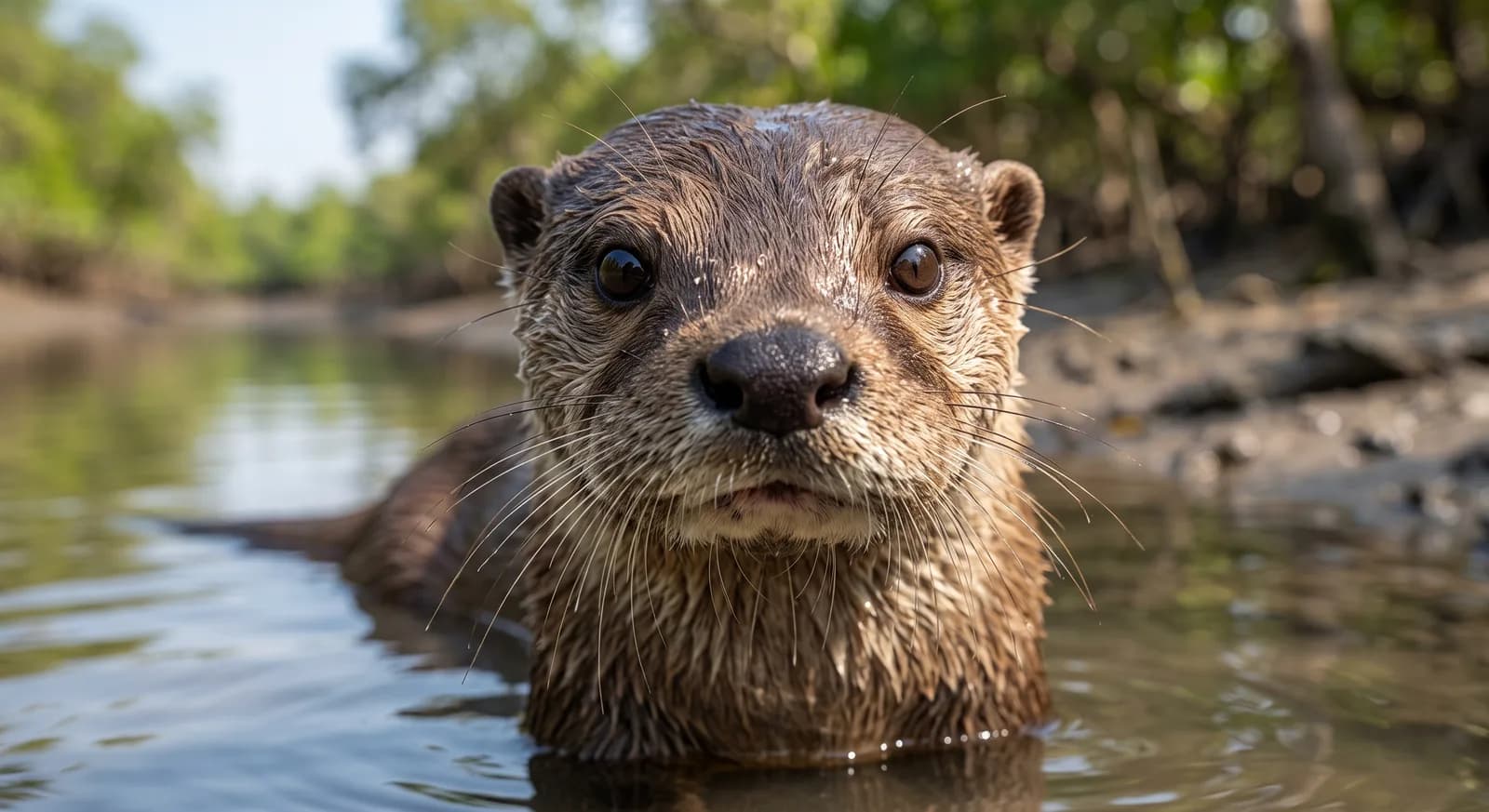
Smooth-coated Otter
Lutrogale perspicillata
One of the 8 otters on WAnimals
Mammals · Carnivora · Mustelidae
Aonyx cinereus
At high risk of extinction in the wild over the medium term.
The Oriental small-clawed otter is the smallest otter in the world and one of the most social: it lives in family groups of up to a dozen individuals that communicate with a wide repertoire of squeaks and whistles. Unlike other otters it does not chase fish by swimming: it feels about with its hands under stones and in the mud for crabs, molluscs and amphibians. Its claws are reduced to tiny spines that do not project beyond the pads, which leaves it extraordinarily dextrous fingers.
Weight
2.7 kg – 5.4 kg
Size
45 cm – 61 cm
Life expectancy
15 years
Diet
Carnivore
Feeds mainly on other animals.
Activity
Diurnal
Active mainly during the day.
Social structure
Family group
Lives in small family groups with close bonds.
Sources consulted: Wikipedia (es): Aonyx cinereus
Best time: All year round in southern and South-East Asia, by day; it moves in very noisy family groups through rice paddies, mangroves and streams.
Parks and dive sites where this species has been documented — showing 10 of 56.
Other species in the catalogue with the most in common with Oriental Small-clawed Otter — same habitat, park, country, tags or family.
The oriental small-clawed otter is classified as vulnerable. Organisations such as the IUCN, WWF and the Wildlife Conservation Society work specifically on its conservation and that of its habitat; looking into their programmes is a good starting point if you want to get involved.
It's documented in 10 protected areas — one reason why protecting these places matters for its conservation.
Based on what we already know about oriental small-clawed otter.
The pins mark the parks where its presence is documented.