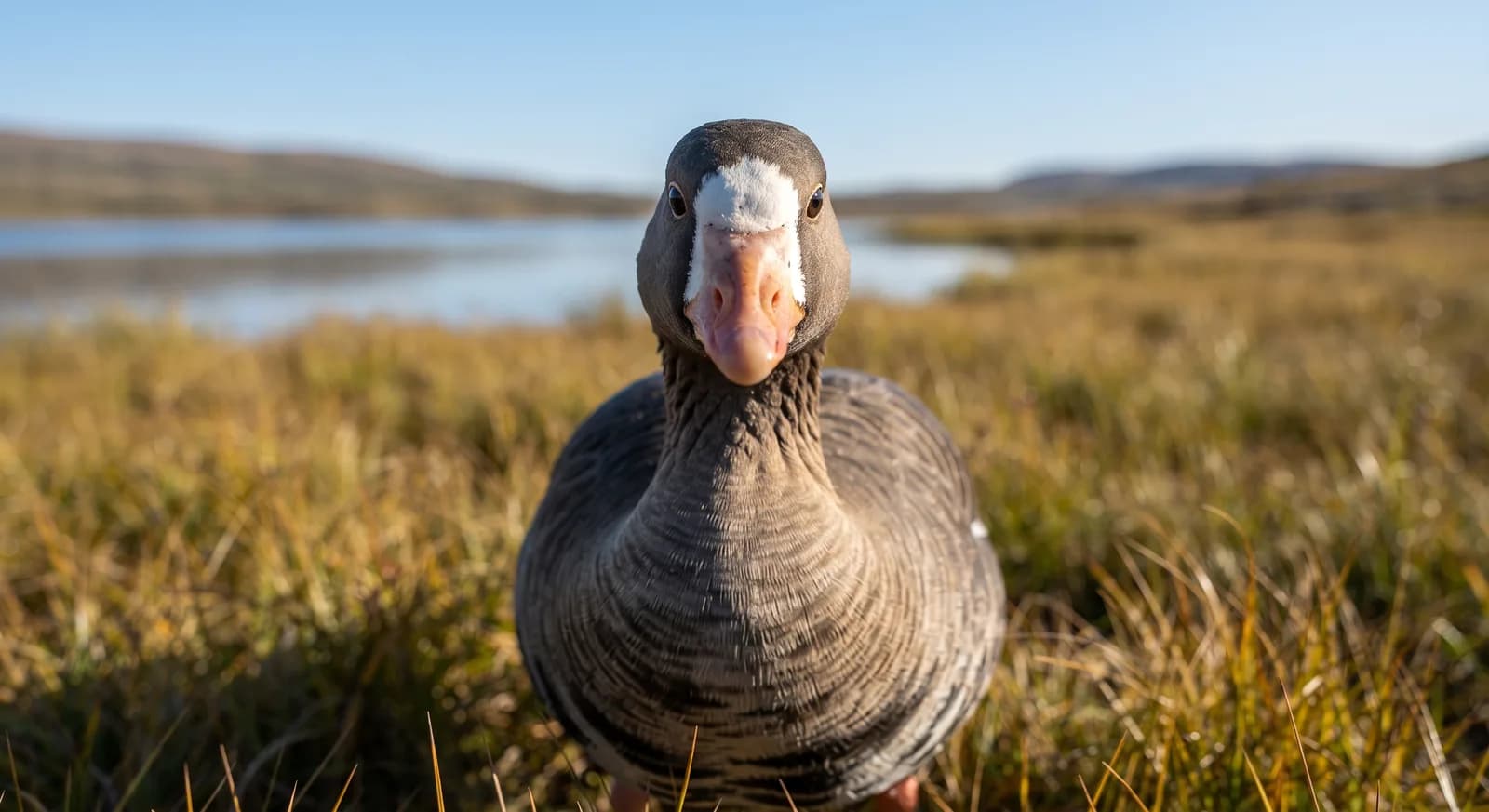
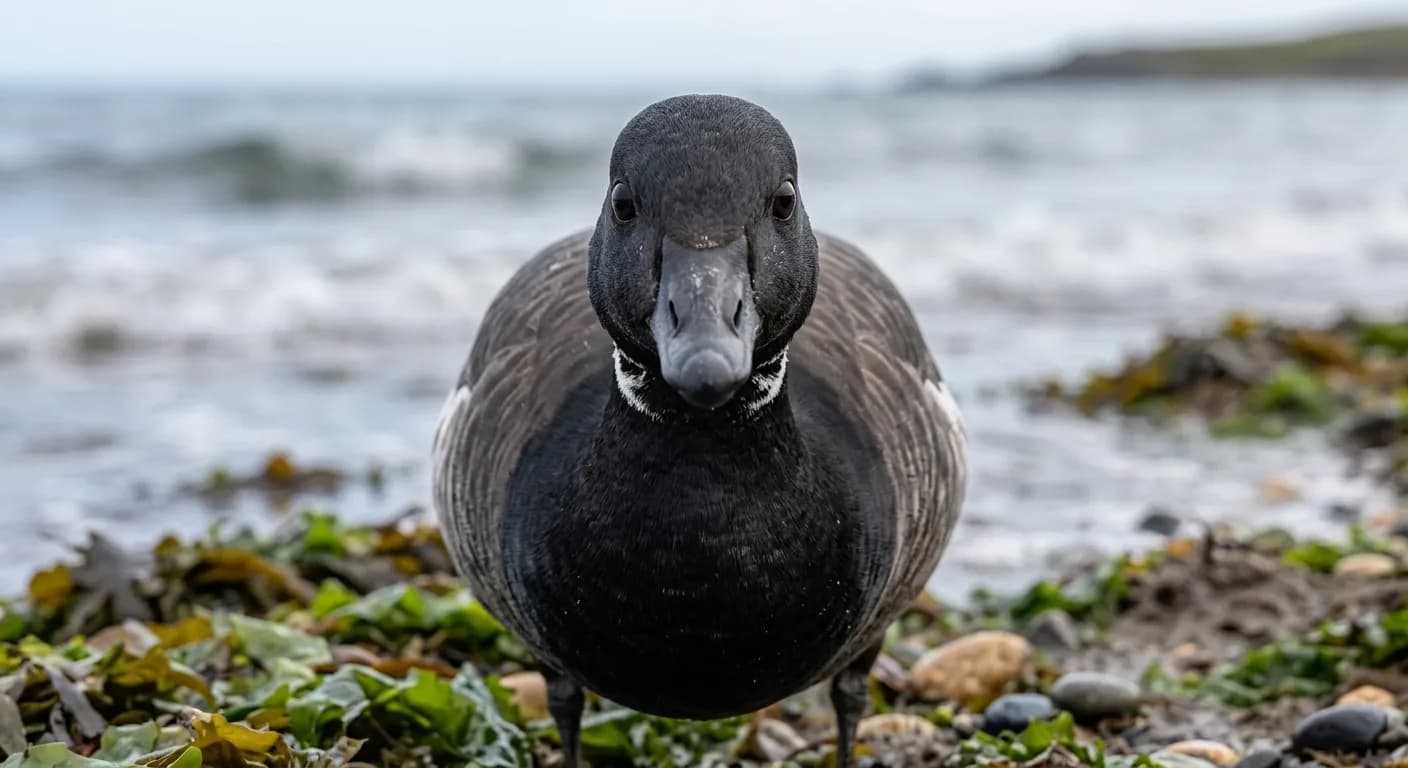
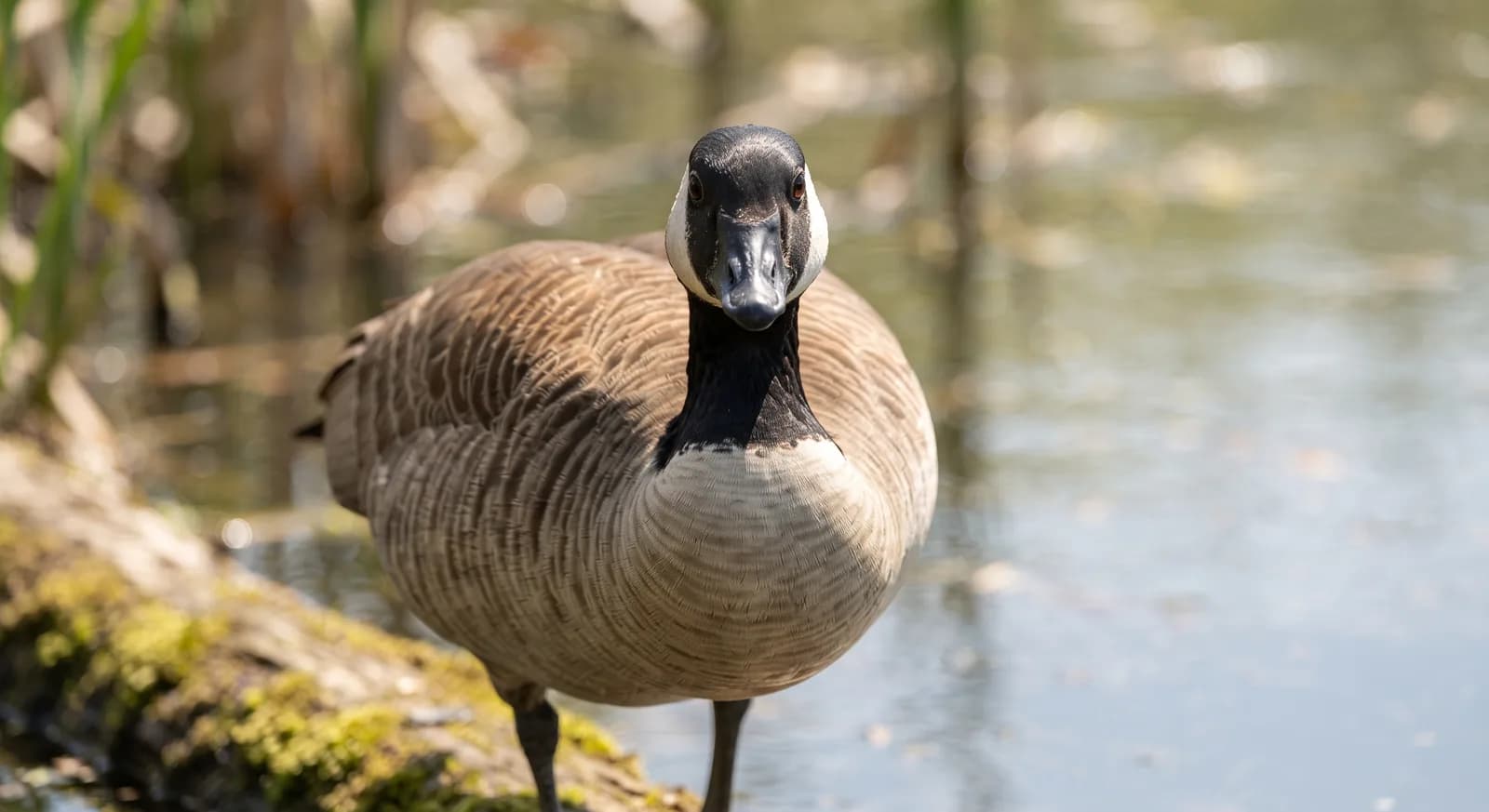
One of the 4 geese on WAnimals
Birds · Anseriformes · Anatidae
Anser caerulescens
The species is abundant and widely distributed; it faces no significant short-term risk.
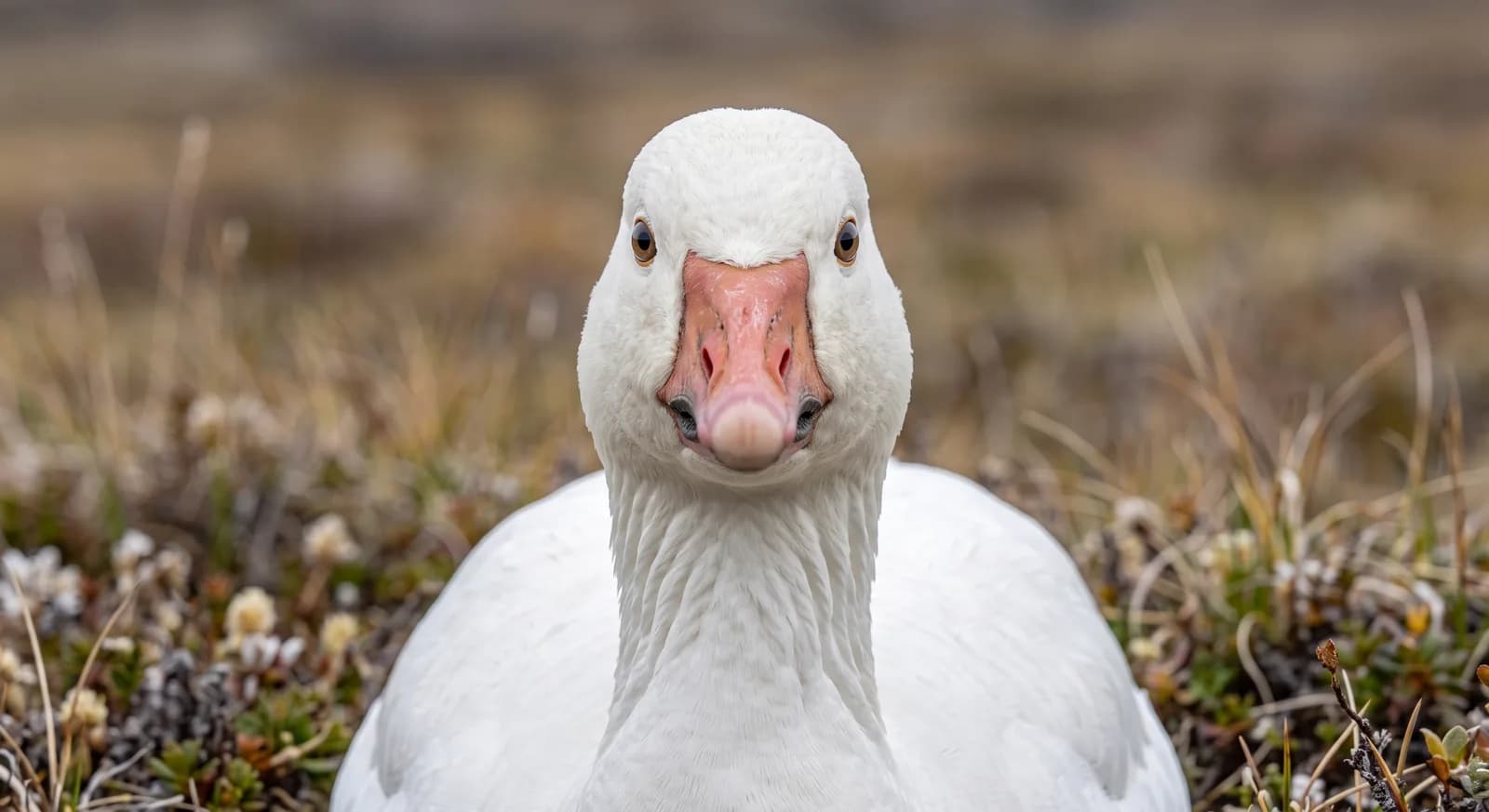
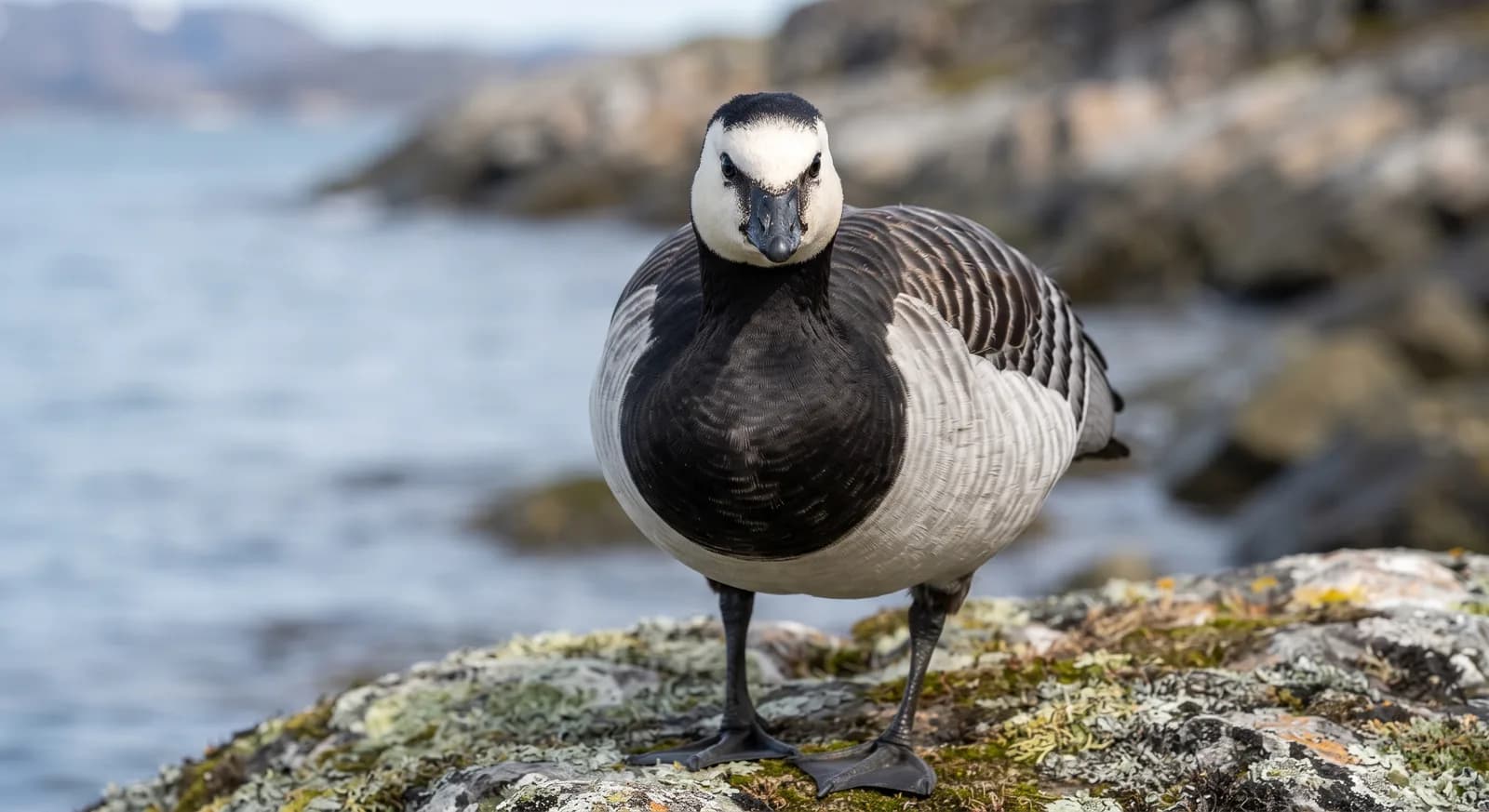
An Arctic goose with two colour morphs in the adults. The white morph, or "snow" morph, has a white body with black wingtips and a black mark on the bill that recalls a smile. The blue morph retains those same black patterns but the body is bluish grey, with the head equally white. There is slight sexual dimorphism: the males are somewhat larger.
Weight
2 kg – 3.2 kg
Size
65 cm – 84 cm
Life expectancy
15 years
Diet
Herbivore
Feeds mainly on plants.
Activity
Diurnal
Active mainly during the day.
Social structure
Colony
Lives in large concentrations, often for breeding reasons.
Estimated population
It is one of the most abundant waterbirds in the world
AI-generated images: illustrations, not photographs.
Sources consulted: IUCN Red List (BirdLife International 2012) · Birds of the World (Cornell Lab) · Soper 1930, Canadian Field Naturalist 44 · Cooke et al. · Bernis et al. 1994, Ardeola (nombres castellanos SEO) · Linnaeus 1758 · Kennard 1927
Best time: Winter in the southern United States and Mexico; it breeds in summer on the Arctic tundra
The pins mark the parks where its presence is documented.
Parks and dive sites where this species has been documented — showing 10 of 24.
Other species in the catalogue with the most in common with Snow Goose — same habitat, park, country, tags or family.
Based on what we already know about snow goose.