 Least Concern
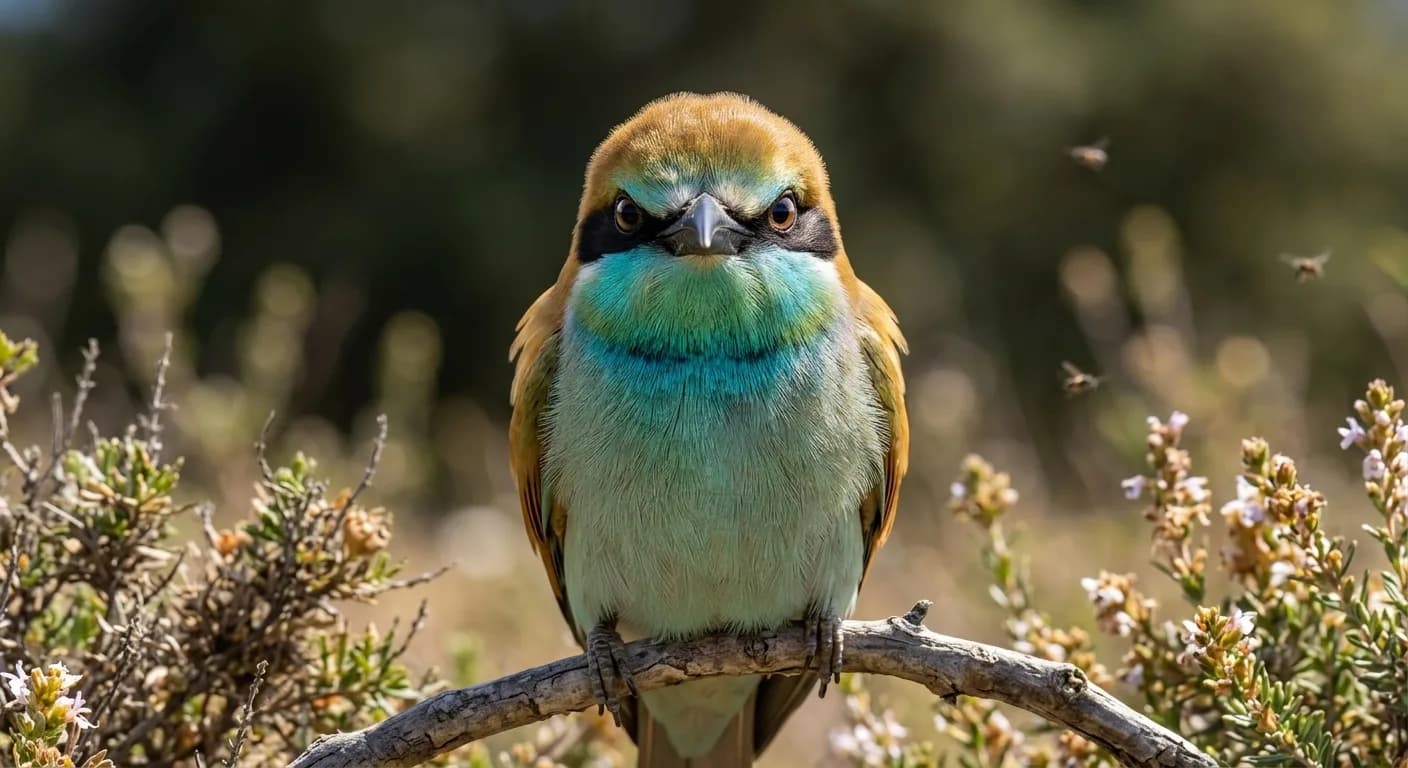
European Bee-eater
Merops apiaster
Africa
The Central African Republic occupies the transition between the Congo rainforest, to the southwest, and the Sudanian savannahs of the north and east. At the far southwest, the Dzanga-Sangha complex forms part of the great trinational forest block it shares with Cameroon and the Republic of the Congo, with closed-canopy rainforest, blackwater rivers and swampy clearings where wildlife gathers. In the north and east stretch immense, thinly populated wooded savannahs, crossed by gallery forest, which once held enormous herds of elephants and antelopes and where recovery projects such as Chinko now work. The Ba'Aka peoples of the southwest hold a deep knowledge of the forest and take part in tracking gorillas habituated to human presence.
National animal: The elephant, present on the national coat of arms
Dzanga Bai is a swampy clearing in the middle of the rainforest, the size of a few football pitches, visited every day by dozens of forest elephants, sometimes more than a hundred. They do not come to drink but to dig the mud with trunk and tusks in search of mineral salts they cannot find among the vegetation. It is the best place in the world to watch this species, normally invisible under the canopy, and its social behaviour has been studied there for decades.
Manovo-Gounda-St Floris has been on the list of World Heritage in Danger since 1997 because of poaching and insecurity. Dzanga-Sangha combines strict protection with use rights for the Ba'Aka communities.
Dzanga Bai year-round, from the observation platform, for forest elephants. The forests of Bai Hokou for habituated gorillas. The northern savannahs in the dry season for large ungulates.
Where else might I want to travel?
Same region: Central Africa
Same region: Central Africa
Same region: Central Africa
Same region: Central Africa
176 species found
Based on what we already know about Central African Republic.