Skip to content
WAnimals
  • Map
  • Species
  • Parks
  • Diving
Log inCreate account
WAnimals

The guide for travellers and animal lovers: discover, plan and share your wild adventures around the world.

Discover wildlife

  • Species
  • Ecosystems
  • Glossary
  • Tags

Explore places

  • Map
  • Countries
  • Parks
  • Diving

Plan experiences

  • Guides

Learn

  • Blog

Resources

  • About us
  • How we build our profiles
  • Help centre
  • Contact
  • Install the app

Follow us

Account

  • Log in
  • Create account

© 2026 WAnimals. All rights reserved.

Terms of servicePrivacyCookiesLegal notice
MapSpeciesParksDiving
  1. Home
  2. Species
  3. Boomslang
Boomslang (Dispholidus typus)

Reptiles · Squamata · Colubridae

Boomslang

Dispholidus typus

Least Concern

The species is abundant and widely distributed; it faces no significant short-term risk.

Spotted something wrong?

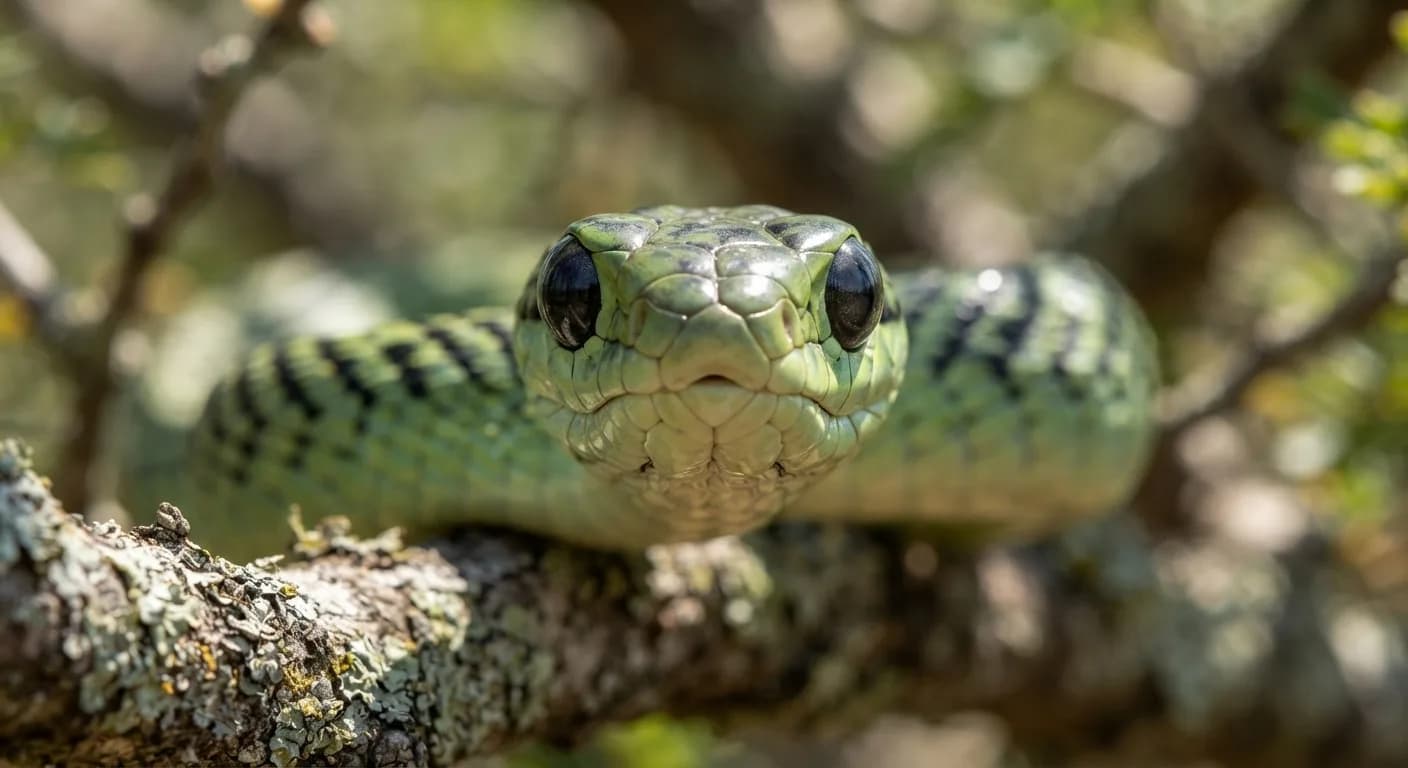
The boomslang, also known as the Cape tree snake, is a species of alethinophidian snake of the family Colubridae. Its name means "tree snake" in Afrikaans and Dutch. It is relatively large, at 1 to 1.50 m in length. It is widely distributed across sub-Saharan Africa, and has different colour phases depending on the area. Males are more colourful than females, and the feature they share is that they have the largest eye of any snake, which is also a bright green that is very striking in young individuals.

Weight

3.8 kg on average

Size

1 m – 2 m

Life expectancy

12 years
Diet

Carnivore

Feeds mainly on other animals.

Activity

Diurnal

Active mainly during the day.

Social structure

Solitary

Lives and hunts alone, joining others only to breed.

SavannaRainforestTemperate forestGrassland
43countries75parks17same family

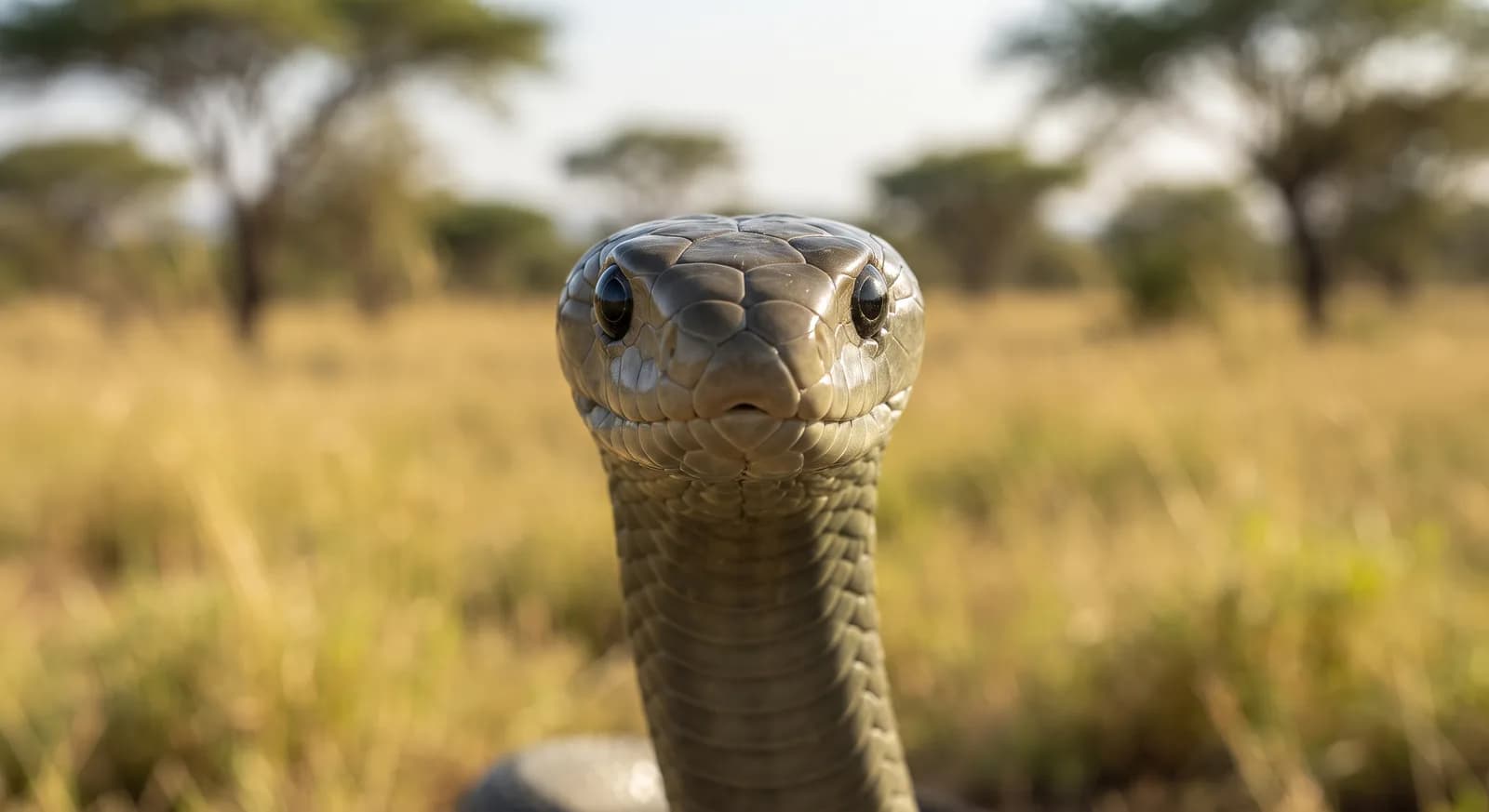
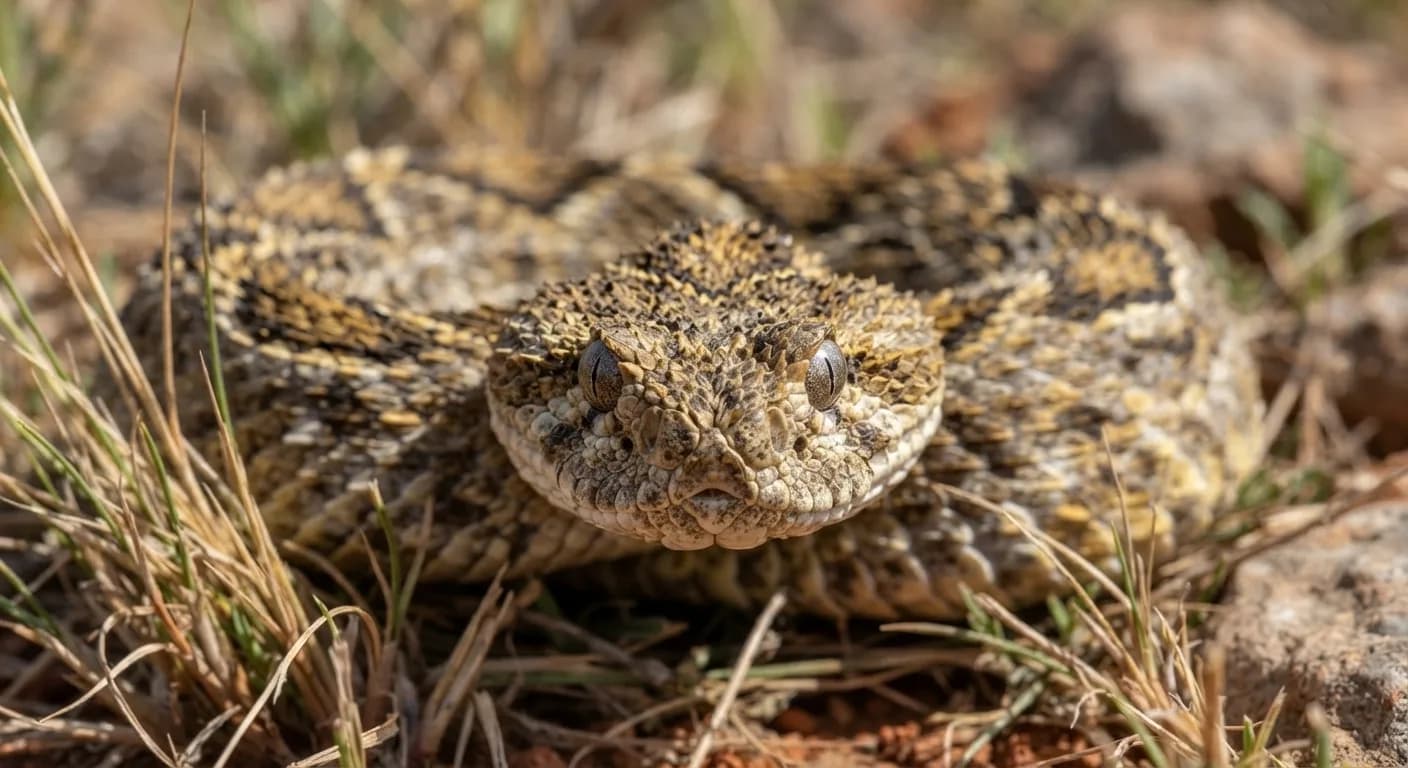
AI-generated images: illustrations, not photographs.

Fun facts

  • GeneralA tree snake with a very potent haemotoxic venom and enormous eyes for hunting chameleons.
  • In 1957 the herpetologist Karl Schmidt was bitten by a juvenile boomslang and, convinced that the dose was harmless, meticulously noted his symptoms hour by hour for twenty-four hours until he died: his diary completely changed the medical view of this species.
  • Its venom acts slowly and without initial pain, which has led victims not to seek medical help in time: it can take more than a day to show its full effects.
  • It has the largest eyes in proportion to the head of almost any African colubrid, with excellent binocular vision for hunting chameleons and birds in the canopy.

Life cycle and biology

Skeleton type
Vertebrate - internal bony skeleton (reptile)
Habitat and environment
Wooded savannah, gallery forest, scrub and plantations of sub-Saharan Africa
Sexual maturity
2 years
Gestation / incubation
90 days of incubation
Litter / clutch size
12 eggs

Sources consulted: Wikipedia (es): Dispholidus typus

Where to find it

Loading map…

Where to see it

Parks and dive sites where this species has been documented — showing 10 of 75.

Related species

Other species in the catalogue with the most in common with Boomslang — same habitat, park, country, tags or family.

Same taxonomic family
Shares a park
Shares a park
Shares a park
Shares a park
Shares a park

Keep exploring

Based on what we already know about boomslang.

Share an experience, a fun fact or a tip for seeing the boomslang.
See full glossary
This page in other languages: Español · Deutsch · Français · Português · Italiano

The pins mark the parks where its presence is documented.

See its range on the interactive map→
Serengeti National ParkTanzania
Maasai Mara National ReserveKenya
Kruger National ParkSouth Africa
NgorongoroTanzania
AmboseliKenya
TsavoKenya
Lake NakuruKenya
KgalagadiSouth Africa
Moremi (Okavango Delta)Botswana
ChobeBotswana
See all 75 parks
Least Concern

Rhombic Egg Eater

Dasypeltis scabra

Least Concern

Helmeted Turtle

Pelomedusa subrufa

Least Concern

Ball Python

Python regius

Puff AdderLeast Concern

Puff Adder

Bitis arietans

Least Concern

Black-necked Spitting Cobra

Naja nigricollis

Black MambaLeast Concern

Black Mamba

Dendroaspis polylepis

CountriesSouth Africa
ParksSerengeti National ParkTanzania
TagsCarnivore
Carnivore
Diurnal
Solitary
Reptile
Savannah
Rainforest
Temperate forest
Grassland
South Africa
Tanzania
Kenya
Botswana
Namibia
Mozambique
Angola
Benin
Botswana
Burkina Faso
Burundi
Cameroon
Central African Republic
Chad
Côte d’Ivoire
Democratic Republic of the Congo
Djibouti
Equatorial Guinea
Eritrea
Eswatini
Ethiopia
Gabon
Gambia
Ghana
Guinea
Guinea-Bissau
Kenya
Lesotho
Liberia
Malawi
Mali
Mauritania
Mozambique
Namibia
Niger
Nigeria
Republic of the Congo
Rwanda
Senegal
Sierra Leone
Somalia
South Africa
South Sudan
Sudan
Tanzania
Togo
Uganda
Zambia
Zimbabwe