Skip to content
WAnimals
  • Map
  • Species
  • Parks
  • Diving
Log inCreate account
WAnimals

The guide for travellers and animal lovers: discover, plan and share your wild adventures around the world.

Discover wildlife

  • Species
  • Ecosystems
  • Glossary
  • Tags

Explore places

  • Map
  • Countries
  • Parks
  • Diving

Plan experiences

  • Guides

Learn

  • Blog

Resources

  • About us
  • How we build our profiles
  • Help centre
  • Contact
  • Install the app

Follow us

Account

  • Log in
  • Create account

© 2026 WAnimals. All rights reserved.

Terms of servicePrivacyCookiesLegal notice
MapSpeciesParksDiving
  1. Home
  2. Species
  3. Common Agama

One of the 2 agamas on WAnimals
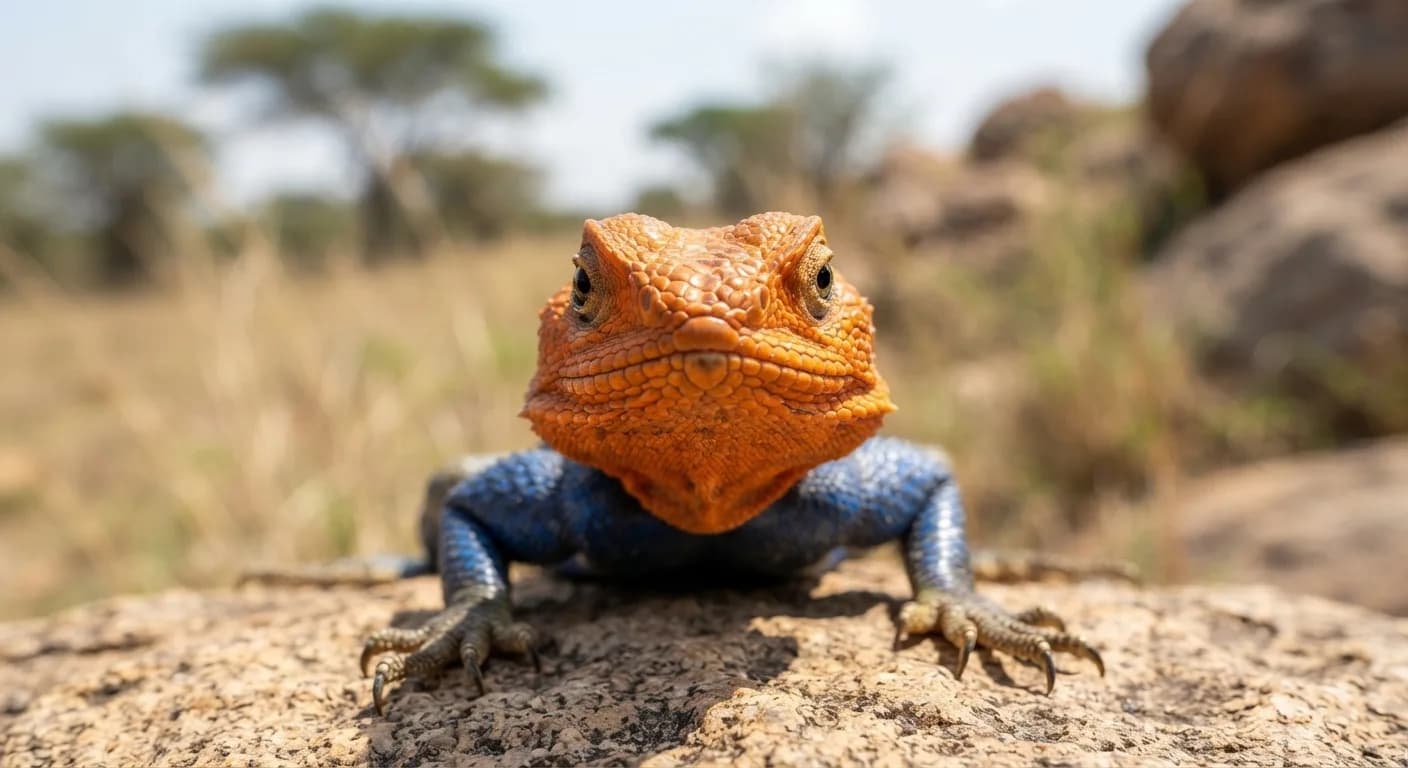
Common Agama (Agama agama)

Reptiles · Squamata · Agamidae

Common Agama

Agama agama

Least Concern

The species is abundant and widely distributed; it faces no significant short-term risk.

Spotted something wrong?

The red-headed rock agama is one of the most visible lizards in West Africa: the dominant male has an intensely orange or red head and a blue body, and displays on walls and rocks by doing press-ups to mark his territory. Subordinate males and females are brown, and a male that loses his territory loses the colour with it.

Size

20 cm – 40 cm

Life expectancy

15 years

Diet

Insectivore

Feeds mainly on insects and other invertebrates.
Activity

Diurnal

Active mainly during the day.

Social structure

Colony

Lives in large concentrations, often for breeding reasons.

SavannaDesertMountainGrassland
43countries45parks7same family

AI-generated images: illustrations, not photographs.

Fun facts

  • GeneralThe dominant male sports a deep orange head and does press-ups to display.
  • reproducciónDominant males develop a deep orange or red head and a bluish body in the season of greatest breeding and territorial activity.
  • Colour depends on status: only the dominant male has the orange head and blue body, and if he loses his territory to a rival he goes back to the dull brown of the subordinates within hours.
  • Its press-ups on rocks and walls are not a greeting but a territorial display, and the frequency and rhythm of the movements carry information about the size and condition of the male.
  • It is extremely abundant in the cities of West Africa, where it lives on walls, roofs and buildings, and is probably the lizard most often seen by any visitor to the region.
  • The dominant male becomes spectacular: an intense orange or red head and a blue body, which is where the name rainbow agama comes from. Subordinates remain brown.
  • That colour is not permanent but social: if the dominant male disappears, a subordinate takes on the livery within minutes or hours. The colour depends on rank, not on the individual.
  • Males do press-ups. The repeated head-bobbing is their territorial display, and it can be seen constantly on any sunny African wall.
  • It lives in groups with one dominant male, several females and subordinate males, and the dominant male actively defends his territory.
  • It is diurnal and heat-loving: it comes out at the hottest hours, when other reptiles take shelter.
  • Its tolerance of urban environments has made it one of Africa's most visible reptiles, and it has established itself as an introduced species in Florida.

Life cycle and biology

Skeleton type
Vertebrate - internal bony skeleton (reptile)
Habitat and environment
Rocks, walls, buildings and bare ground of savannah and inhabited areas of sub-Saharan Africa
Sexual maturity
18 months
Gestation / incubation
60 days of incubation
Litter / clutch size
8 eggs

Sources consulted: Wikipedia (es): Agama agama

Where to find it

Loading map…

Where to see it

Parks and dive sites where this species has been documented — showing 10 of 45.

Related species

Other species in the catalogue with the most in common with Common Agama — same habitat, park, country, tags or family.

Shares a park
Shares a park
Shares a park
Shares a park
Shares a park
Shares a park

Keep exploring

Based on what we already know about common agama.

Share an experience, a fun fact or a tip for seeing the common agama.
See full glossary
This page in other languages: Español · Deutsch · Français · Português · Italiano

The pins mark the parks where its presence is documented.

See its range on the interactive map→
Serengeti National ParkTanzania
Maasai Mara National ReserveKenya
NgorongoroTanzania
AmboseliKenya
TsavoKenya
Lake NakuruKenya
ComoeCôte d’Ivoire
MoleGhana
KakumGhana
TaiCôte d’Ivoire
See all 45 parks
Least Concern

Rufous Elephant Shrew

Elephantulus rufescens

Least Concern

Bush Hyrax

Heterohyrax brucei

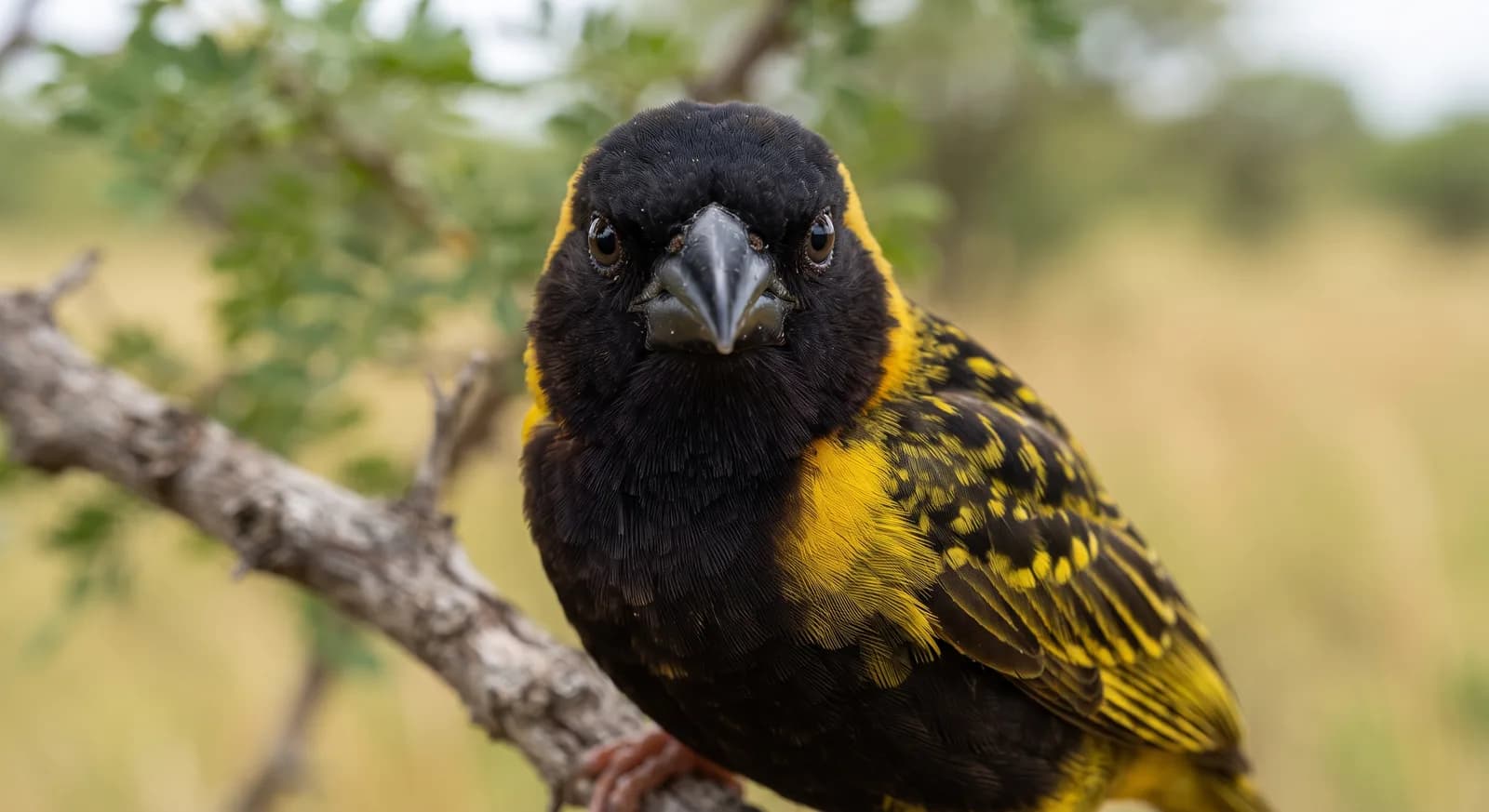
Village WeaverLeast Concern

Village Weaver

Ploceus cucullatus

Least Concern

Black-necked Spitting Cobra

Naja nigricollis

Least Concern

Patas Monkey

Erythrocebus patas

Least Concern

Hamadryas Baboon

Papio hamadryas

CountriesTanzania
ParksSerengeti National ParkTanzania
TagsInsectivore
Insectivore
Diurnal
Colonial
Reptile
Savanna
Desert
Mountain
Grassland
Tanzania
Kenya
Ethiopia
Uganda
Chad
Côte d’Ivoire
Angola
Benin
Botswana
Burkina Faso
Burundi
Cameroon
Central African Republic
Chad
Côte d’Ivoire
Democratic Republic of the Congo
Djibouti
Equatorial Guinea
Eritrea
Eswatini
Ethiopia
Gabon
Gambia
Ghana
Guinea
Guinea-Bissau
Kenya
Lesotho
Liberia
Malawi
Mali
Mauritania
Mozambique
Namibia
Niger
Nigeria
Republic of the Congo
Rwanda
Senegal
Sierra Leone
Somalia
South Africa
South Sudan
Sudan
Tanzania
Togo
Uganda
Zambia
Zimbabwe