Skip to content
WAnimals
  • Map
  • Species
  • Parks
  • Diving
Log inCreate account
WAnimals

The guide for travellers and animal lovers: discover, plan and share your wild adventures around the world.

Discover wildlife

  • Species
  • Ecosystems
  • Glossary
  • Tags

Explore places

  • Map
  • Countries
  • Parks
  • Diving

Plan experiences

  • Guides

Learn

  • Blog

Resources

  • About us
  • How we build our profiles
  • Help centre
  • Contact
  • Install the app

Follow us

Account

  • Log in
  • Create account

© 2026 WAnimals. All rights reserved.

Terms of servicePrivacyCookiesLegal notice
MapSpeciesParksDiving
  1. Home
  2. Species
  3. Hamerkop
Hamerkop (Scopus umbretta)

Birds · Pelecaniformes · Scopidae

Hamerkop

Scopus umbretta

Least Concern

The species is abundant and widely distributed; it faces no significant short-term risk.

Spotted something wrong?

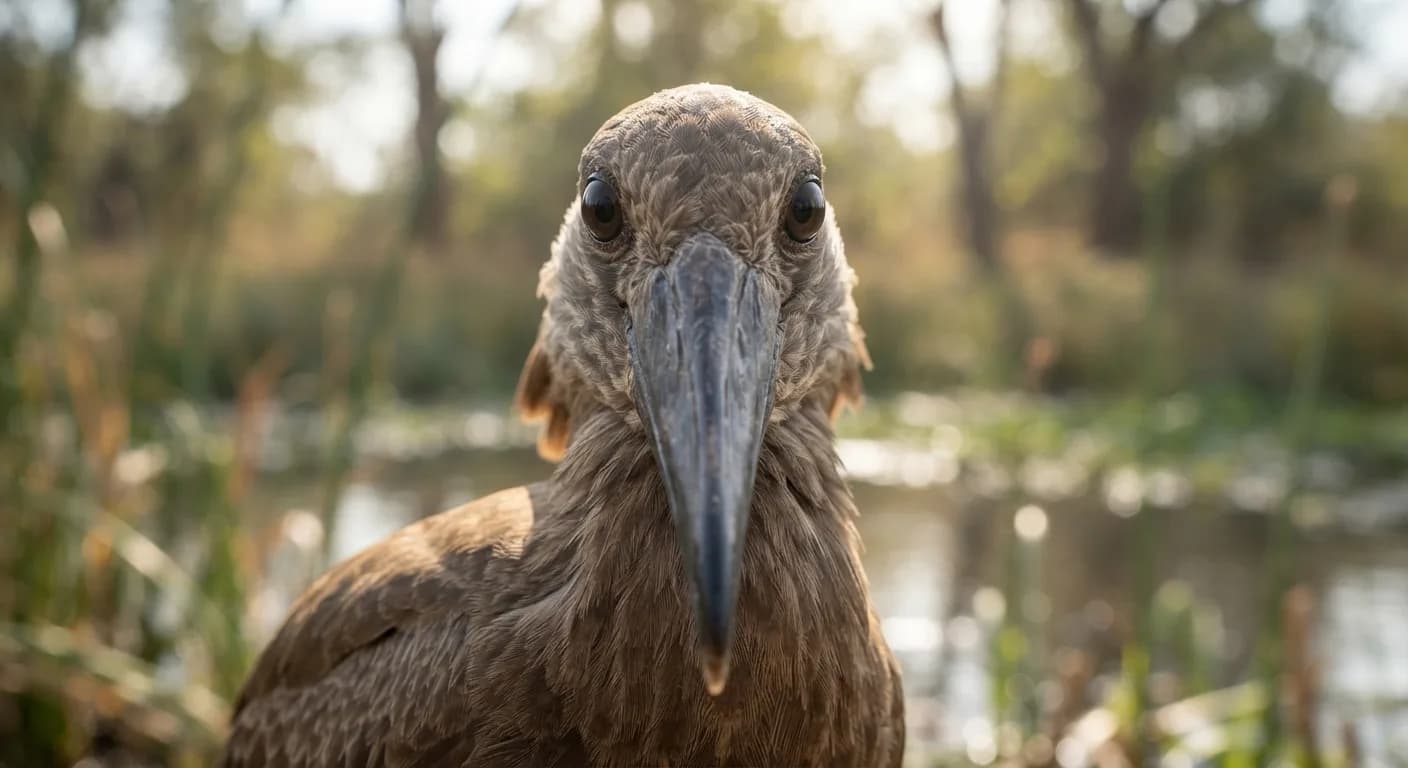
The hamerkop is a brownish, medium-sized bird with an occipital crest that, together with the thick bill, gives its head the shape of a hammer. It is the only member of its family. It lives beside water and hunts amphibians and small fish. Its most astonishing feature is the nest: a closed structure more than a metre and a half across, with walls of mud and branches half a metre thick and an inner chamber reached through a tunnel.

Weight

420 g – 470 g

Size

50 cm – 56 cm

Life expectancy

20 years
Diet

Carnivore

Feeds mainly on other animals.

Activity

Diurnal

Active mainly during the day.

Social structure

In pairs

Usually lives in pairs, sometimes for life.

SavannaFreshwater
46countries39parks

AI-generated images: illustrations, not photographs.

Fun facts

  • GeneralIt builds one of the largest nests in the world: a domed vault of sticks 1.5 m across weighing as much as 50 kg.
  • It builds the largest nest in the world in proportion to its size: a dome of up to two metres with thousands of branches and kilos of mud, able to bear a person's weight, which a pair takes months to raise.
  • Once abandoned, its nests are taken over by barn owls, kestrels, genets, snakes and even geese: they are an essential source of shelter for other species in the African savannahs.
  • In many African cultures it is credited with supernatural powers and destroying its nest is considered a bad omen, which in practice has protected it for centuries.

Life cycle and biology

Skeleton type
Vertebrate - internal bony skeleton (bird)
Habitat and environment
River banks, wetlands, rice fields and pools of sub-Saharan Africa, Madagascar and Arabia
Sexual maturity
2 years
Gestation / incubation
30 days of incubation
Litter / clutch size
4 eggs

Sources consulted: Wikipedia (en): Hamerkop

Where to find it

Loading map…

Where to see it

Parks and dive sites where this species has been documented — showing 10 of 39.

Related species

Other species in the catalogue with the most in common with Hamerkop — same habitat, park, country, tags or family.

Shares a park
Shares a park
Shares a park
Shares a park
Shares a park
Shares a park

Keep exploring

Based on what we already know about hamerkop.

Share an experience, a fun fact or a tip for seeing the hamerkop.
See full glossary
This page in other languages: Español · Deutsch · Français · Português · Italiano

The pins mark the parks where its presence is documented.

See its range on the interactive map→
Serengeti National ParkTanzania
Maasai Mara National ReserveKenya
Kruger National ParkSouth Africa
Okavango DeltaBotswana
NgorongoroTanzania
TsavoKenya
Lake NakuruKenya
Moremi (Okavango Delta)Botswana
ChobeBotswana
EtoshaNamibia
See all 39 parks
Least Concern

Violet Turaco

Musophaga violacea

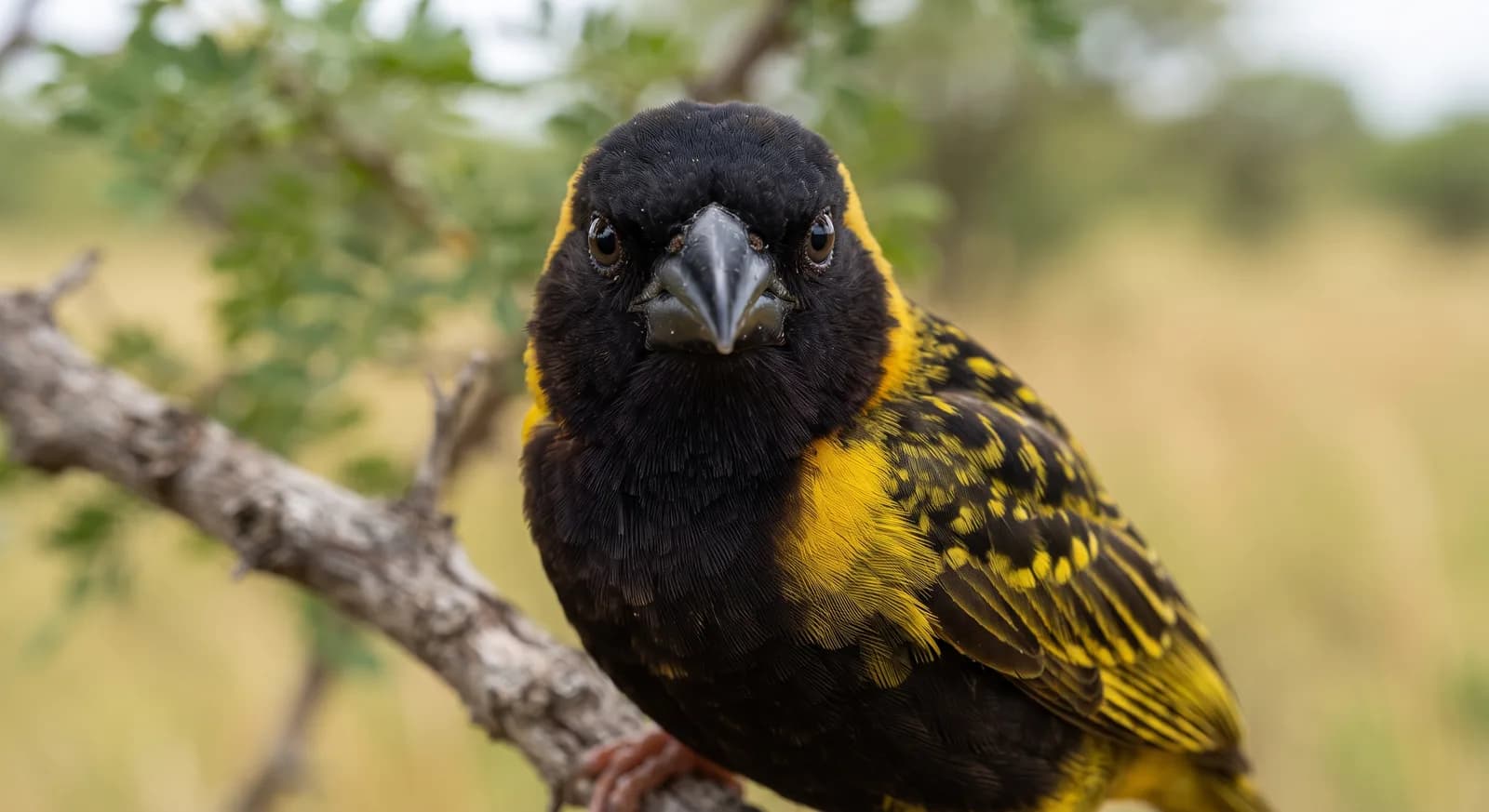
Village WeaverLeast Concern

Village Weaver

Ploceus cucullatus

Least Concern

Helmeted Turtle

Pelomedusa subrufa

Least Concern

Giant Bullfrog

Pyxicephalus adspersus

Least Concern

Southern Boubou

Laniarius ferrugineus

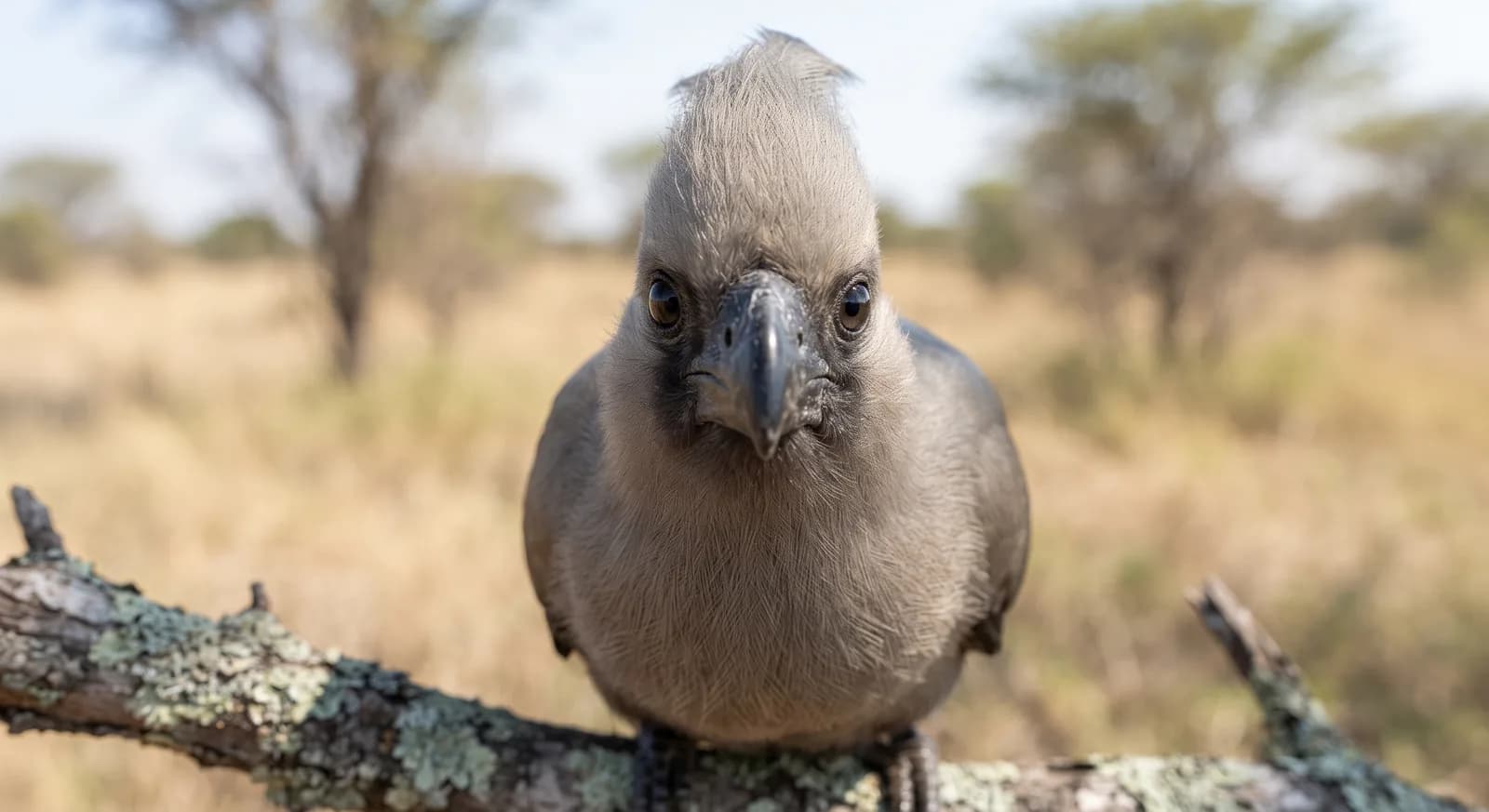
Grey Go-away-birdLeast Concern

Grey Go-away-bird

Corythaixoides concolor

CountriesTanzania
ParksSerengeti National ParkTanzania
TagsCarnivore
Carnivore
Diurnal
In pairs
Bird
Savannah
Freshwater

Africa44

Asia2

Tanzania
Uganda
Kenya
South Africa
Botswana
Namibia
Angola
Benin
Botswana
Burkina Faso
Burundi
Cameroon
Central African Republic
Chad
Côte d’Ivoire
Democratic Republic of the Congo
Djibouti
Equatorial Guinea
Eritrea
Eswatini
Ethiopia
Gabon
Gambia
Ghana
Guinea
Guinea-Bissau
Kenya
Lesotho
Liberia
Madagascar
Malawi
Mali
Mauritania
Mozambique
Namibia
Niger
Nigeria
Republic of the Congo
Rwanda
Senegal
Sierra Leone
Somalia
South Africa
South Sudan
Sudan
Tanzania
Togo
Uganda
Zambia
Zimbabwe
Saudi Arabia
Yemen