Skip to content
WAnimals
  • Map
  • Species
  • Parks
  • Diving
Log inCreate account
WAnimals

The guide for travellers and animal lovers: discover, plan and share your wild adventures around the world.

Discover wildlife

  • Species
  • Ecosystems
  • Glossary
  • Tags

Explore places

  • Map
  • Countries
  • Parks
  • Diving

Plan experiences

  • Guides

Learn

  • Blog

Resources

  • Help centre
  • Contact
  • Install the app

Follow us

Account

  • Log in
  • Create account

© 2026 WAnimals. All rights reserved.

About usHow we build our profilesTerms of servicePrivacyLegal notice
MapSpeciesParksDiving
  1. Home
  2. Species
  3. Grey Go-away-bird

One of the 8 turacos on WAnimals
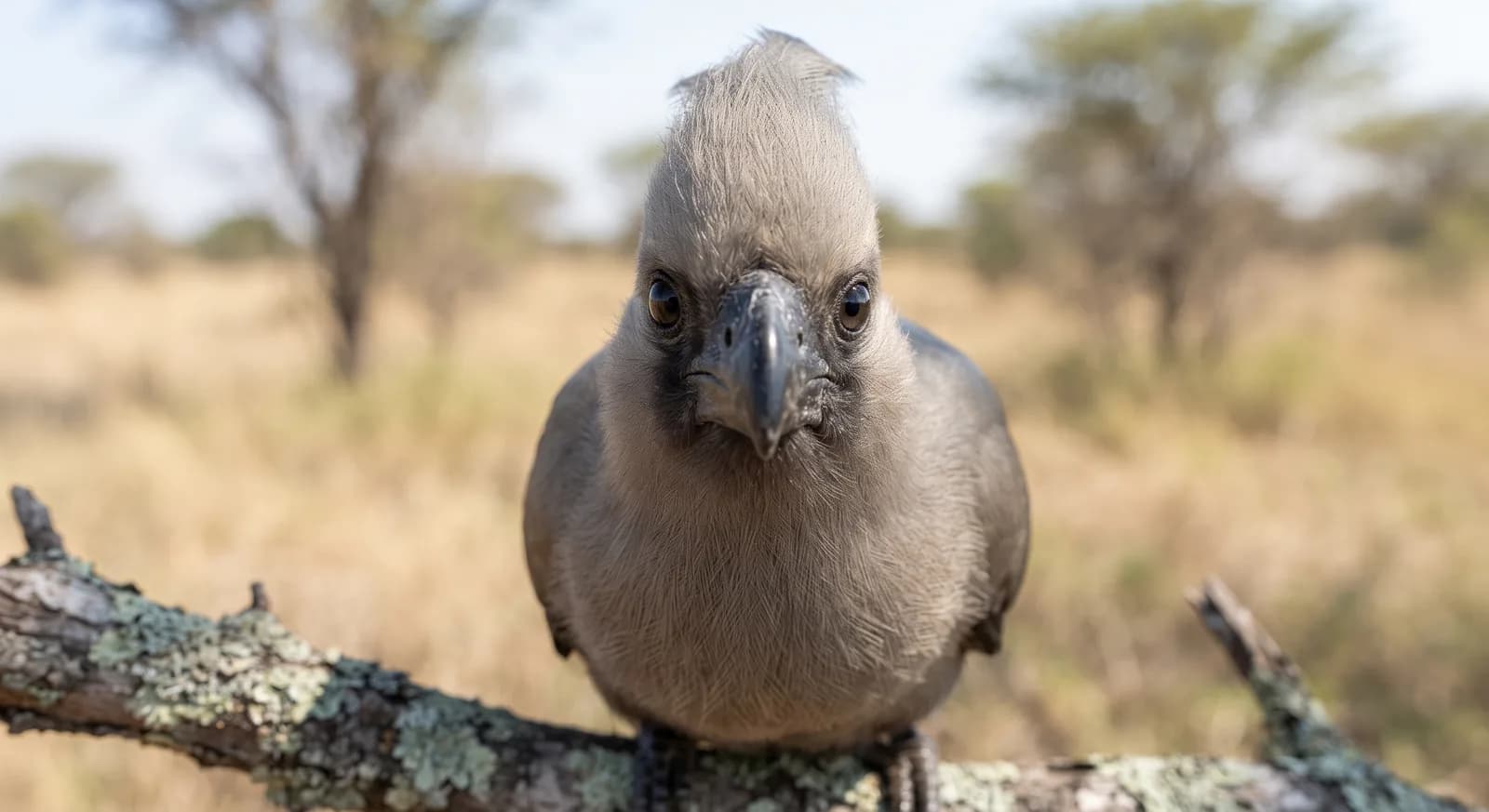
Grey Go-away-bird (Corythaixoides concolor)

Birds · Musophagiformes · Musophagidae

Grey Go-away-bird

Corythaixoides concolor

Least Concern

The species is abundant and widely distributed; it faces no significant short-term risk.

Spotted something wrong?

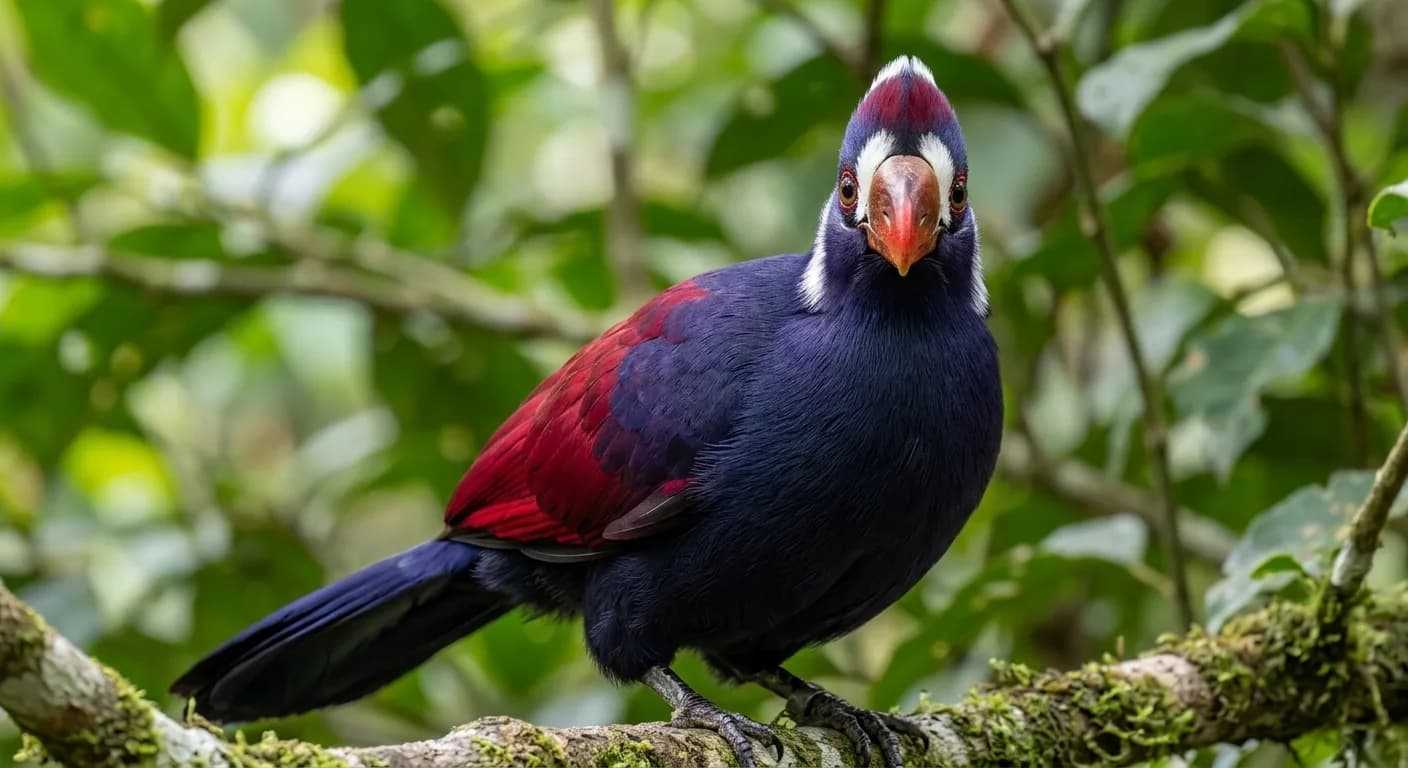
The grey go-away-bird is an entirely grey turaco with a very tall, shaggy crest, native to the savannahs of southern Africa. Unlike its green forest relatives, it occupies open, wooded country. It owes its popular name to its call, a nasal mewing that sounds like a warning and that hunters detest: it alerts every animal in the area.

Weight

200 g – 300 g

Size

47 cm – 51 cm

Life expectancy

18 years
Diet

Herbivore

Feeds mainly on plants.

Activity

Diurnal

Active mainly during the day.

Social structure

In pairs

Usually lives in pairs, sometimes for life.

Sighting difficulty

Easy

SavannaGrassland
43countries24parks7same family

AI-generated images: illustrations, not photographs.

Fun facts

  • comunicaciónIts alarm call sounds like "go away", which is where its English name comes from, and it warns the rest of the savannah that a predator is about.
  • Its call, a descending nasal mew, is written in English as "go away", and hunters detest it because it alerts antelopes and other animals to the presence of an intruder.
  • It belongs to the only group of turacos that has left the forest for the open savannah, and as a result has lost the green and red pigments of its family: it is entirely grey.
  • It feeds on leaves, flowers and fruit and will gather in dozens in a fruiting tree, making a considerable racket.

Life cycle and biology

Skeleton type
Vertebrate - internal bony skeleton (bird)
Habitat and environment
Wooded savannah, acacia and mopane woodland of southern Africa
Birth weight
Altricial: born blind, naked or with sparse down and entirely dependent
Size at birth
Altricial: born blind, naked or with sparse down and entirely dependent
Sexual maturity
2 years
Gestation / incubation
27 days of incubation
Litter / clutch size
3 eggs

Sources consulted: https://www.iucnredlist.org/ | https://animaldiversity.org/ | https://es.wikipedia.org/

Where to find it

Best time: All year round in the savannahs of southern Africa, by day; its nasal call, which sounds like 'go away', gives it away from a long way off.

Loading map…

Where to see it

Parks and dive sites where this species has been documented — showing 10 of 24.

Related species

Other species in the catalogue with the most in common with Grey Go-away-bird — same habitat, park, country, tags or family.

Same taxonomic family
Shares a park
Shares a park
Shares a park

Keep exploring

Based on what we already know about grey go-away-bird.

Comments

Share an experience, a fun fact or a tip for seeing the grey go-away-bird.

Be the first to comment.

See full glossary
This page in other languages: Español · Deutsch · Français · Português · Italiano

The pins mark the parks where its presence is documented.

See its range on the interactive map→
Kruger National ParkSouth Africa
Okavango DeltaBotswana
Moremi (Okavango Delta)Botswana
ChobeBotswana
HwangeZimbabwe
South LuangwaZambia
GorongosaMozambique
Liwonde National ParkMalawi
RuahaTanzania
KafueZambia
See all 24 parks
Ross's TuracoLeast Concern

Ross's Turaco

Tauraco rossae

Knysna TuracoLeast Concern

Knysna Turaco

Tauraco corythaix

Least Concern

Violet Turaco

Musophaga violacea

Helmeted GuineafowlLeast Concern

Helmeted Guineafowl

Numida meleagris

Malachite SunbirdLeast Concern

Malachite Sunbird

Nectarinia famosa

Least Concern

Southern Boubou

Laniarius ferrugineus

CountriesBotswana
ParksKruger National ParkSouth Africa
TagsHerbivore
Herbivore
Diurnal
In pairs
Bird
Savanna
Grassland
Botswana
Zimbabwe
Mozambique
Namibia
South Africa
Zambia
Angola
Benin
Botswana
Burkina Faso
Burundi
Cameroon
Central African Republic
Chad
Côte d’Ivoire
Democratic Republic of the Congo
Djibouti
Equatorial Guinea
Eritrea
Eswatini
Ethiopia
Gabon
Gambia
Ghana
Guinea
Guinea-Bissau
Kenya
Lesotho
Liberia
Malawi
Mali
Mauritania
Mozambique
Namibia
Niger
Nigeria
Republic of the Congo
Rwanda
Senegal
Sierra Leone
Somalia
South Africa
South Sudan
Sudan
Tanzania
Togo
Uganda
Zambia
Zimbabwe