One of the 9 guenons on WAnimals
Mammals · Primates · Cercopithecidae
Campbell’s Monkey
Cercopithecus campbelli
The species is abundant and widely distributed; it faces no significant short-term risk. See full glossary
Campbell's monkey or Campbell's mona monkey is a medium-sized primate of the West African forests, with an olive-grey back, pale underparts and a white band across the forehead. It is highly adaptable and survives in secondary forest and plantations. Its vocal communication is among the best studied in the animal kingdom: the males combine a small repertoire of calls with suffixes and sequences that alter their meaning.
Weight
2.5 kg – 6 kg
Size
40 cm – 56 cm
Lifespan
25 years
Diet
Herbivore
Feeds mainly on plants.
Activity
Diurnal
Active mainly during the day.
Sighting difficulty
Easy
Fun facts
- The males add a suffix to their alarm calls that changes the meaning of the message, and combine the calls into sequences with rules of their own: it is the animal communication system most often compared to the rudiments of human syntax.
- Females and young react differently depending on the order of the calls, which shows that the information lies in the sequence and not only in each sound taken separately.
Life cycle & biology
- Skeleton type
- Vertebrate - internal bony skeleton (mammal)
- Habitat & environment
- Rainforest, secondary forest, gallery forest and plantations of West Africa
- Sexual maturity
- 3 years
- Gestation / incubation
- 5.9 months
- Litter / clutch size
- 1
Sources consulted: https://es.wikipedia.org/wiki/Cercopithecus_campbelli
Where to find it
See its range on the interactive mapWhere to watch it
Parks and dive sites where this species has been documented.
Related species
Other species in the catalogue with the most in common with Campbell’s Monkey — same habitat, park, country, tags or family.
Putty-nosed Monkey
Cercopithecus nictitans
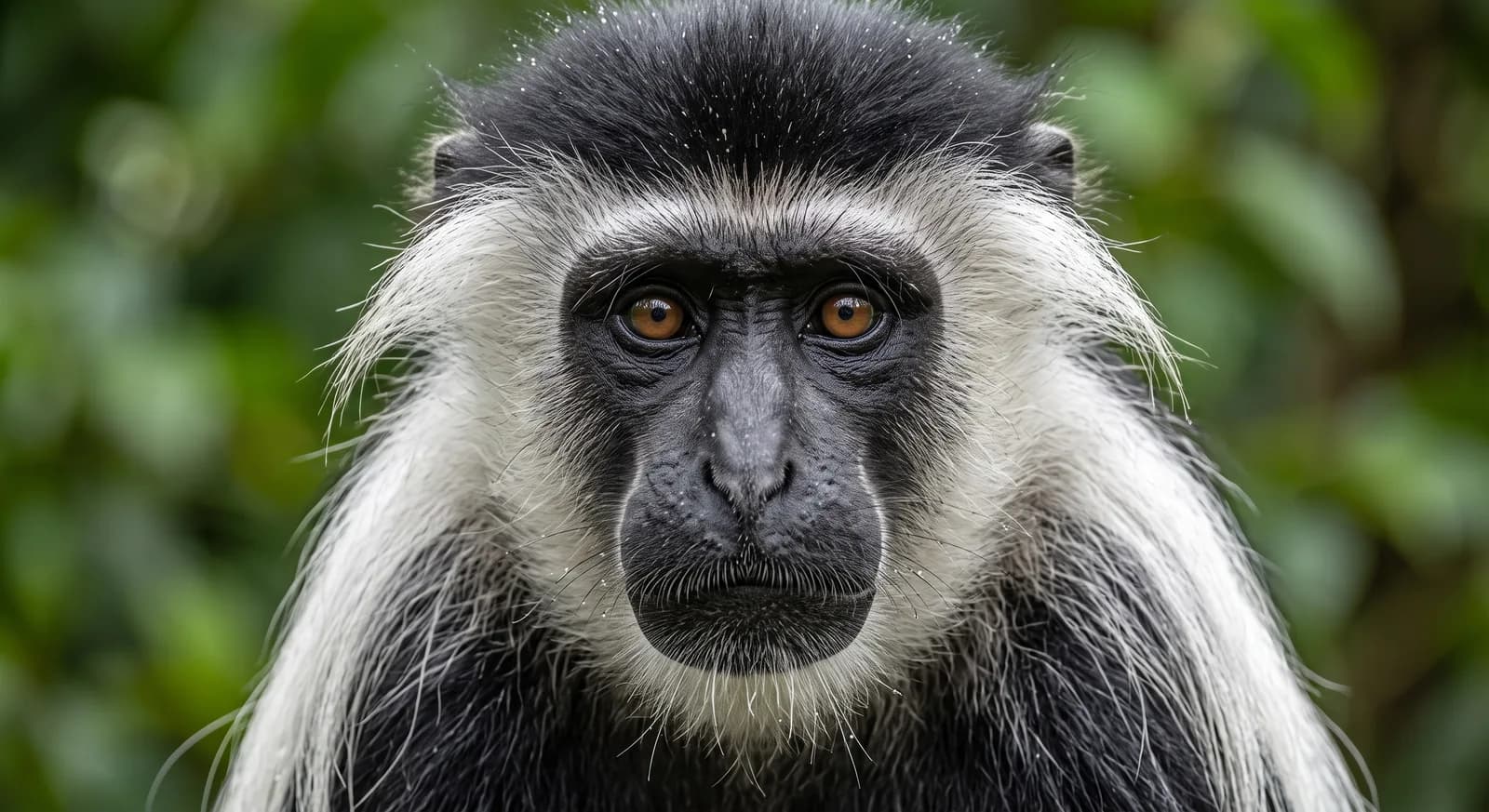 Least Concern
Guereza
Colobus guereza
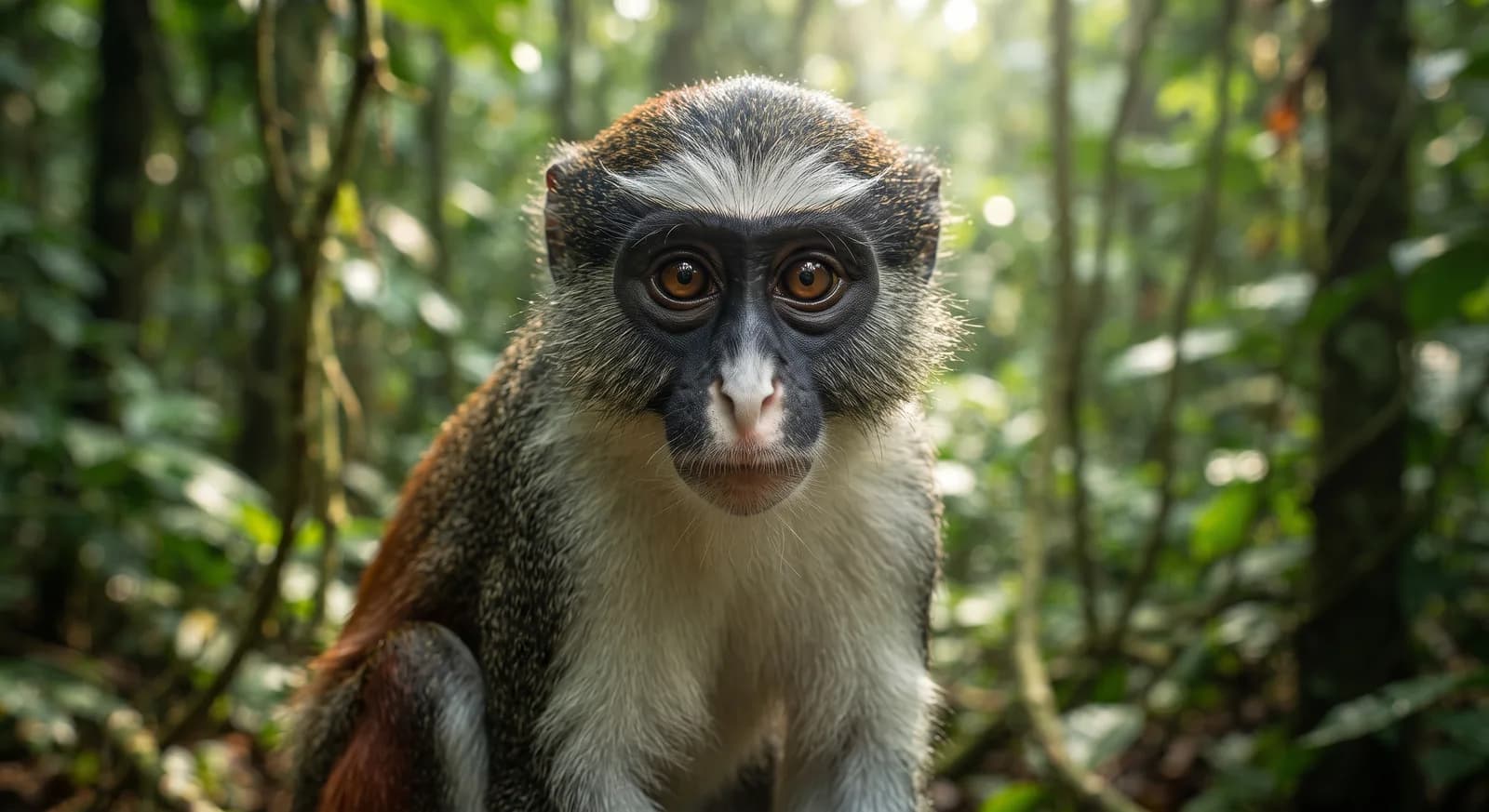
Mona Monkey
Cercopithecus mona
 Endangered
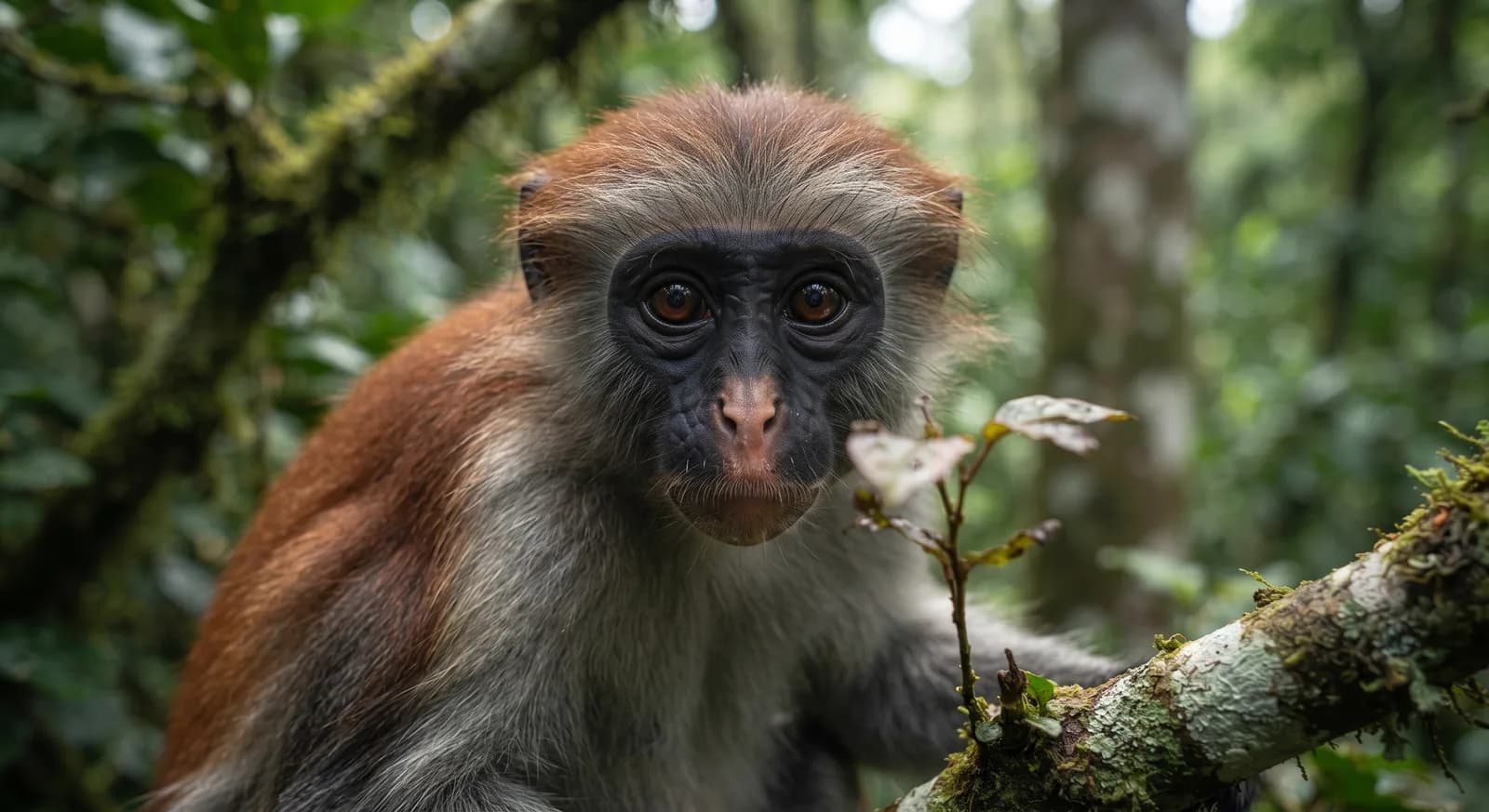
Western Red Colobus
Piliocolobus badius
 Vulnerable
Diana Monkey
Cercopithecus diana
 Least Concern
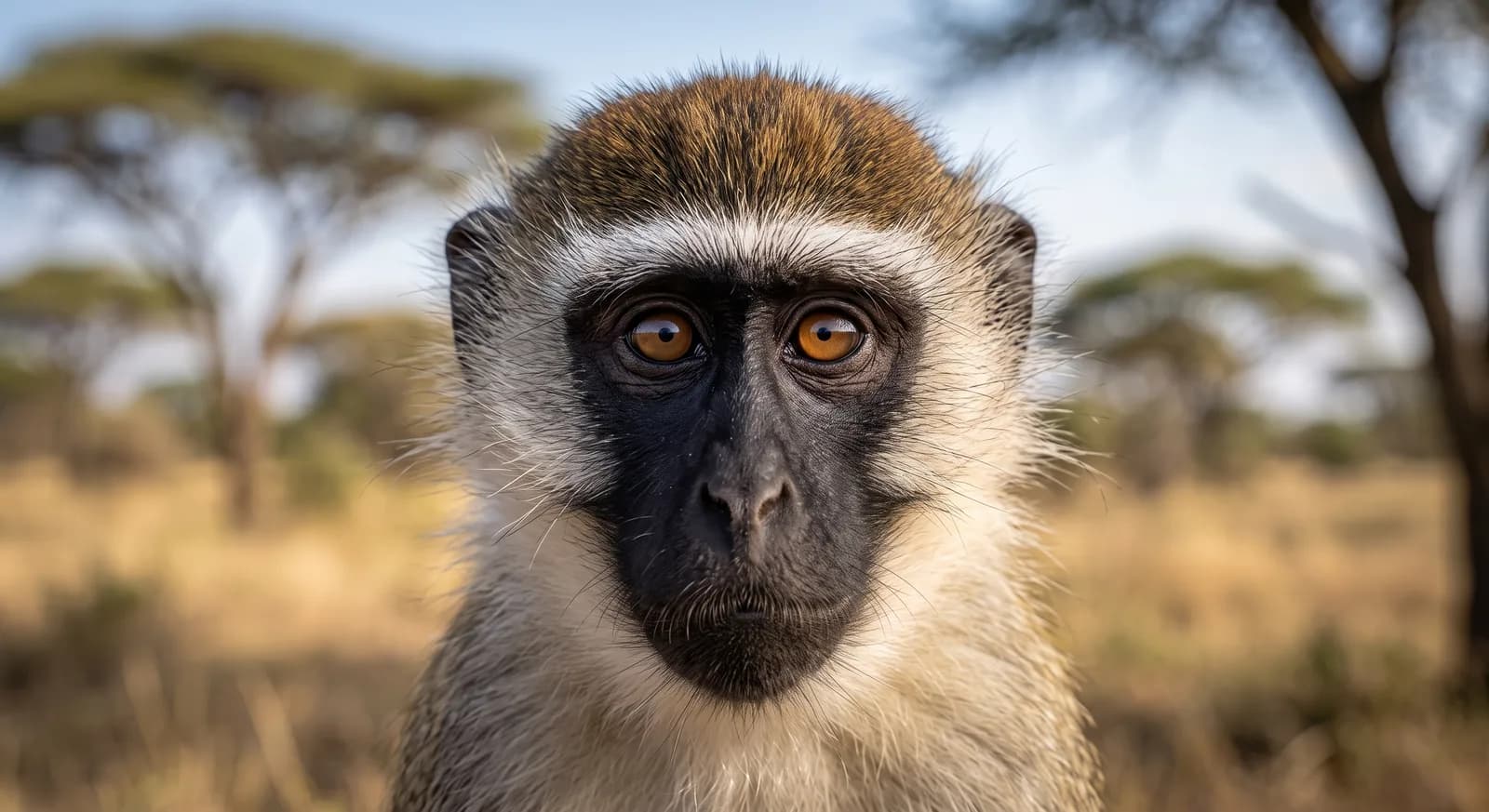
Grivet
Chlorocebus aethiops
Keep exploring
Based on what we already know about campbell’s monkey.
Comments
Share an experience, a fun fact or a tip for seeing the campbell’s monkey.
Be the first to comment.