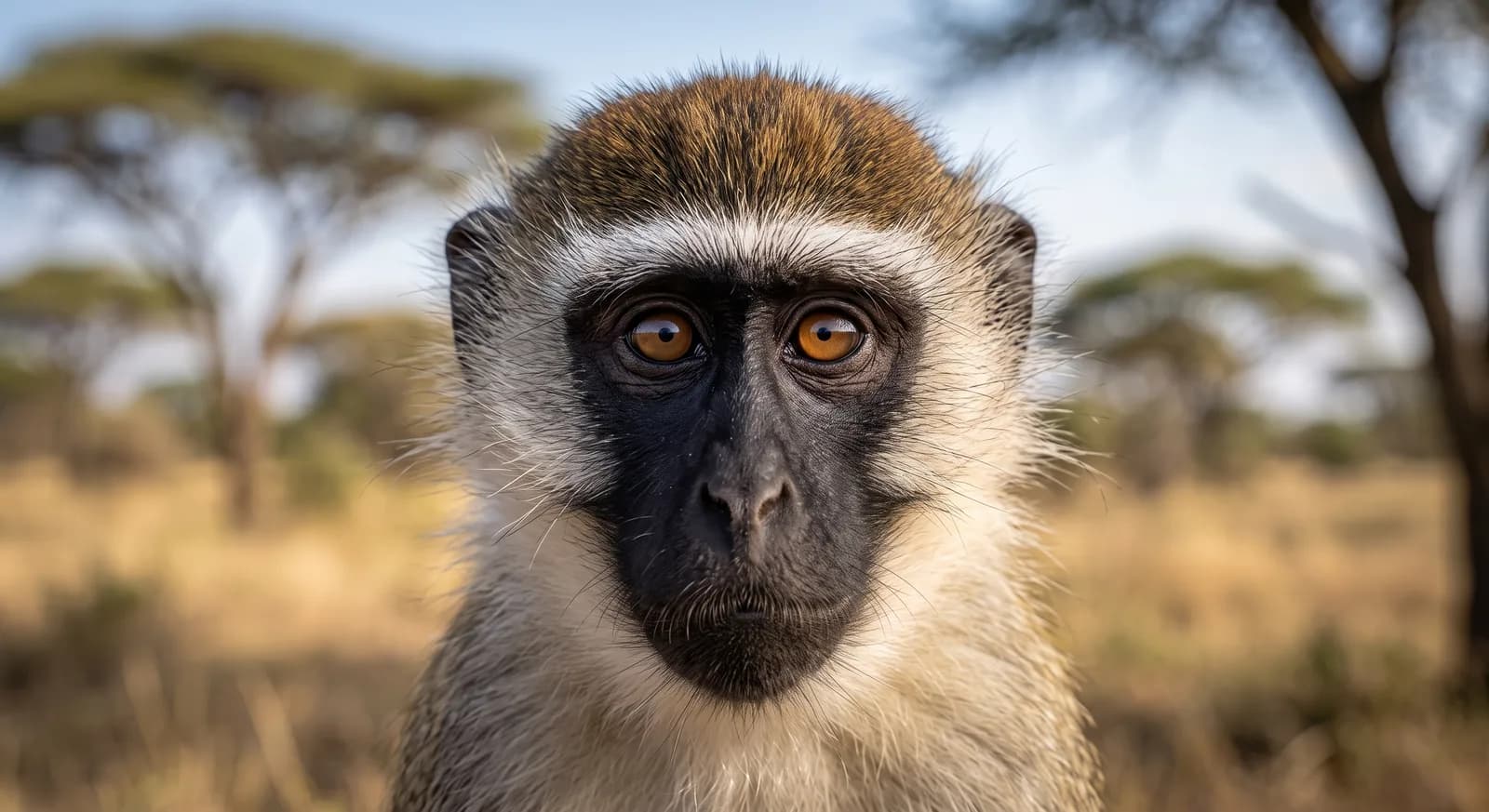
One of the 9 guenons on WAnimals
Mammals · Primates · Cercopithecidae
Grivet
Chlorocebus aethiops
The species is abundant and widely distributed; it faces no significant short-term risk. See full glossary
The grivet belongs to the vervet group, a set of savannah monkeys widespread across Africa and of disputed taxonomy. It lives in troops of several dozen animals with matrilineal hierarchies and spends much of its time on the ground, though it sleeps and takes refuge in trees. It is omnivorous and opportunistic, which makes it a regular visitor to crops and villages. Its communication system is one of the most studied in the entire animal kingdom.
Weight
3 kg – 8 kg
Size
40 cm – 60 cm
Lifespan
25 years
Diet
Omnivore
Combines animal and plant food depending on availability.
Activity
Diurnal
Active mainly during the day.
Sighting difficulty
Easy
Fun facts
- The classic studies on this group of monkeys showed that they have different alarm calls for leopard, eagle and snake, and that each triggers a specific response: climbing a tree, looking up or looking down. It was one of the first solid pieces of evidence for referential communication in a non-human animal.
- Young males leave their natal group on reaching maturity, while females stay for life in the group where they were born.
Life cycle & biology
- Skeleton type
- Vertebrate - internal bony skeleton (mammal)
- Habitat & environment
- Wooded savannah, gallery forest and crop margins of north-eastern Africa
- Sexual maturity
- 2.8 years
- Gestation / incubation
- 5.3 months
- Litter / clutch size
- 1
Sources consulted: https://es.wikipedia.org/wiki/Chlorocebus_aethiops
Where to find it
See its range on the interactive mapWhere to watch it
Parks and dive sites where this species has been documented.
Related species
Other species in the catalogue with the most in common with Grivet — same habitat, park, country, tags or family.
Olive Baboon
Papio anubis
Patas Monkey
Erythrocebus patas
 Least Concern
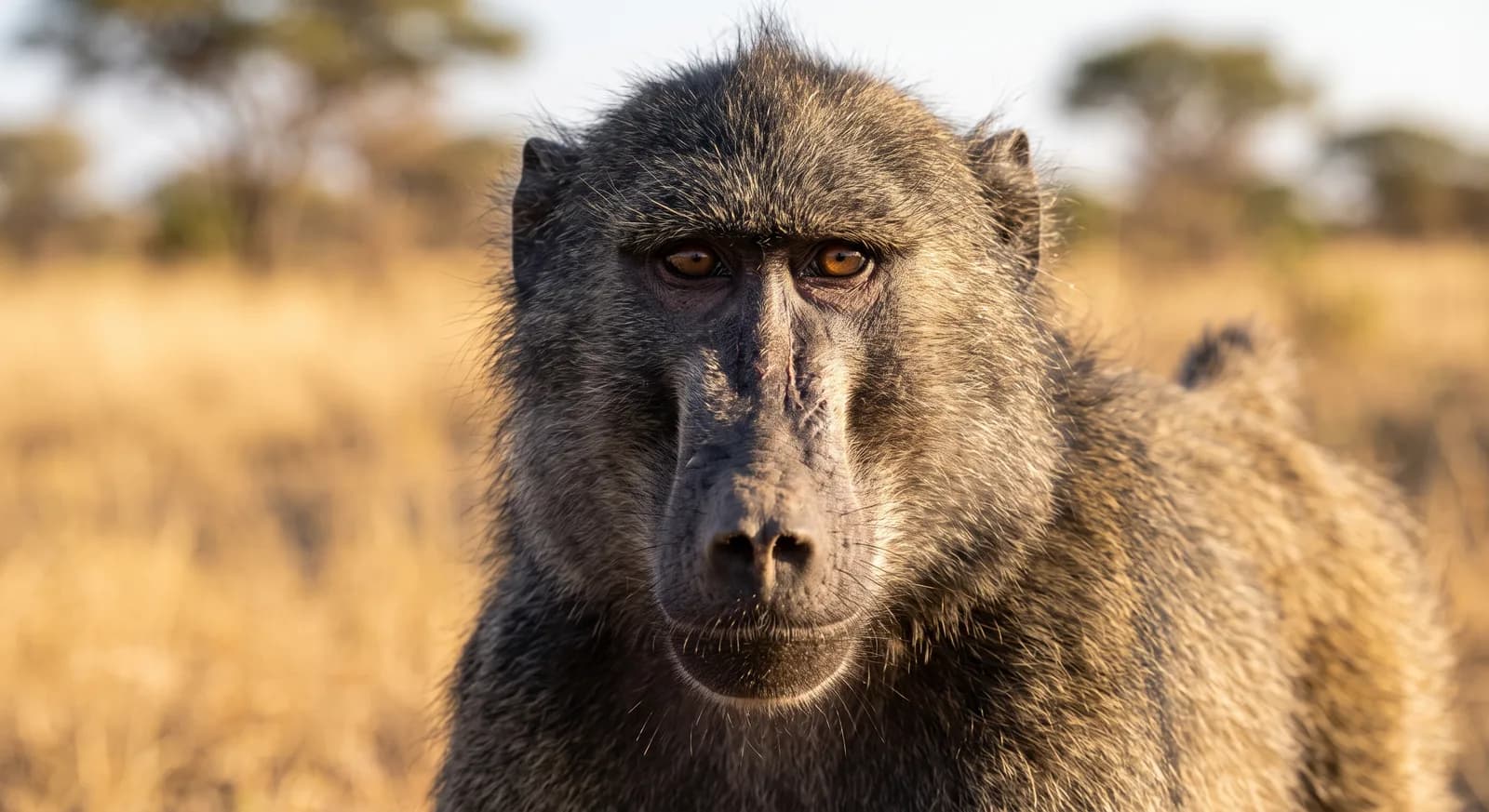
Chacma Baboon
Papio ursinus
Putty-nosed Monkey
Cercopithecus nictitans
Campbell’s Monkey
Cercopithecus campbelli
Mona Monkey
Cercopithecus mona
Keep exploring
Based on what we already know about grivet.
Comments
Share an experience, a fun fact or a tip for seeing the grivet.
Be the first to comment.