One of the 2 baboons on WAnimals
Mammals · Primates · Cercopithecidae
Olive Baboon
Papio anubis
The species is abundant and widely distributed; it faces no significant short-term risk. See full glossary
It is the most widely distributed baboon, found in 25 countries across sub-Saharan Africa, and is much used in biomedical and behavioural research.
Weight
10 kg – 37 kg
Size
60 cm – 76 cm
Lifespan
30 years
Diet
Omnivore
Combines animal and plant food depending on availability.
Activity
Diurnal
Active mainly during the day.
Social structure
Herd
Lives in large groups as a strategy against predators.
Sighting difficulty
Easy
Fun facts
- In Ancient Egypt, baboons were held sacred and linked to the god Thoth.
- It feeds mainly on roots, grasses and fruit, supplemented with small invertebrates and vertebrates.
- It lives in savannah, grassland, steppe and tropical woodland across sub-Saharan Africa.
Life cycle & biology
- Skeleton type
- Vertebrate - internal bony skeleton (mammal)
- Habitat & environment
- Savannah, grassland, steppe and tropical woodland in 25 sub-Saharan countries; the most widely distributed baboon
- Birth weight
- Weight at birth not found as a precise figure
- Size at birth
- Wholly dependent, carried in its mother's arm for the first few days
- Sexual maturity
- Female: 7-8 years | Male: 8-10 years
- Gestation / incubation
- ~187 days (6 months)
- Litter / clutch size
- 1 young (twins rare)
Sources consulted: AboutAnimals; A-Z Animals; Animal Diversity Web; PMC (segmental morphometrics study, Zika infection study); Animalia.bio
Where to find it
See its range on the interactive mapBest time: All year round, by day, in savannah, gallery forest and rocky country of central and eastern Africa.
Where to watch it
Parques y spots de buceo donde se ha documentado esta especie — se muestran 10 de 26 documentados.
Related species
Other species in the catalogue with the most in common with Olive Baboon — same habitat, park, country, tags or family.
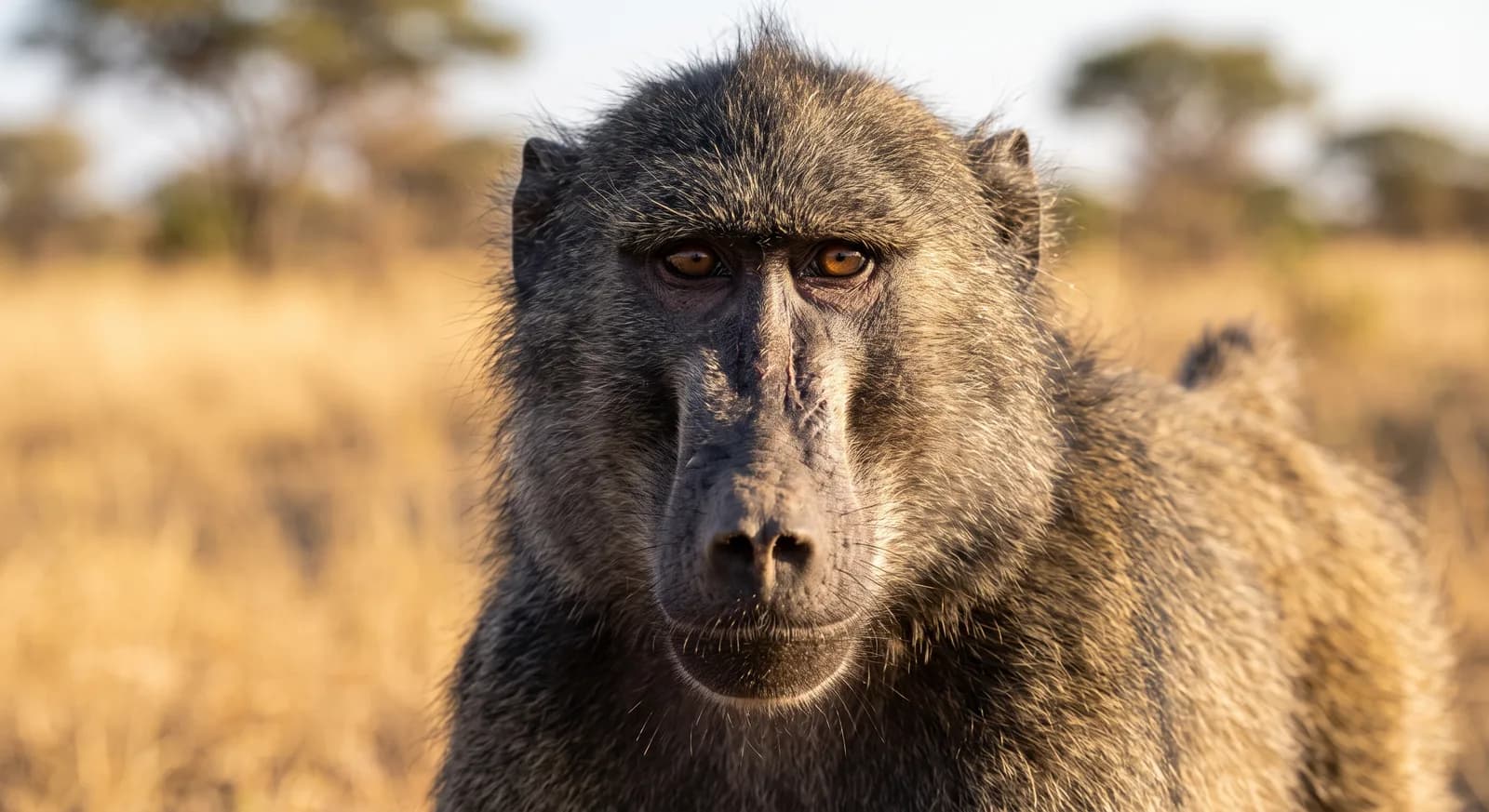 Least Concern
Chacma Baboon
Papio ursinus
Yellow Baboon
Papio cynocephalus
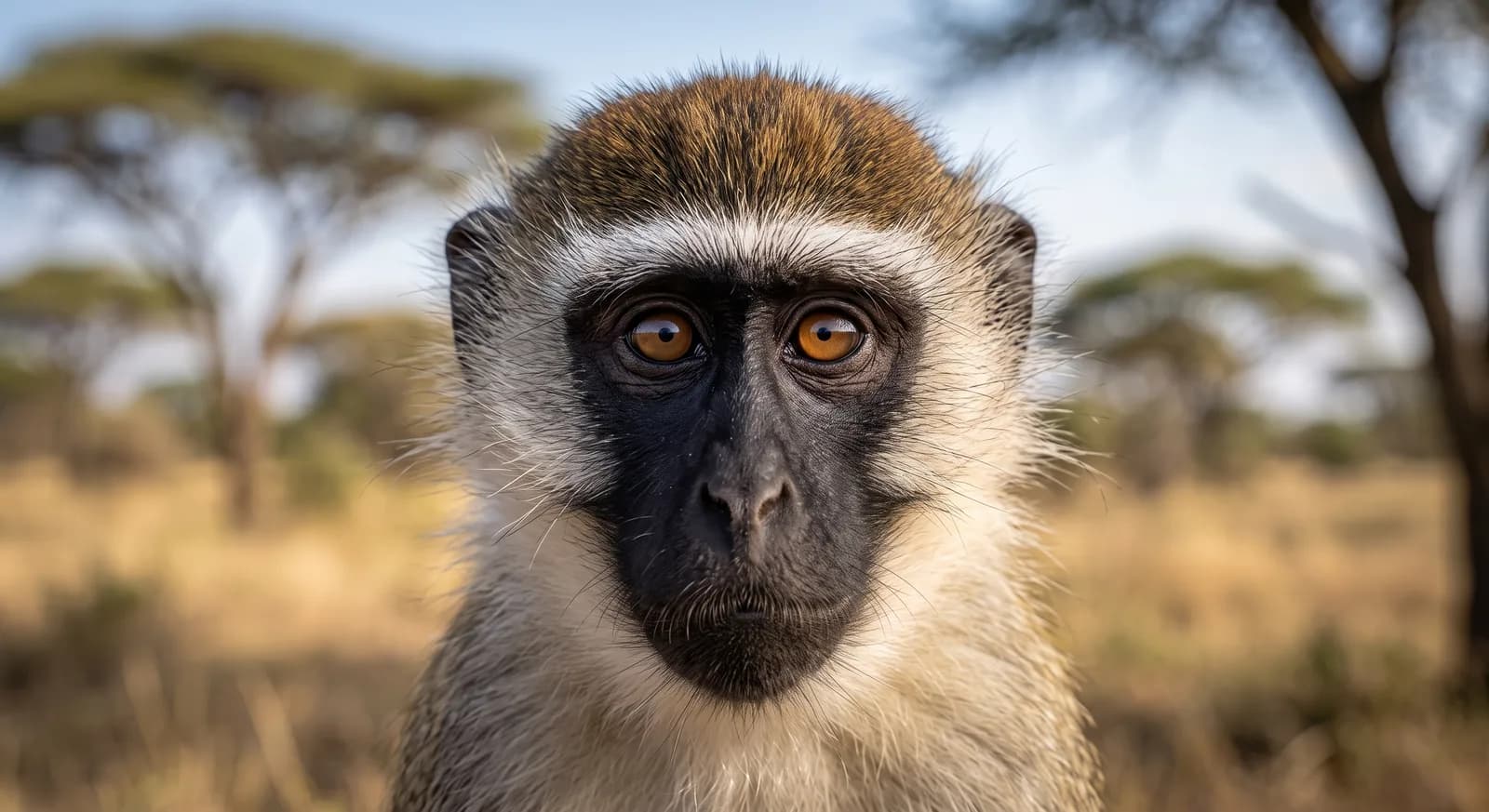 Least Concern
Grivet
Chlorocebus aethiops
Vervet Monkey
Chlorocebus pygerythrus
Patas Monkey
Erythrocebus patas
Hamadryas Baboon
Papio hamadryas
Keep exploring
Based on what we already know about olive baboon.
Comments
Share an experience, a fun fact or a tip for seeing the olive baboon.
Be the first to comment.