One of the 2 baboons on WAnimals
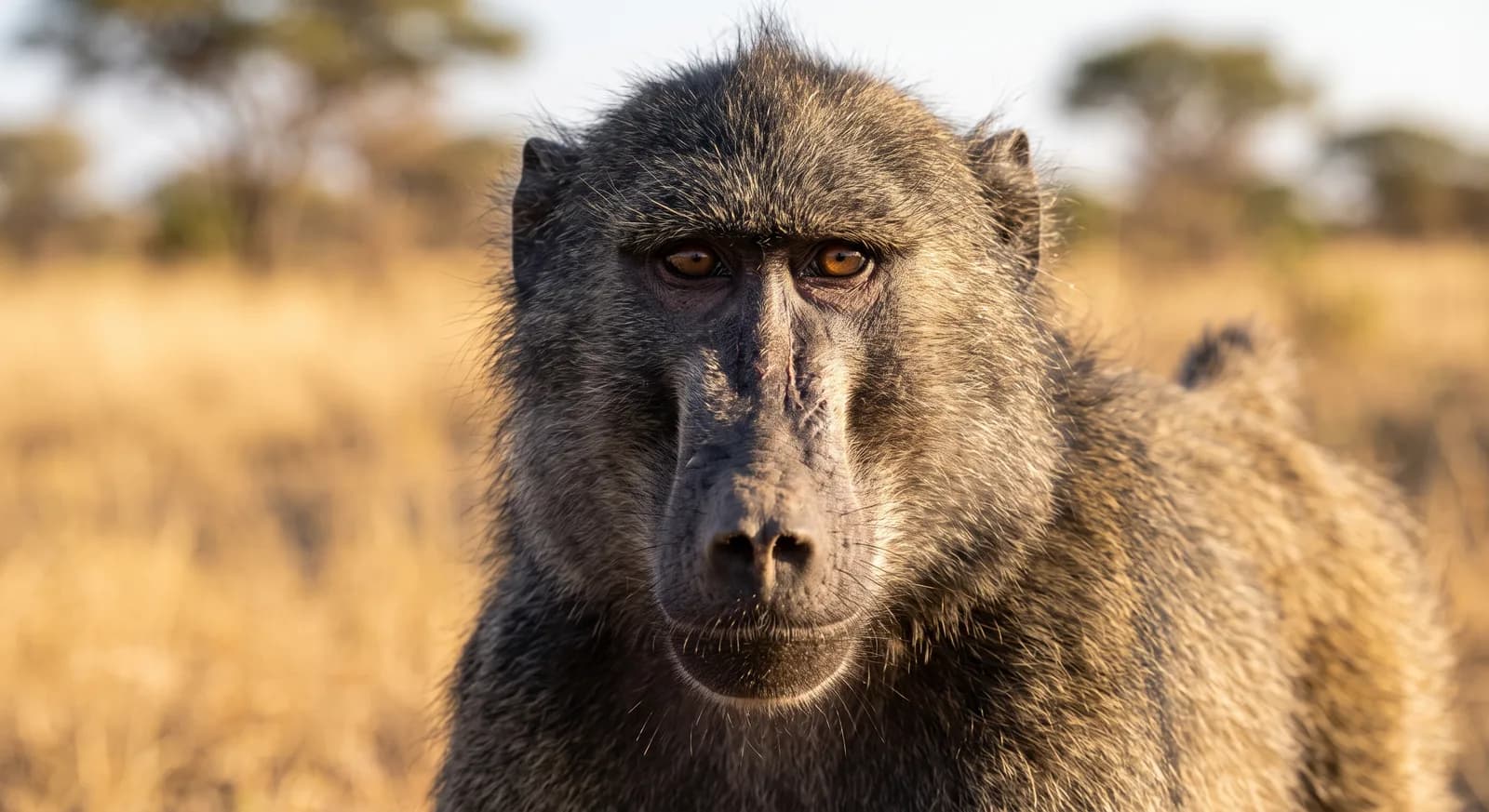
Mammals · Primates · Cercopithecidae
Chacma Baboon
Papio ursinus
The species is abundant and widely distributed; it faces no significant short-term risk. See full glossary
The chacma baboon is the largest of the baboons and the heaviest primate in southern Africa. It lives in troops of between 20 and 100 animals with several males and several females, structured by stable matrilineal hierarchies. It is extraordinarily flexible: it feeds on grasses, roots, fruit, insects, eggs and occasionally kids or antelope calves, and on the Cape Peninsula it has been documented foraging for shellfish in the intertidal zone. Its adaptability leads to frequent conflict with people.
Weight
12 kg – 45 kg
Size
50 cm – 1.2 m
Lifespan
30 years
Diet
Omnivore
Combines animal and plant food depending on availability.
Activity
Diurnal
Active mainly during the day.
Sighting difficulty
Easy
Fun facts
- The troops on the Cape Peninsula come down to the shore to eat mussels, limpets and small stranded sharks, behaviour unique among African primates.
- The males have the longest canines of any primate in proportion to their body, able to exceed five centimetres.
Life cycle & biology
- Skeleton type
- Vertebrate - internal bony skeleton (mammal)
- Habitat & environment
- Savannah, scrub, mountains and rocky coasts of southern Africa
- Sexual maturity
- 5 years
- Gestation / incubation
- 6 months
- Litter / clutch size
- 1
Sources consulted: https://es.wikipedia.org/wiki/Papio_ursinus
Where to find it
See its range on the interactive mapWhere to watch it
Parks and dive sites where this species has been documented.
Related species
Other species in the catalogue with the most in common with Chacma Baboon — same habitat, park, country, tags or family.
Olive Baboon
Papio anubis
Yellow Baboon
Papio cynocephalus
Vervet Monkey
Chlorocebus pygerythrus
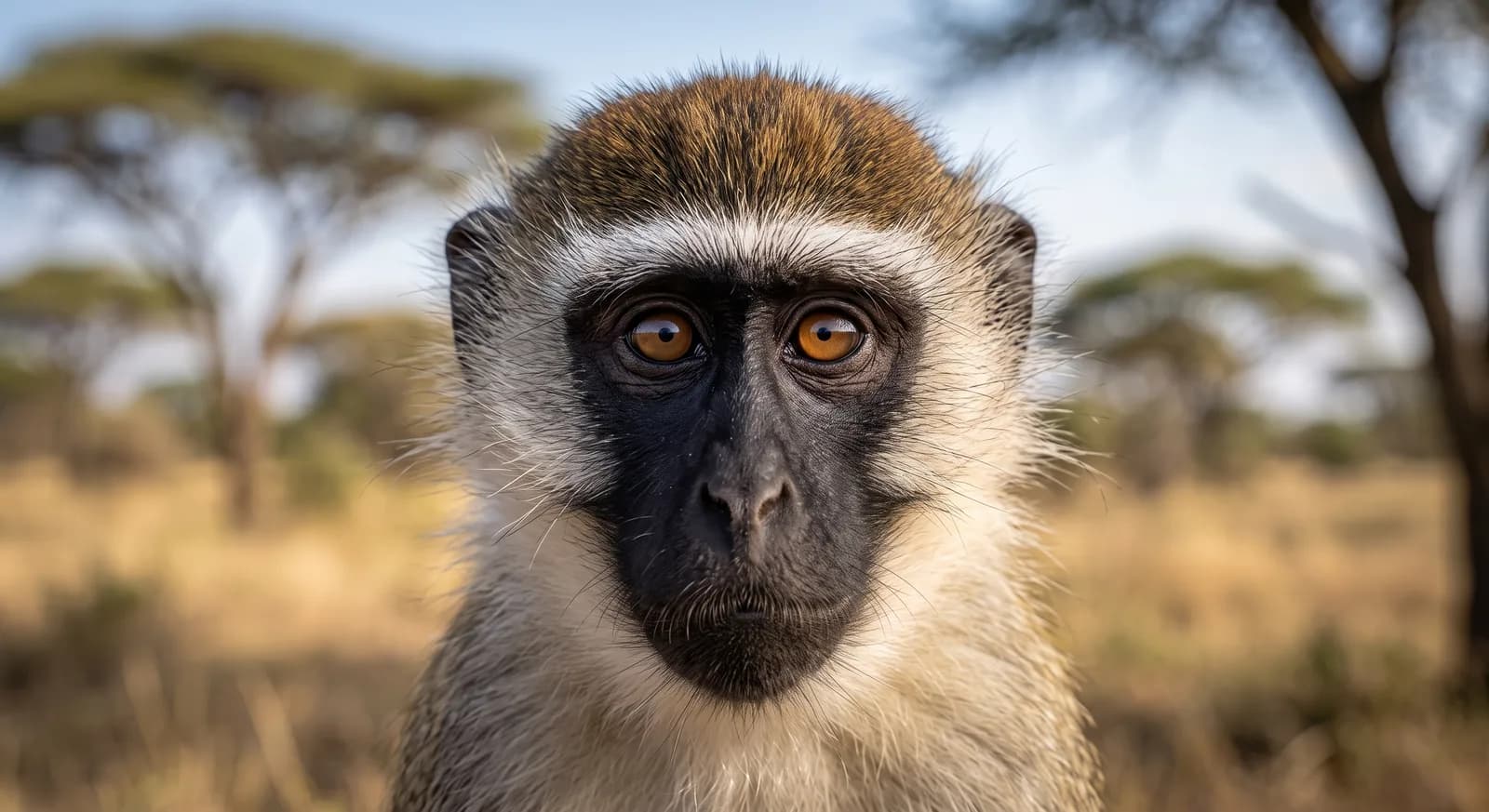 Least Concern
Grivet
Chlorocebus aethiops
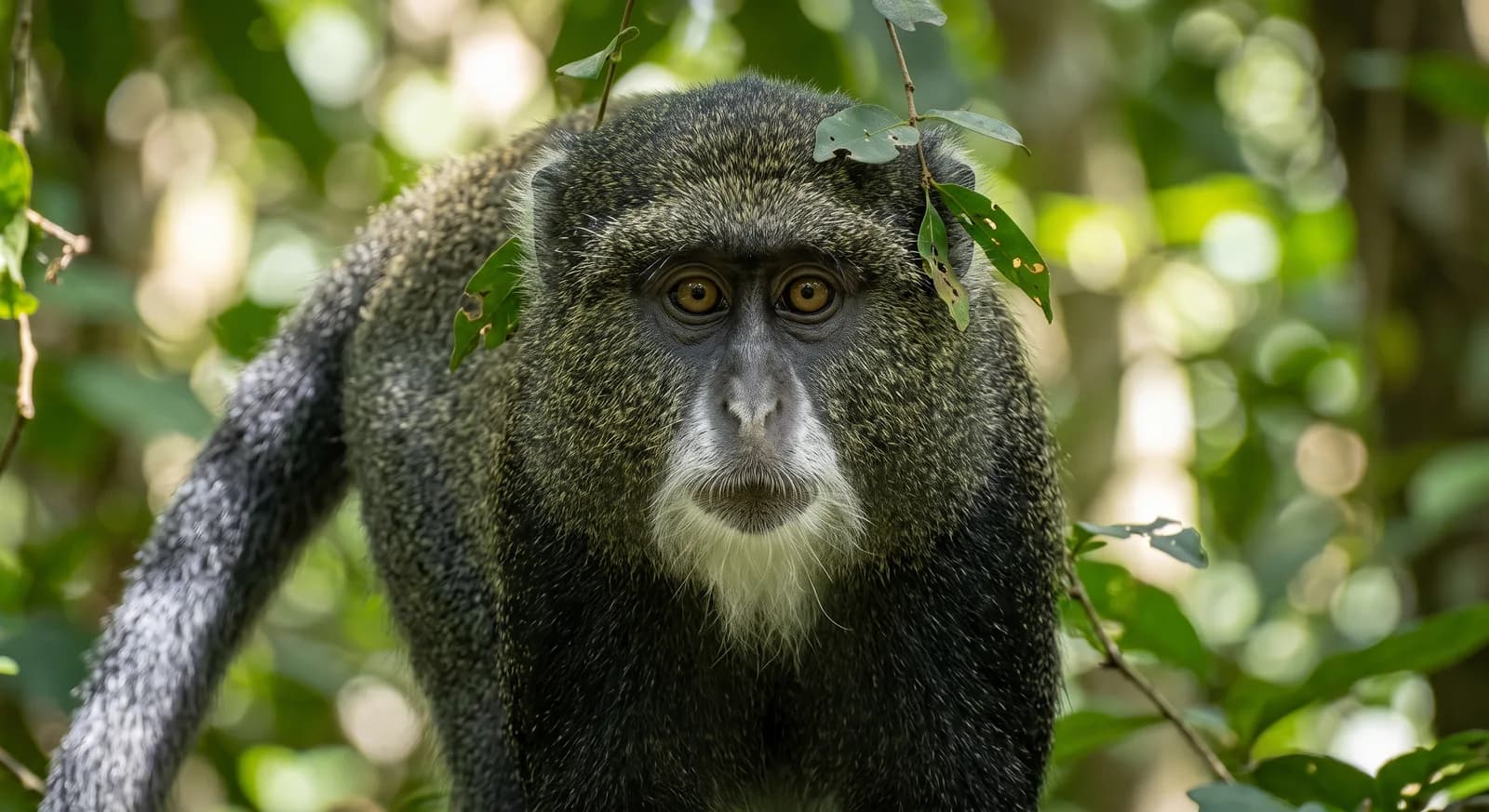 Least Concern
Blue Monkey
Cercopithecus mitis
Bush Hyrax
Heterohyrax brucei
Keep exploring
Based on what we already know about chacma baboon.
Comments
Share an experience, a fun fact or a tip for seeing the chacma baboon.
Be the first to comment.