Species group · Mammals
Guenons
WAnimals has 9 species of guenon, all in the family Cercopithecidae.
- 9 species
- 1 family
- 32 countries
- 44 parks
- Weight
- 2.5 kg – 10 kg
- Length
- 40 cm – 70 cm
- Lifespan
- 24 – 30 years
Ranges calculated from the entries that record the figure, not from all 9.
All 9 species of guenons on WAnimals
Each one has its own full entry. This group does not replace them: it brings them together.
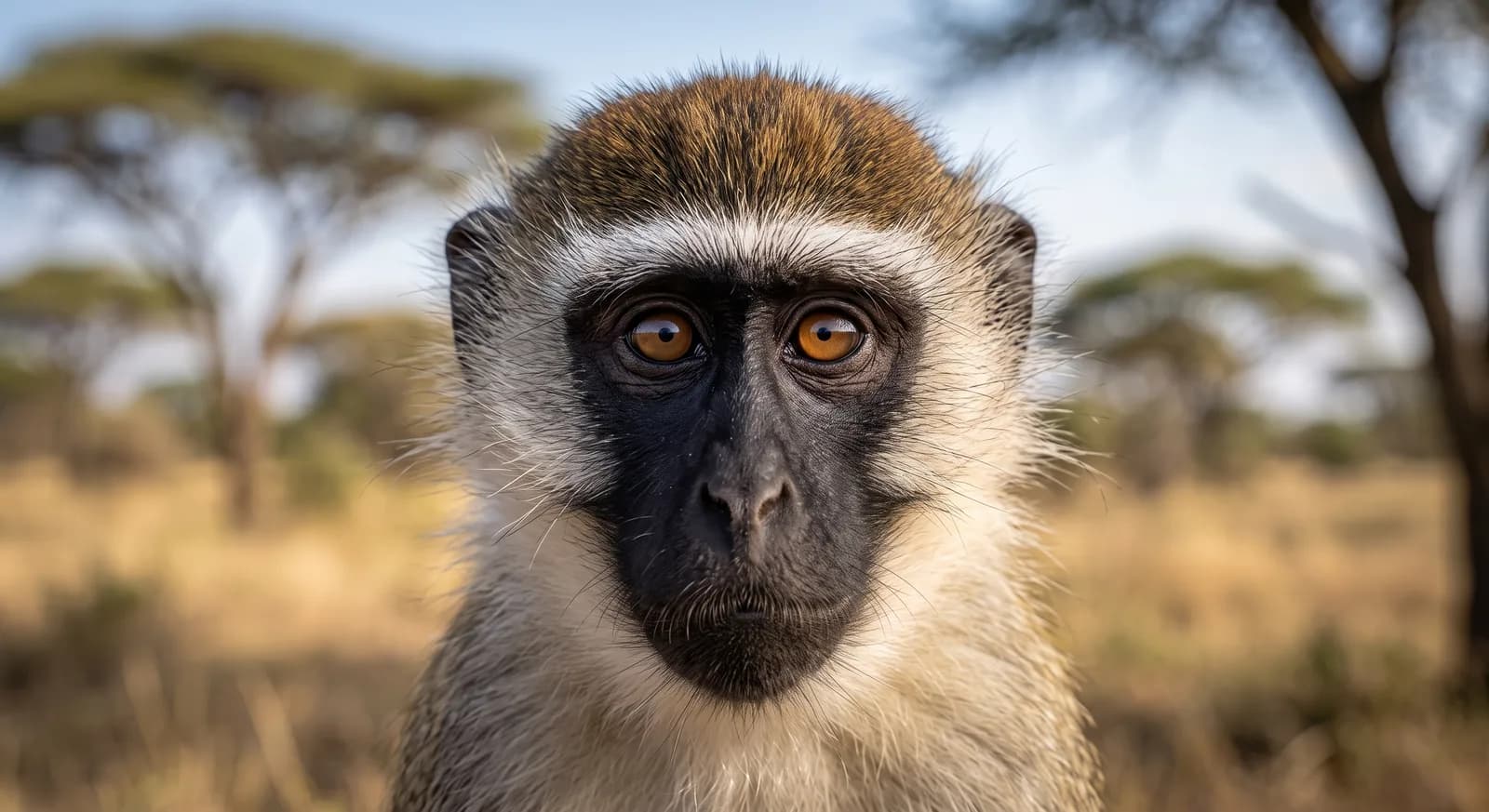 Least Concern
Grivet
Chlorocebus aethiops
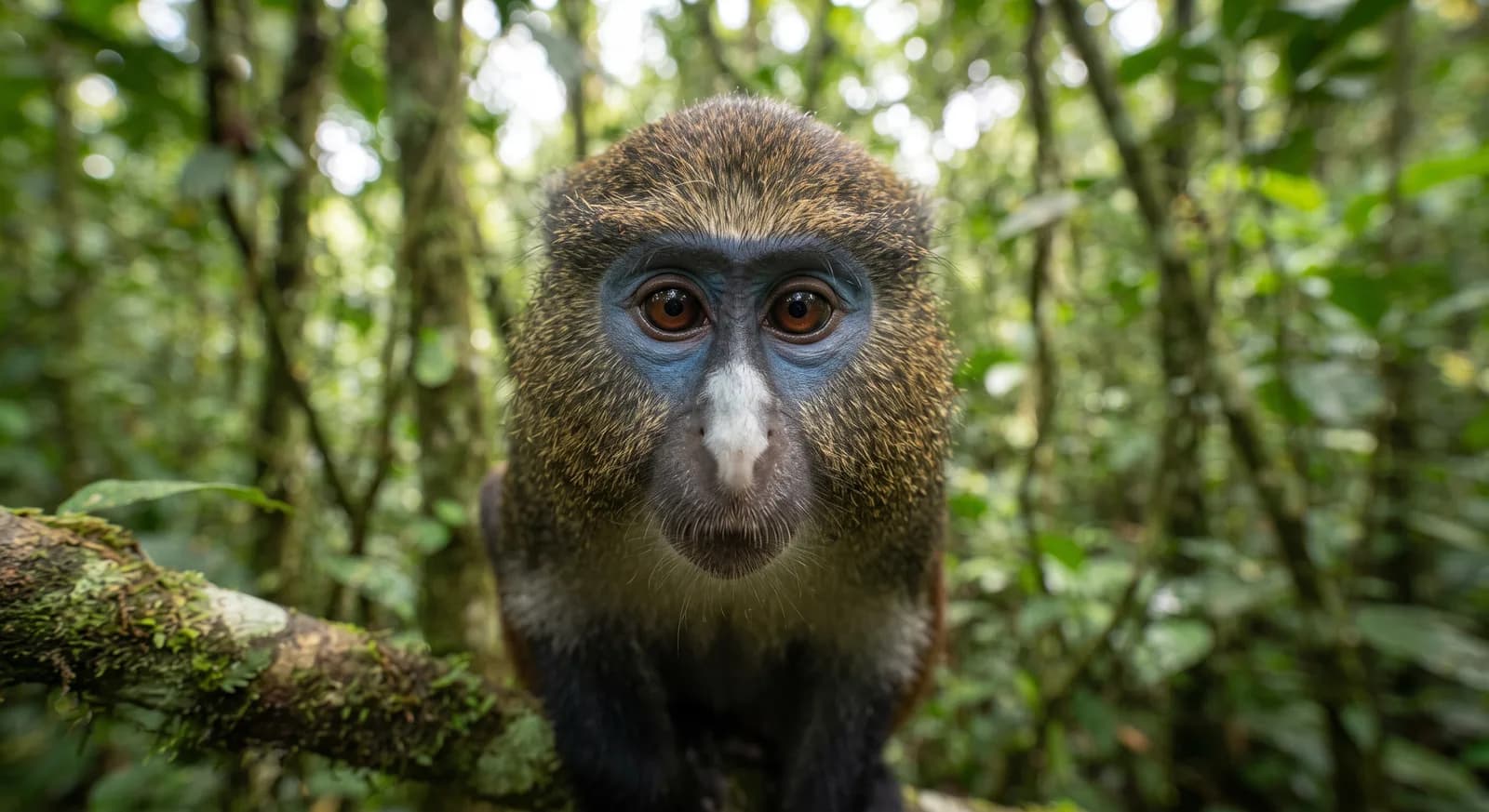 Least Concern
Red-tailed Monkey
Cercopithecus ascanius
De Brazza’s Monkey
Cercopithecus neglectus
Mona Monkey
Cercopithecus mona
Putty-nosed Monkey
Cercopithecus nictitans
Campbell’s Monkey
Cercopithecus campbelli
Wolf's Monkey
Cercopithecus wolfi
L'Hoest's Monkey
Allochrocebus lhoesti
Preuss’s Monkey
Allochrocebus preussi
Conservation status
2 especies in this group están en alguna categoría de riesgo real según la UICN.
See the global conservation statusWhere they live
Recorded in 32 countries. The ones with the most species in the group:
Where to see them
Did you know…
The classic studies on this group of monkeys showed that they have different alarm calls for leopard, eagle and snake, and that each triggers a specific response: climbing a tree, looking up or looking down. It was one of the first solid pieces of evidence for referential communication in a non-human animal.
From Grivet
Young males leave their natal group on reaching maturity, while females stay for life in the group where they were born.
From Grivet
Its cheek pouches let it stuff itself with fruit at speed in a contested tree and withdraw somewhere quiet to eat, a strategy that reduces fighting within the group.
From Red-tailed Monkey
It forms stable mixed groups with the blue monkey, with which it shares territory and lookout duty, and fertile hybrids between the two species have been documented in the wild.
From Red-tailed Monkey
Its white beard gives it the look of an old man; faced with danger it freezes rather than flees.
From De Brazza’s Monkey
Its strategy in the face of danger is to freeze: it can stay completely motionless in the foliage for hours, and that stillness makes it so hard to spot that it is considered one of the most undercounted African primates in surveys.
From De Brazza’s Monkey
Its white beard and orange brow band have made it one of the most recognisable monkeys in the world's zoos, though in the wild hardly anyone sees it.
From De Brazza’s Monkey
There is a feral population on the island of Grenada, in the Caribbean, descended from animals carried on slave ships from West Africa more than three hundred years ago.
From Mona Monkey