One of the 9 guenons on WAnimals
Mammals · Primates · Cercopithecidae
Red-tailed Monkey
Cercopithecus ascanius
The species is abundant and widely distributed; it faces no significant short-term risk. See full glossary
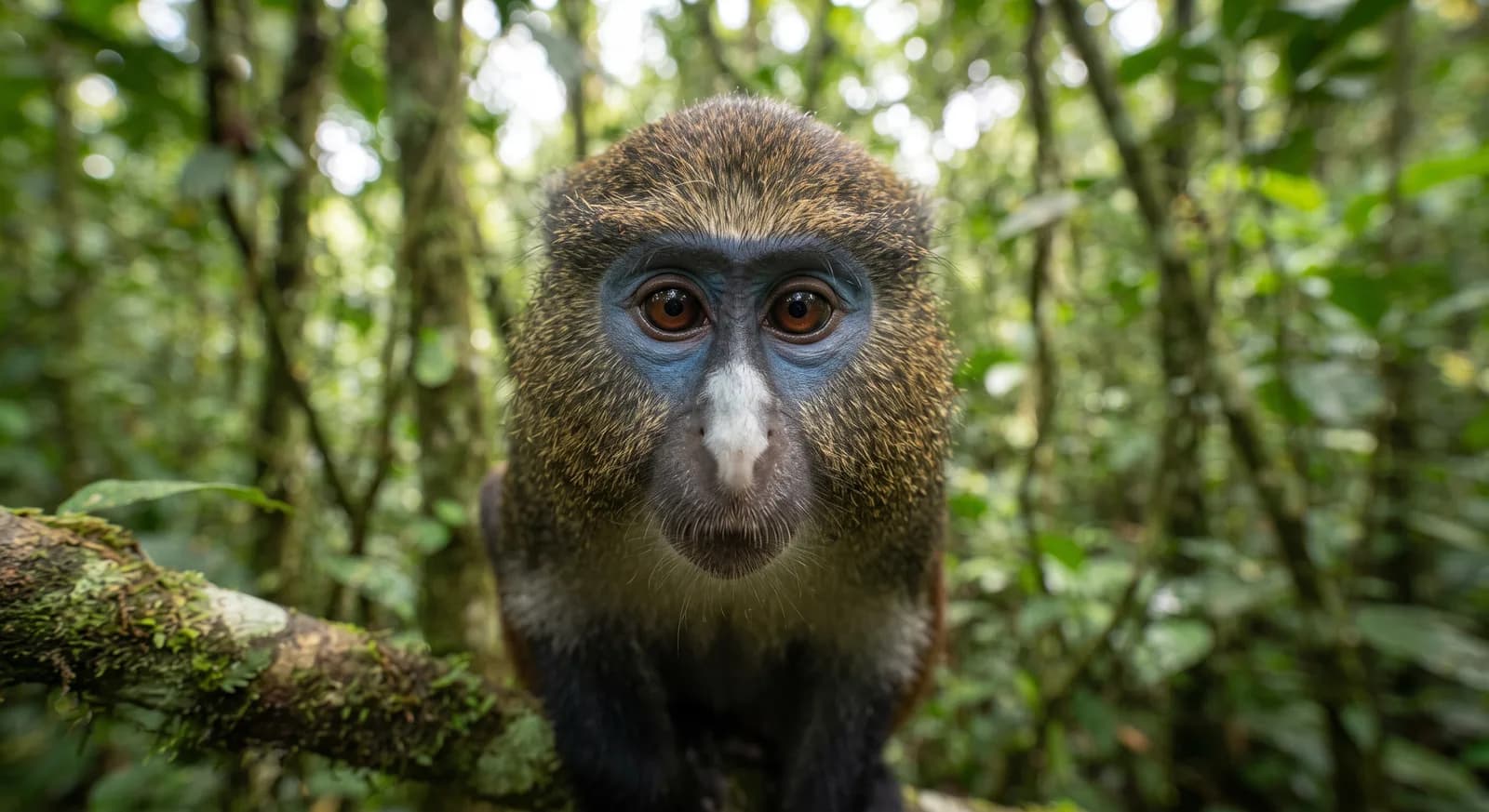
The red-tailed monkey is a small, striking primate of the forests of Central Africa, with a white heart-shaped patch covering its nose, white cheeks and a chestnut-red tail. It lives in groups of a single male and several females, and frequently associates with other guenons and colobus monkeys. It is omnivorous and highly opportunistic: fruit, leaves, flowers, insects and occasionally eggs and small vertebrates.
Weight
2.5 kg – 4.5 kg
Size
40 cm – 55 cm
Lifespan
28 years
Diet
Omnivore
Combines animal and plant food depending on availability.
Activity
Diurnal
Active mainly during the day.
Sighting difficulty
Easy
Fun facts
- Its cheek pouches let it stuff itself with fruit at speed in a contested tree and withdraw somewhere quiet to eat, a strategy that reduces fighting within the group.
- It forms stable mixed groups with the blue monkey, with which it shares territory and lookout duty, and fertile hybrids between the two species have been documented in the wild.
Life cycle & biology
- Skeleton type
- Vertebrate - internal bony skeleton (mammal)
- Habitat & environment
- Primary and secondary rainforest, gallery forest and swamp forest of Central Africa
- Sexual maturity
- 4.5 years
- Gestation / incubation
- 4.8 months
- Litter / clutch size
- 1
Sources consulted: https://es.wikipedia.org/wiki/Cercopithecus_ascanius
Where to find it
See its range on the interactive mapWhere to watch it
Parks and dive sites where this species has been documented.
Related species
Other species in the catalogue with the most in common with Red-tailed Monkey — same habitat, park, country, tags or family.
 Least Concern
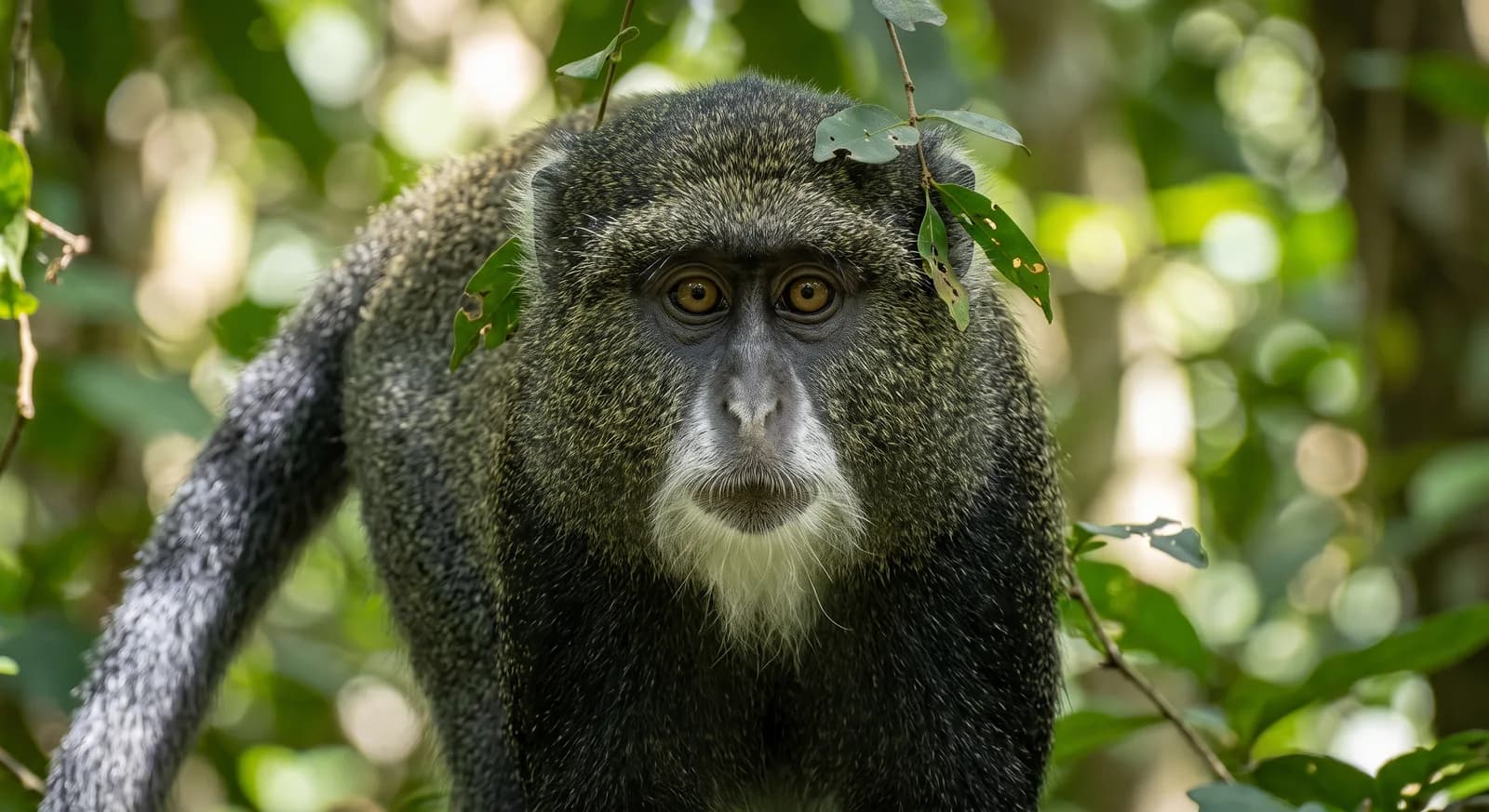
Blue Monkey
Cercopithecus mitis
Grey-cheeked Mangabey
Lophocebus albigena
L'Hoest's Monkey
Allochrocebus lhoesti
 Least Concern
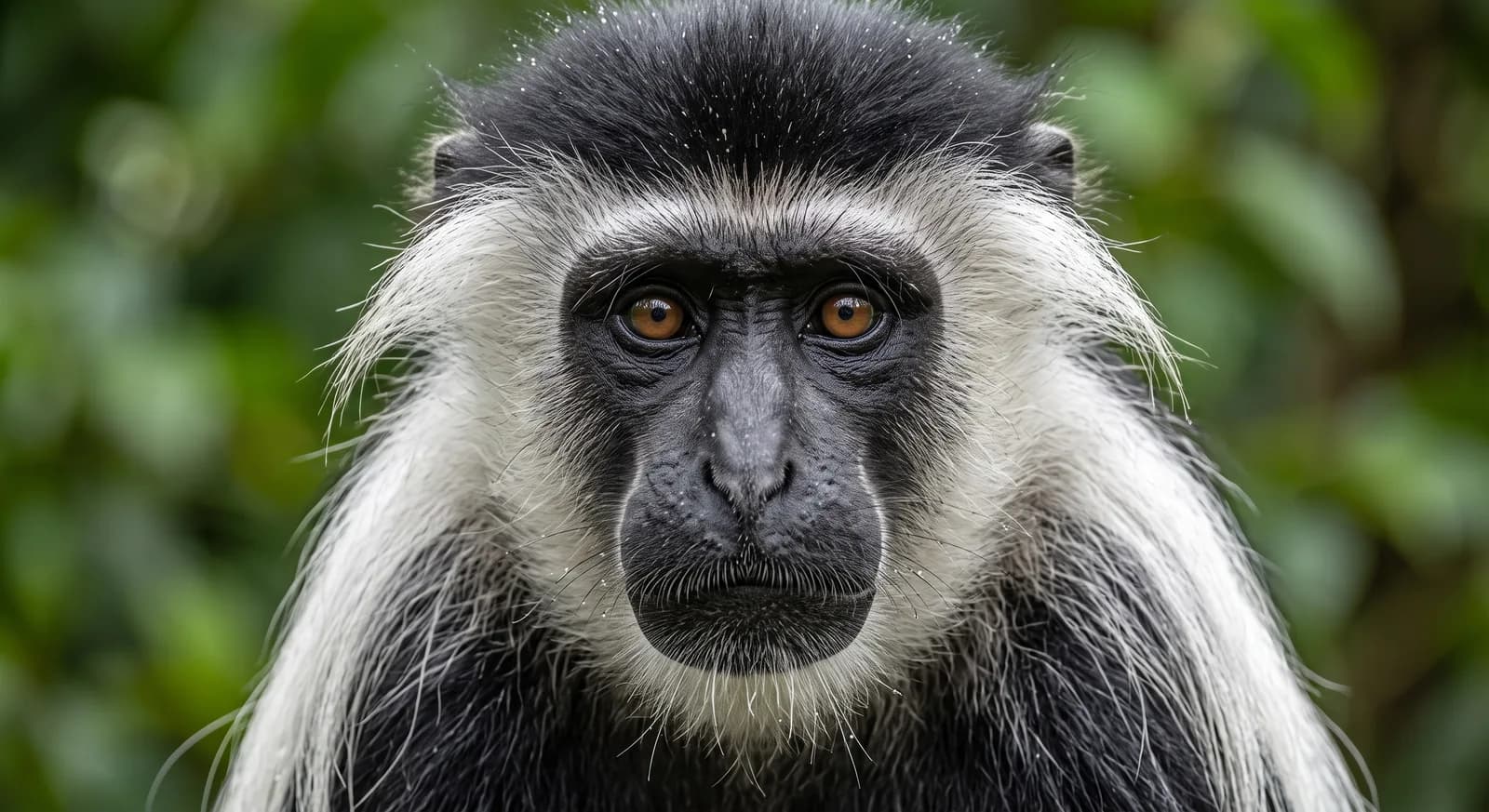
Guereza
Colobus guereza
Patas Monkey
Erythrocebus patas
Yellow Baboon
Papio cynocephalus
Keep exploring
Based on what we already know about red-tailed monkey.
Comments
Share an experience, a fun fact or a tip for seeing the red-tailed monkey.
Be the first to comment.