One of the 6 terns on WAnimals
Birds · Charadriiformes · Laridae
Royal Tern
Thalasseus maximus
The species is abundant and widely distributed; it faces no significant short-term risk. See full glossary
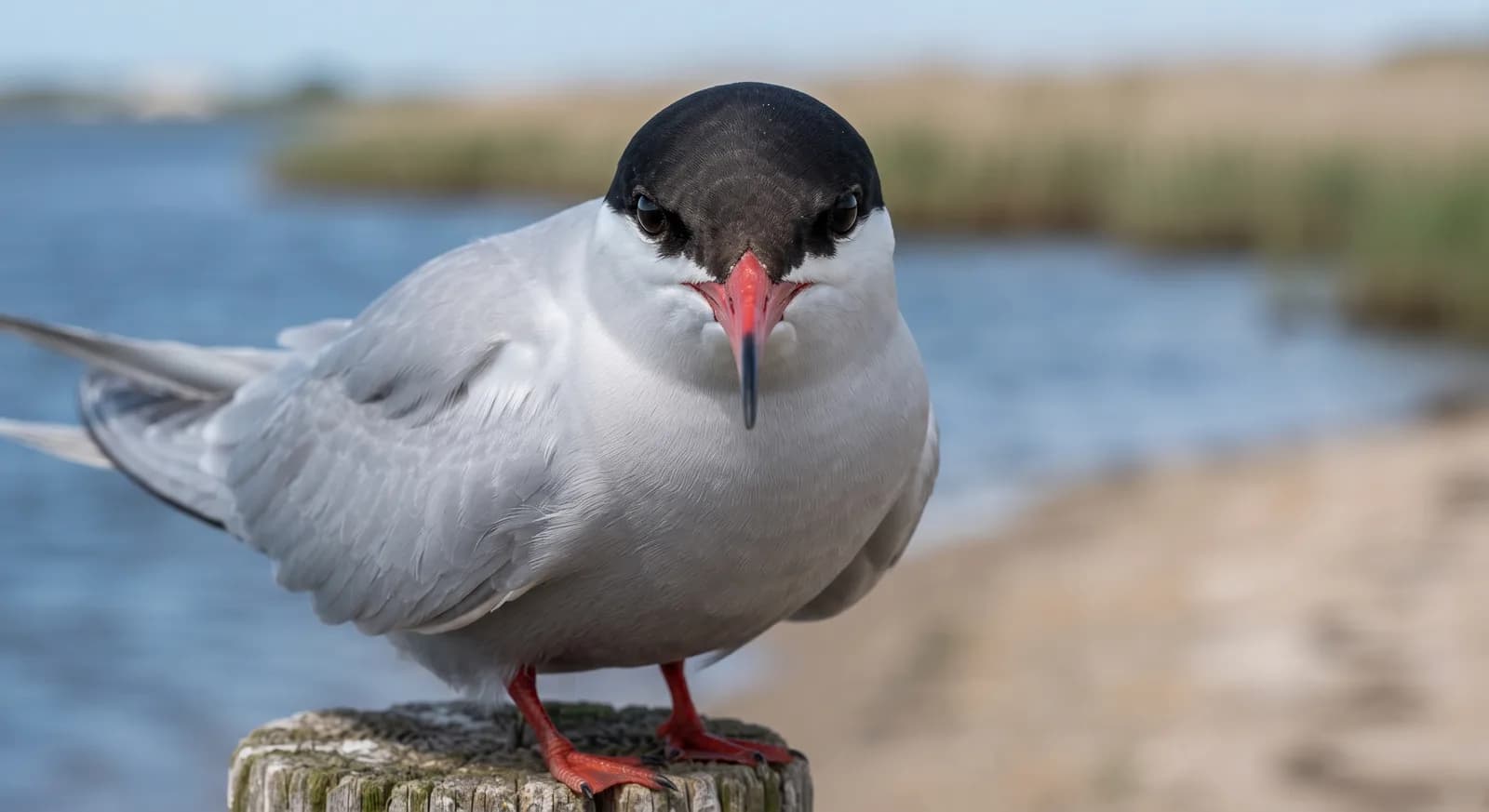
The royal tern is a large tern with an intensely orange bill and a black cap that in winter is reduced to a band across the nape. It breeds in extremely dense colonies on barrier islands and sandbanks along the American and West African coasts. Its chicks form crèches: as soon as they can walk they gather in flocks of hundreds, which the adults locate by voice amid the deafening noise of the colony.
Weight
320 g – 500 g
Size
45 cm – 50 cm
Lifespan
30 years
Diet
Carnivore
Feeds mainly on other animals.
Activity
Diurnal
Active mainly during the day.
Social structure
Colony
Lives in large concentrations, often for breeding reasons.
Sighting difficulty
Easy
Fun facts
- Its chicks form crèches of hundreds of birds, and each adult finds its own in the crowd by recognising its voice: the identification is so precise that a parent can feed its chick among a thousand without error.
- It breeds in extremely tight colonies where the nests are less than thirty centimetres apart, a density that reduces predator success by swamping them.
- Its intensely orange bill distinguishes it from the lesser crested tern, which is smaller with a paler orange bill and shares many of its African colonies.
Life cycle & biology
- Skeleton type
- Vertebrate - internal bony skeleton (bird)
- Habitat & environment
- Coasts, barrier islands, estuaries and coastal lagoons of the Americas and West Africa
- Sexual maturity
- 3 years
- Gestation / incubation
- 28 days
- Litter / clutch size
- 2
Sources consulted: https://es.wikipedia.org/wiki/Thalasseus_maximus
Where to find it
See its range on the interactive mapWhere to watch it
Parques y spots de buceo donde se ha documentado esta especie — se muestran 10 de 17 documentados.
Related species
Other species in the catalogue with the most in common with Royal Tern — same habitat, park, country, tags or family.
Great Black-backed Gull
Larus marinus
Sandwich Tern
Thalasseus sandvicensis
Brown Noddy
Anous stolidus
 Least Concern
Common Tern
Sterna hirundo
Little Tern
Sternula albifrons
Lesser Black-backed Gull
Larus fuscus
Keep exploring
Based on what we already know about royal tern.
Comments
Share an experience, a fun fact or a tip for seeing the royal tern.
Be the first to comment.