One of the 24 beetles on WAnimals
Insects · Coleoptera · Cerambycidae
Titan Beetle
Titanus giganteus
It has not yet been assessed against the IUCN criteria. See full glossary
The titan beetle is a beetle of the family Cerambycidae, the only species in the genus Titanus. It is the largest known species of its family and one of the largest insects alive today, with males reaching up to 17 cm long. It is found in the Amazon region, in the rainforests of Venezuela, Colombia, Ecuador, Peru, the Guianas and north-central Brazil. To date very few females of this beetle have been caught, since it is extremely retiring and its habits are practically unknown. No larvae of this rare species have yet been found. They are believed to live in rotting wood and are thought to measure some 30 cm long and 5 cm wide.
Size
8 cm – 17 cm
Diet
Herbivore
Feeds mainly on plants.
Activity
Nocturnal
Active mainly at night.
Social structure
Solitary
Lives and hunts alone, joining others only to breed.
Sighting difficulty
Unknown
Fun facts
- récordIt is one of the largest beetles in the world, and its jaws are strong enough to snap a wooden pencil in two.
- The adults do not feed: they live off reserves built up during the larval stage and seek only to breed during the few weeks left to them.
- Its larva has never been found in the wild; it is assumed to develop over years inside dead trunks underground, but it remains a mystery.
- The largest reliably measured individual reached 16.7 cm of body, not counting horns: by body alone it is larger than the Hercules beetle, whose horn takes up half its total length.
- The adult eats nothing at all: it emerges with the reserves it built up as a larva and spends them looking for a mate.
- The larva has never been found. Its size is inferred from the exit holes in the wood, which would fit a grub more than five centimetres across.
- The famous life-size photograph of a supposed larva published by National Geographic turned out to be of another species, probably Macrodontia cervicornis.
- Its mandibles snap a pencil in half, and the animal hisses in warning before it bites.
Life cycle & biology
- Habitat & environment
- Humid Amazon rainforest, around large dead trees
Sources consulted: https://es.wikipedia.org/wiki/Titanus_giganteus
Where to find it
See its range on the interactive mapWhere to watch it
Parques y spots de buceo donde se ha documentado esta especie — se muestran 10 de 27 documentados.
Related species
Other species in the catalogue with the most in common with Titan Beetle — same habitat, park, country, tags or family.
Brown-throated Sloth
Bradypus variegatus
Hoffmann's Two-toed Sloth
Choloepus hoffmanni
Southern Two-toed Sloth
Choloepus didactylus
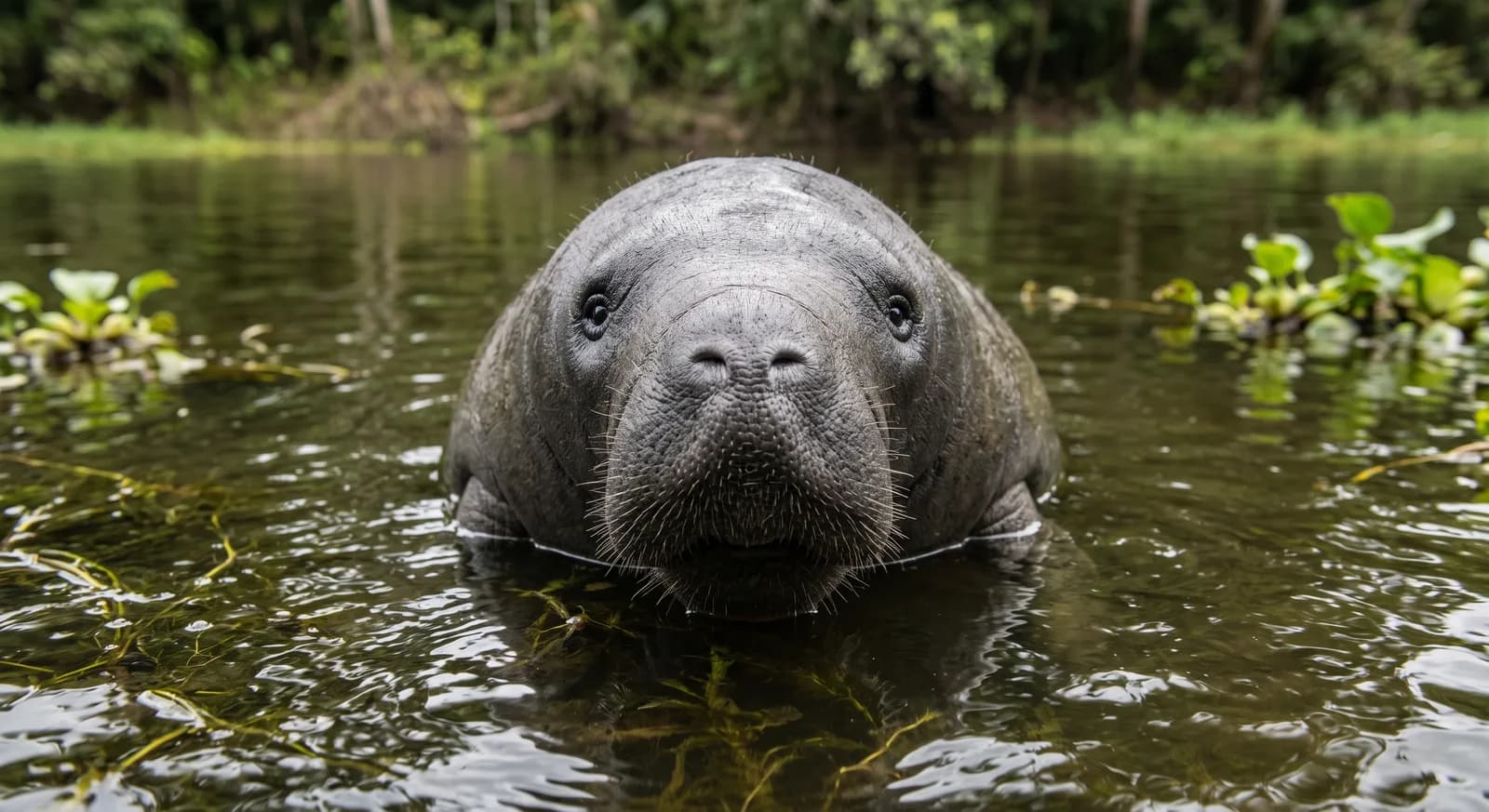 Vulnerable
Amazonian Manatee
Trichechus inunguis
Brazilian Porcupine
Coendou prehensilis
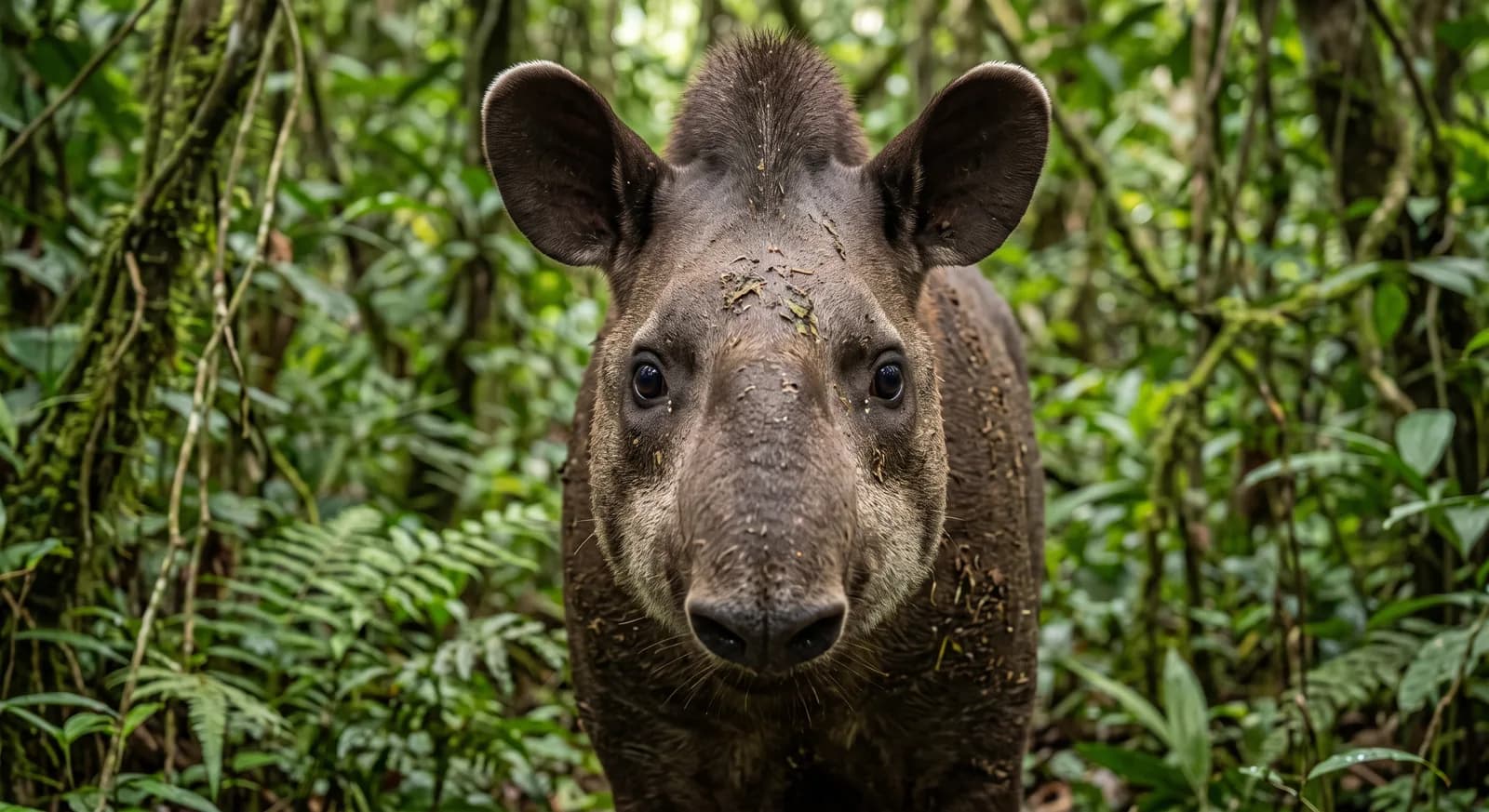 Vulnerable
Lowland Tapir
Tapirus terrestris
Keep exploring
Based on what we already know about titan beetle.
Comments
Share an experience, a fun fact or a tip for seeing the titan beetle.
Be the first to comment.