One of the 6 flamingos on WAnimals
Birds · Phoenicopteriformes · Phoenicopteridae
Andean Flamingo
Phoenicoparrus andinus
It faces a high risk of extinction in the wild over the medium term. See full glossary
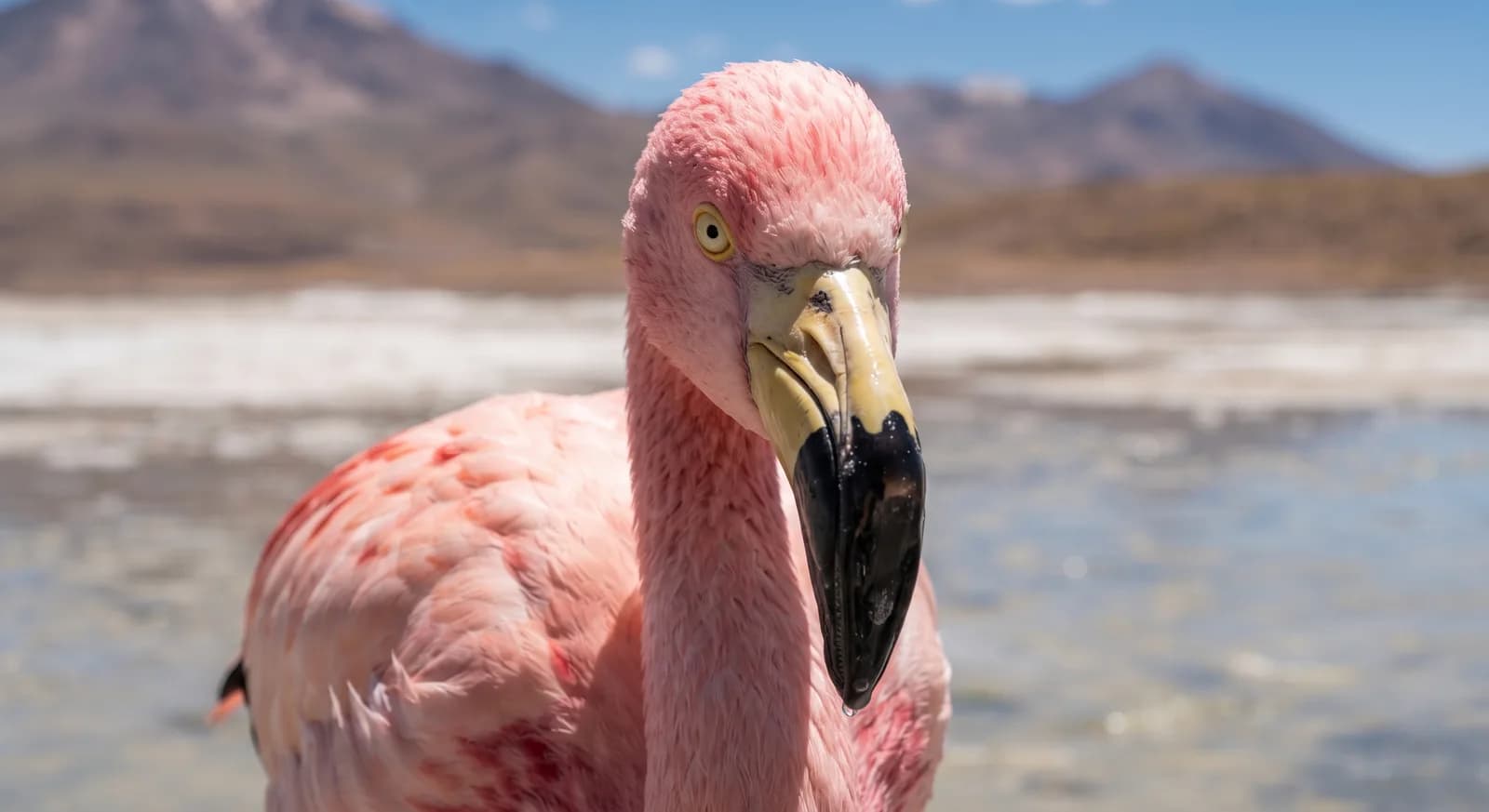
The largest of the three Andean flamingos. Whitish plumage with strong pink, and the front of the neck and the breast wine-coloured. Its wings are vermilion with intensely black flight feathers, and a large black triangle at the rear sets it apart from the other two species. The legs are yellow, a diagnostic feature.
Weight
19 kg – 24 kg
Size
1 m – 1.1 m
Lifespan
30 years
Diet
Herbivore
Feeds mainly on plants.
Activity
Diurnal
Active mainly during the day.
Social structure
Colony
Lives in large concentrations, often for breeding reasons.
Sighting difficulty
Moderate
Estimated population
38,000-39,000 individuals according to current estimates, after a documented decline between the 1970s and the 1990s
Fun facts
- GeneralIt lives in hypersaline water where ice forms around its legs at night.
- It is migratory and can cover as much as 700 miles in a single day between the summer salt flats and the winter wetlands.
- Together with James's flamingo it forms the genus Phoenicoparrus, which differs from the other flamingos in its very deep lower mandible, the extremely long filtering filaments of the upper jaw and the complete absence of a hind toe.
- Its chicks accumulate more arsenic and iron in their bodies than the adults, taken up from the sediments of the salt lakes where they feed.
Life cycle & biology
- Skeleton type
- Vertebrate - internal bony skeleton (bird)
- Habitat & environment
- High-altitude salt flats and saline lagoons (3,500-4,500 m)
- Birth weight
- Born covered in greyish down and with a straight bill, which curves as it grows
- Size at birth
- It leaves the nest within a few days to join the chick creches
- Sexual maturity
- 5-6 years
- Gestation / incubation
- 27-31 days of incubation
- Litter / clutch size
- It nests in colonies, sometimes mixed with the other flamingo species. It builds a mud nest shaped like a cup or cone; exceptionally it makes do with a hollow in the ground. Nesting is not annual and breeding rates are consistently low
Sources consulted: IUCN Red List; Birds of the World (Cornell Lab); Ministerio del Medio Ambiente de Chile (Reglamento de Clasificación de Especies, 11.º proceso); Caziani y Derlindati 1996; Chebez, Los que se van
Where to find it
See its range on the interactive mapBest time: In the austral summer on the high-altitude salt flats; in winter it descends to lower wetlands
Where to watch it
Parks and dive sites where this species has been documented.
Related species
Other species in the catalogue with the most in common with Andean Flamingo — same habitat, park, country, tags or family.
 Near Threatened
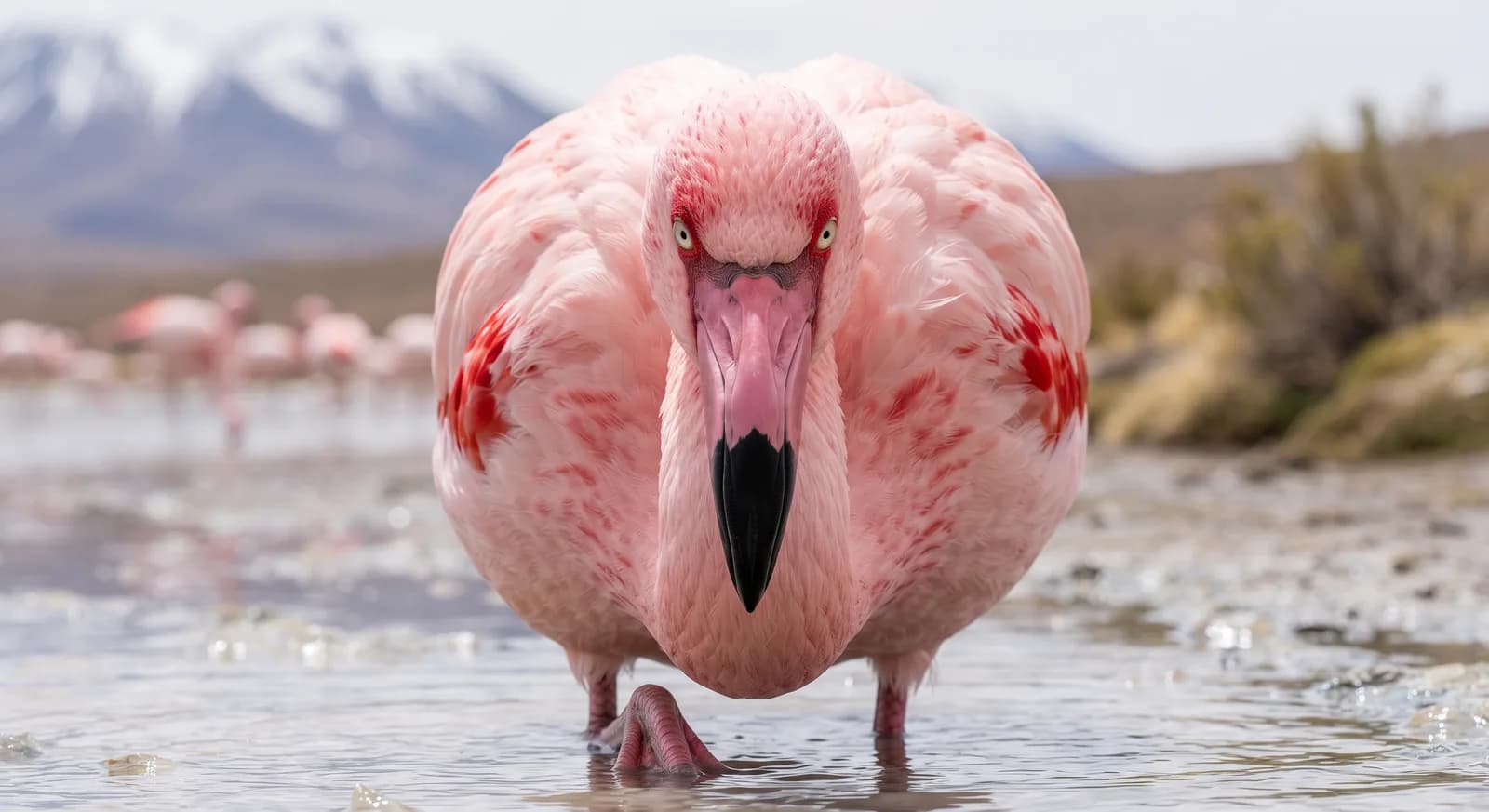
James's Flamingo
Phoenicoparrus jamesi
 Near Threatened
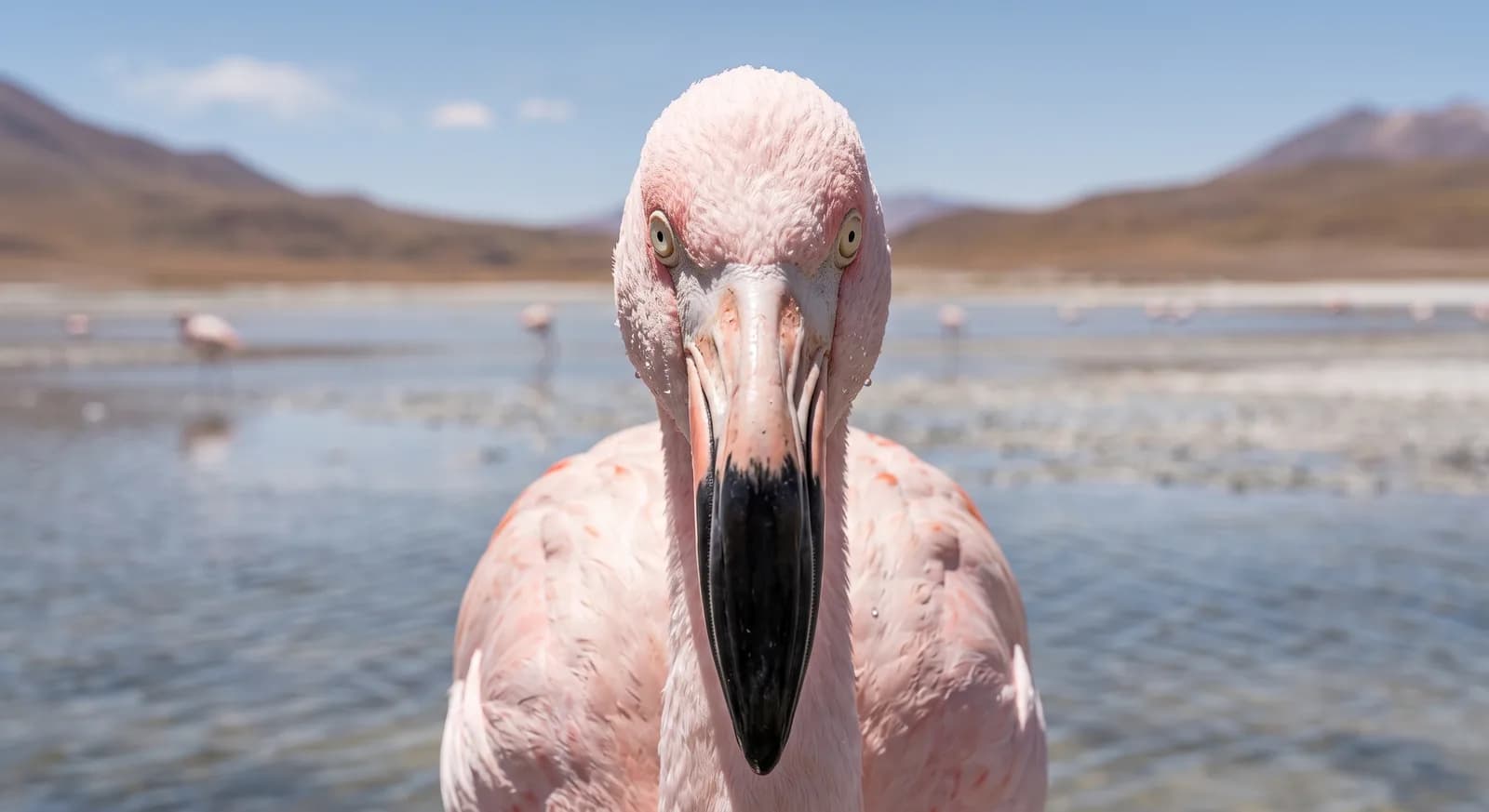
Chilean Flamingo
Phoenicopterus chilensis
 Least Concern
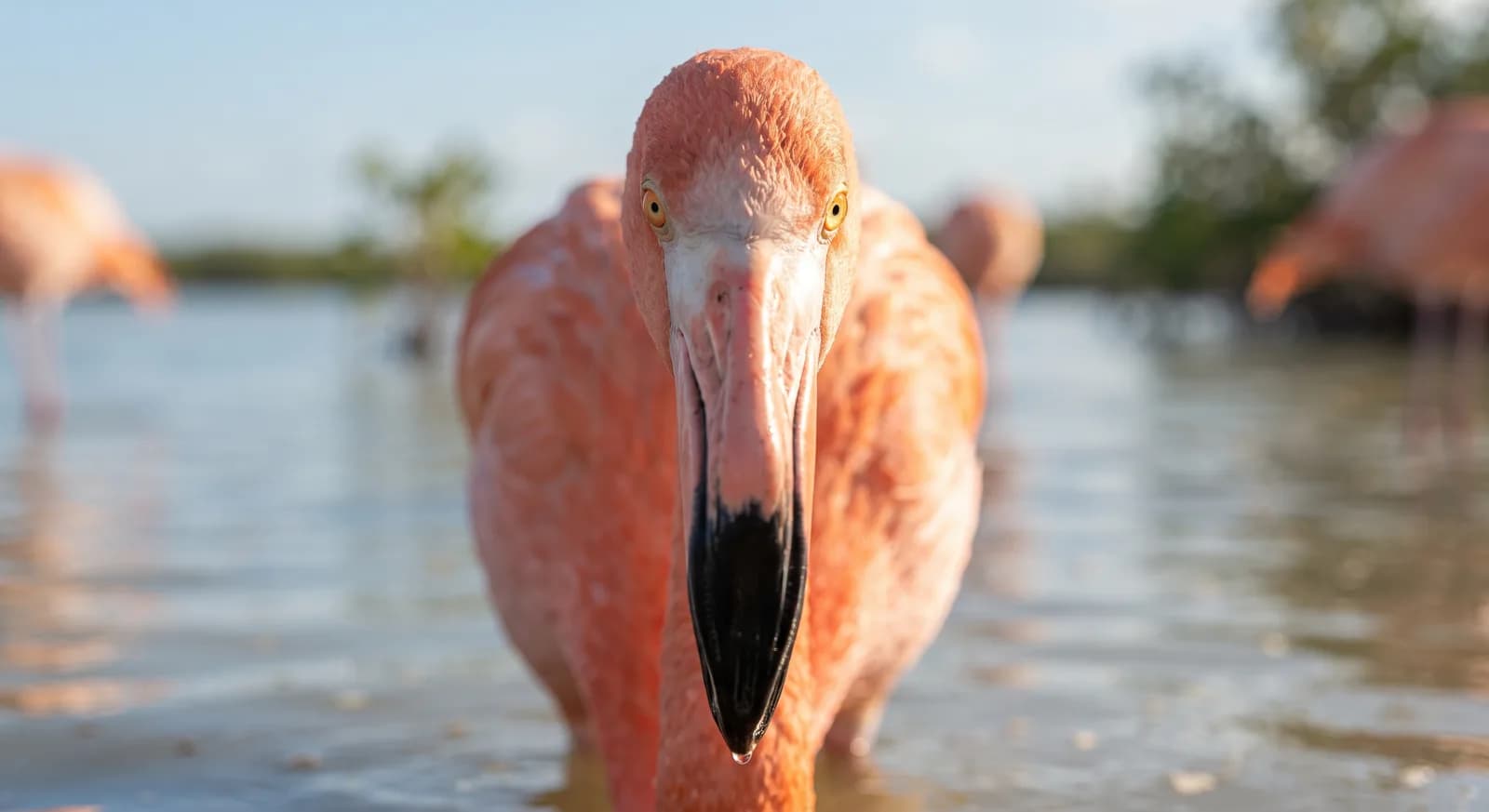
American Flamingo
Phoenicopterus ruber
Military Macaw
Ara militaris
Andean Gull
Chroicocephalus serranus
Giant Coot
Fulica gigantea
How to help
The andean flamingo is classified as vulnerable. Organizations such as UICN, WWF y Wildlife Conservation Society work specifically on its conservation and that of its habitat; looking into their programs is a good starting point if you want to get involved.
It's documented in 5 real protected areas — part of why protecting these places matters for its conservation.
Keep exploring
Based on what we already know about andean flamingo.
Comments
Share an experience, a fun fact or a tip for seeing the andean flamingo.
Be the first to comment.