One of the 6 flamingos on WAnimals
Birds · Phoenicopteriformes · Phoenicopteridae
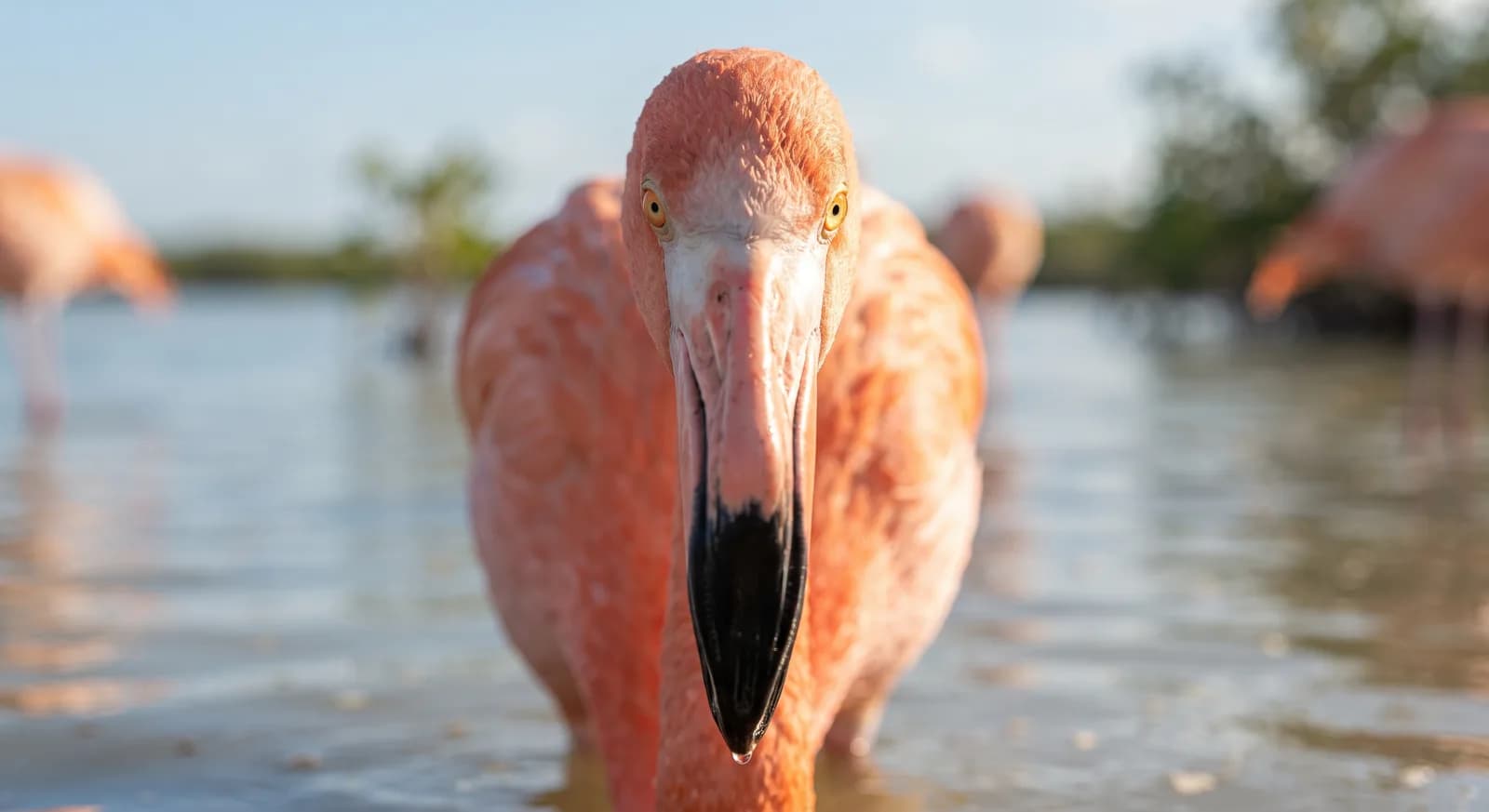
American Flamingo
Phoenicopterus ruber
The species is abundant and widely distributed; it faces no significant short-term risk. See full glossary
The largest flamingo in the Americas and the second largest in the world, surpassed only by the greater flamingo. Its colour ranges from pale pink to crimson or vermilion depending on the area and on how many carotenoid-rich crustaceans it eats. The bill is abruptly curved and fitted with filtering lamellae, with the lower mandible larger than the upper.
Weight
2.2 kg – 2.8 kg
Lifespan
30 years
Diet
Carnivore
Feeds mainly on other animals.
Activity
Diurnal
Active mainly during the day.
Social structure
Colony
Lives in large concentrations, often for breeding reasons.
Sighting difficulty
Easy
Fun facts
- GeneralThe most intensely coloured flamingo: the classic orange-red of the postcards.
- fisiologíaIt is the most intensely coloured of all the flamingos, thanks to a diet especially rich in carotenoids from the crustaceans and algae of Caribbean coastal lagoons.
- The intensity of its colour depends directly on its diet: the more carotenoid-rich crustaceans it eats, the closer it comes to vermilion.
- It is extremely sensitive to disturbance while breeding: even a light aircraft passing overhead can cause a stampede that ruins the whole year's clutch.
- Flamingos feed their chicks on a secretion similar to pigeon's milk, but with more fat and less protein, produced by glands in the upper digestive tract.
Life cycle & biology
- Skeleton type
- Vertebrate - internal bony skeleton (bird)
- Habitat & environment
- Brackish lagoons, salt pans and shallow bays
- Sexual maturity
- 2-6 years, though females usually breed for the first time at around 6
- Gestation / incubation
- 27-31 days, with both parents incubating
- Litter / clutch size
- A single egg, very rarely two, on a mud mound about 30 cm high with a shallow hollow at the top, built by both members of the pair
- Lifespan in captivity
- Considerably longer than in the wild
Sources consulted: IUCN Red List; Wikipedia (Phoenicopterus ruber); Birds Colombia; Sprunt 1975; Ogilvie y Ogilvie 1986; del Hoyo et al. 1992; flamingos-world.com
Where to find it
See its range on the interactive mapBest time: All year round in shallow lagoons and highly saline coastal waters of the Caribbean
Where to watch it
Parks and dive sites where this species has been documented.
Related species
Other species in the catalogue with the most in common with American Flamingo — same habitat, park, country, tags or family.
 Vulnerable
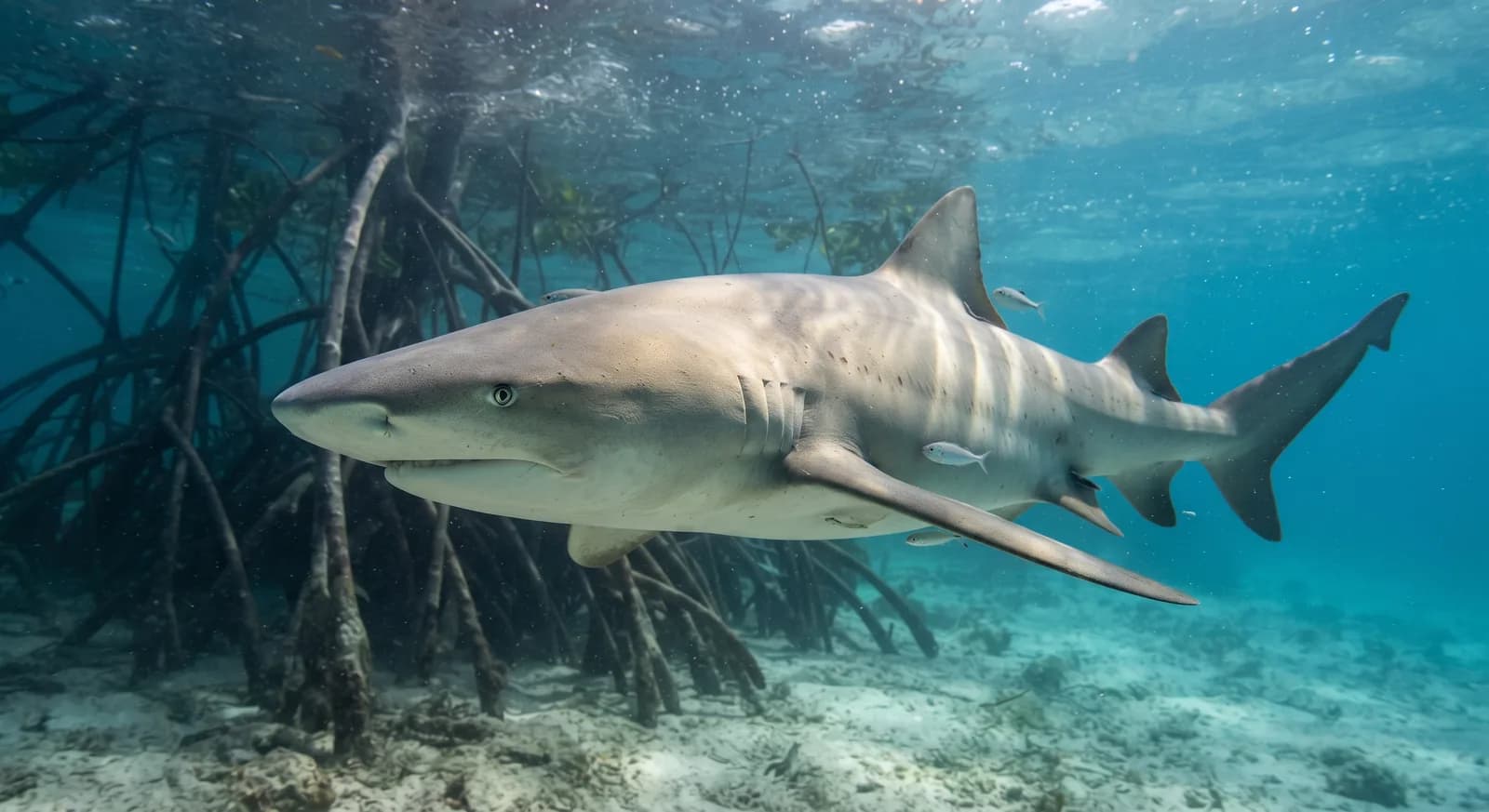
Lemon Shark
Negaprion brevirostris
Queen Parrotfish
Scarus vetula
Grey Snapper
Lutjanus griseus
Atlantic Spadefish
Chaetodipterus faber
Man-of-war Fish
Nomeus gronovii
 Least Concern
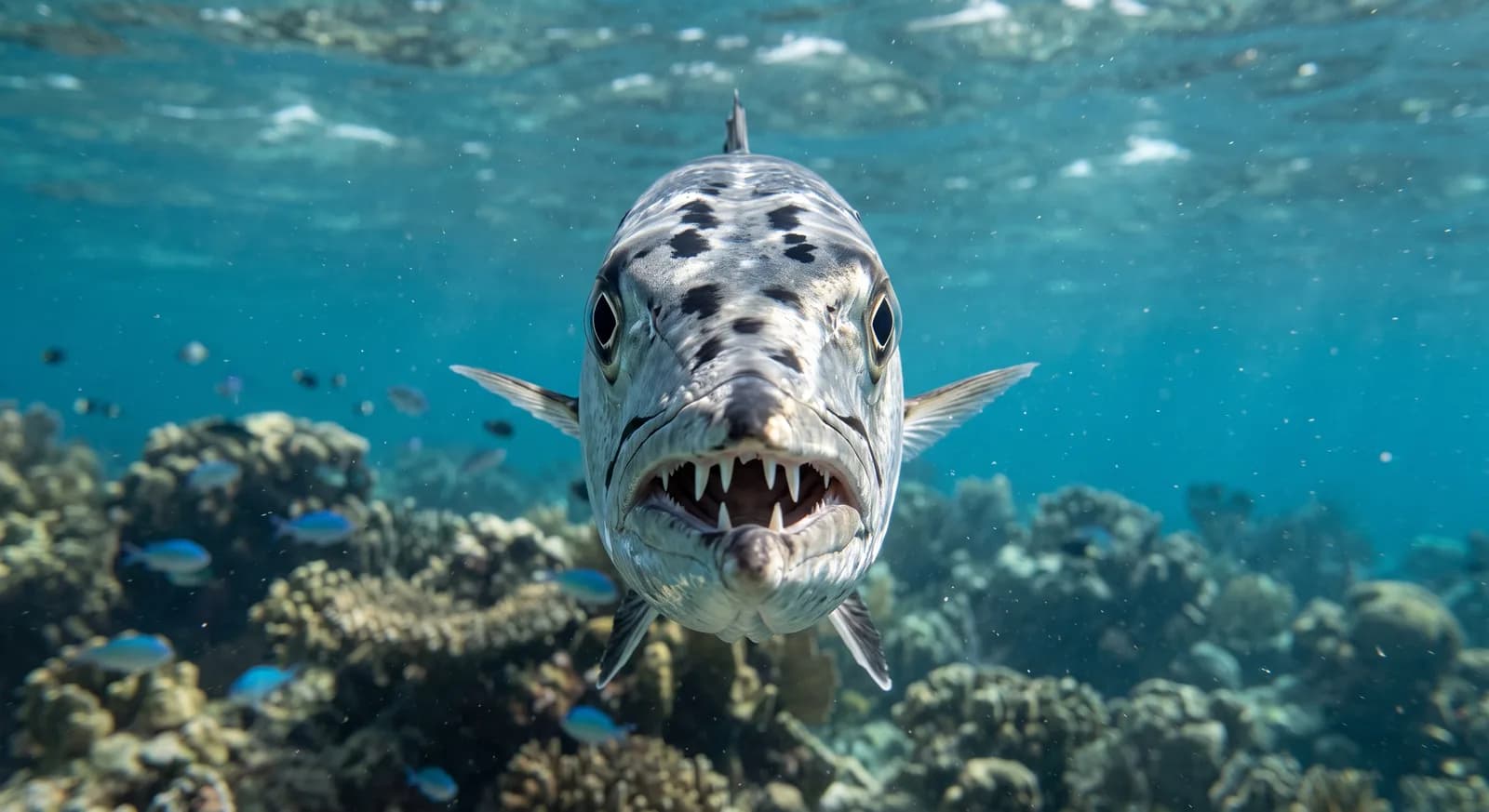
Great Barracuda
Sphyraena barracuda
Keep exploring
Based on what we already know about american flamingo.
Comments
Share an experience, a fun fact or a tip for seeing the american flamingo.
Be the first to comment.